

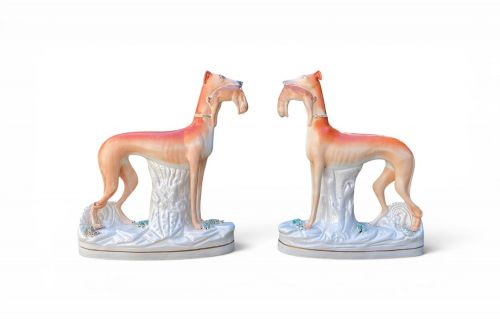


Staffordshire Figures with Dogs
Staffordshire figures with dogs are charming ceramic ornaments capturing Victorian domestic and sporting life, prized by collectors for their character.
Staffordshire Figures with Dogs
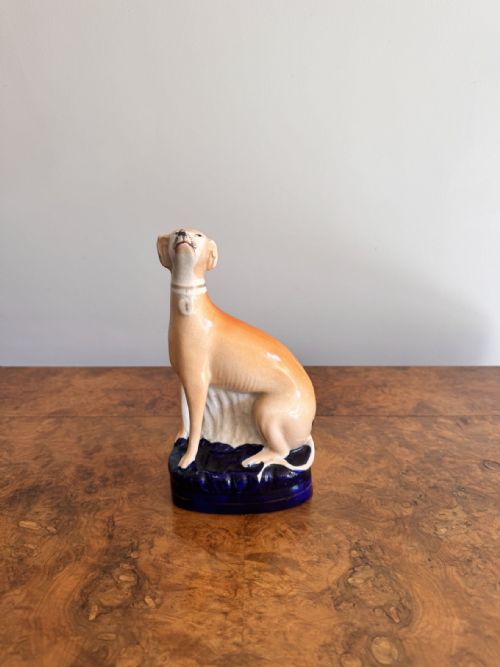
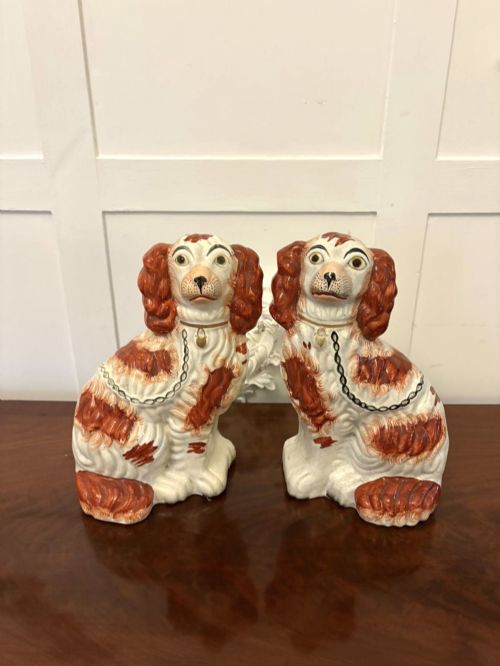
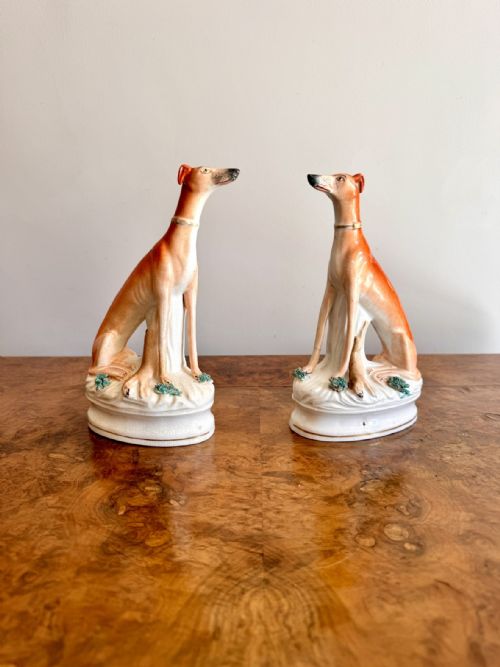
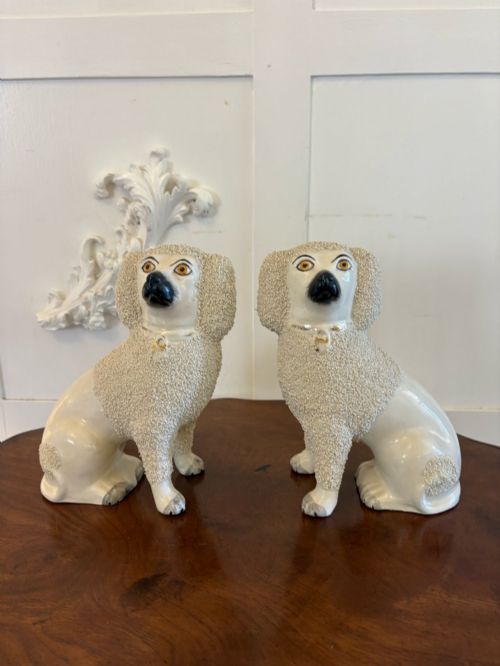
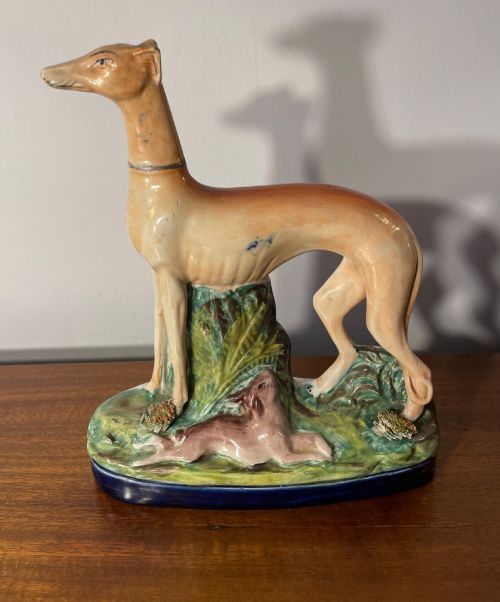
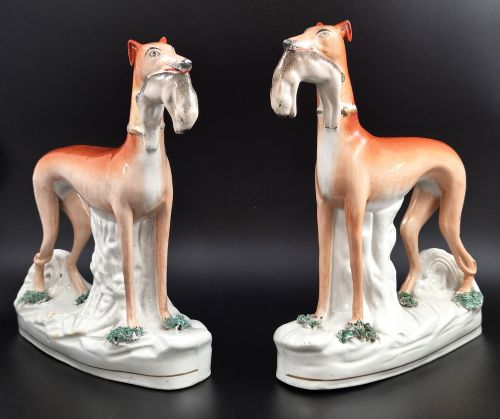
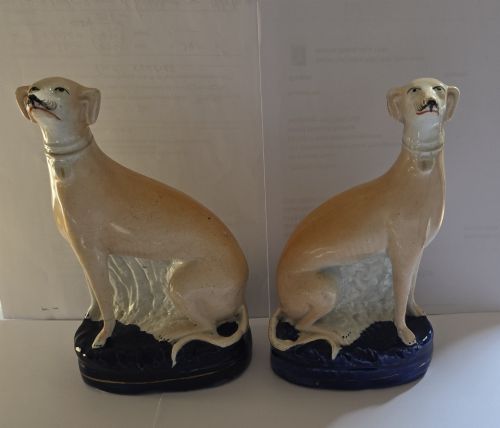
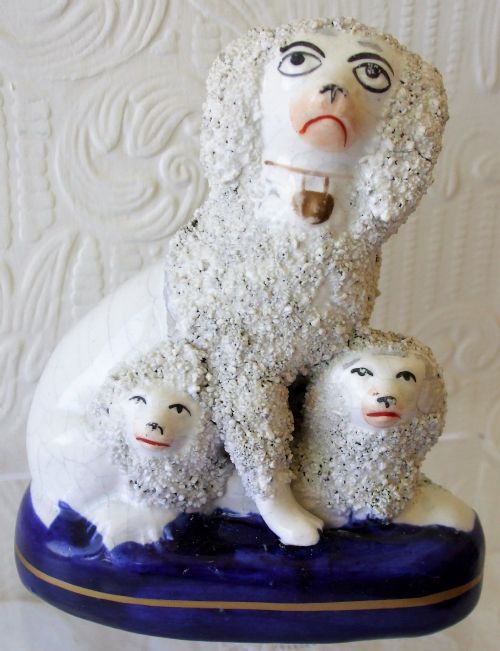
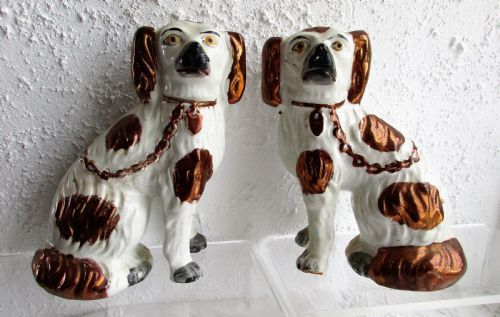
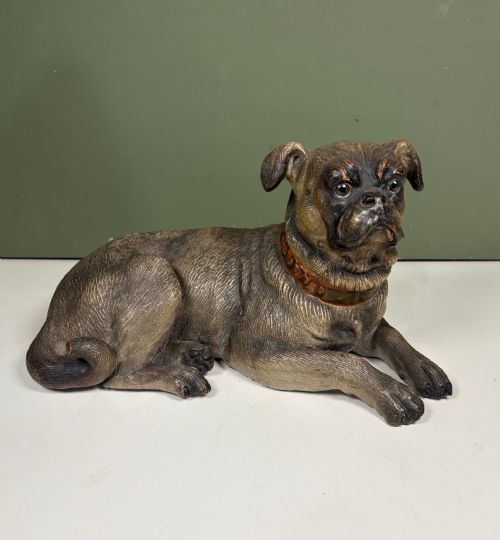
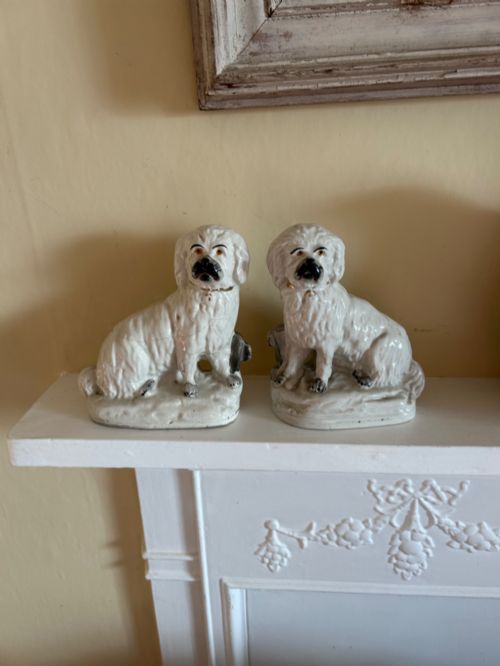
Staffordshire figures with dogs represent a distinct tradition of English pottery created during the Victorian period. You encounter various forms here, ranging from pairs of greyhounds with hares to poodles with pups and spaniels with glass eyes.
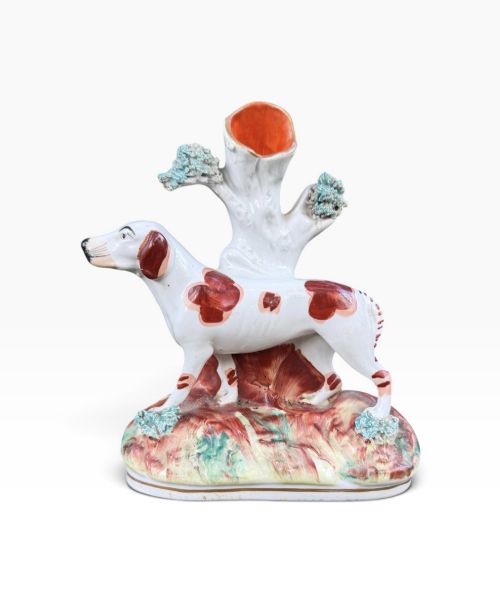
Makers produced these decorative figurines, pottery figures, and quill holders primarily in the mid to late nineteenth century. The examples on this page span dates from about eighteen fifty to eighteen ninety, reflecting the popular tastes of the era.
The subjects extend beyond single animals to include hunting dogs with hares and human figures accompanied by dogs. These ceramic pieces served both decorative and functional purposes in Victorian homes.
How they were made
The manufacturing process involved moulding the pottery figures and firing them before artists hand-painted the enamel colours. Certain models, particularly from the later nineteenth century, include fitted glass eyes.
Staffordshire Figures with Dogs Retail Price Guide 2026
Typical asking prices for staffordshire figures with dogs among the pieces listed under this phrase on Sellingantiques today, from the lower quarter to the upper quarter. They describe what is for sale here now, not the wider market.
Listings on this site feature earthenware materials, enamel paint, and lead glaze across nineteenth-century Victorian periods.
What varies in quality
The standard of modelling and painting separates finer Staffordshire figures from simpler production pieces. Skilled hand-painting on the enamel and careful application of gold leaf define the upper tier of these ceramics.
Scale and complexity also influence the standing of a piece, with large pairs of animals showing greater sculptural ambition than smaller single figures. The inclusion of modelled hares, pups, or baskets adds to the detail.
The Staffordshire Figures with Dogs Glossary
- Earthenware
- Porous pottery fired at a relatively low temperature. This is the primary ceramic body used for nineteenth-century Staffordshire figures.
- Lead glaze
- A shiny coating applied to pottery before firing. It gives these Victorian figures their characteristic glossy finish.
- Enamel paint
- Coloured decoration applied over the glaze and fired at a lower temperature. This method provides the vibrant hues found on the dogs and clothing.
- Quill holder
- A desk accessory featuring a modelled vessel or figure designed to hold writing feathers. Several dog figures serve this practical purpose.
- Victorian
- The period of the reign of Queen Victoria, spanning from eighteen thirty-seven to nineteen oh one. The majority of these ceramic figures date from this era.
Staffordshire Figures with Dogs: Frequently Asked Questions
What are Staffordshire figures with dogs?
These pieces are glazed ceramic ornaments made in English potteries during the nineteenth century. They depict various dog breeds, often as pairs or accompanied by hares, pups, and human handlers.
Potters designed them as mantelpiece decorations and practical items such as quill holders for Victorian homes.
How old are these ceramic dog figures?
The pieces listed on this page date from the mid to late nineteenth century, specifically between eighteen fifty and eighteen ninety.
They belong to the Victorian era when Staffordshire potteries produced large quantities of decorative earthenware animal figures.
How were these pottery dogs used originally?
Victorian households placed these ceramic figures on mantelpieces, sideboards, and occasional tables as decorative ornaments. Some specialised pieces, such as quill holders, incorporated small wells to hold writing quills on a desk.
They functioned primarily to display status, sporting interests, and a fondness for pets in the home.
What dog breeds appear in these figures?
Greyhounds, poodles, spaniels, and general hunting dogs appear frequently in these nineteenth-century ceramic sculptures. Potters often paired these animals with hares, additional puppies, or human figures.
The selection reflects the popular sporting and domestic animals of the Victorian period.