


Earthenware Mantel Figures
These earthenware mantel figures bring nineteenth-century British parlours to life with portrait subjects, animals, and pairs designed for the fireplace.
Earthenware Mantel Figures
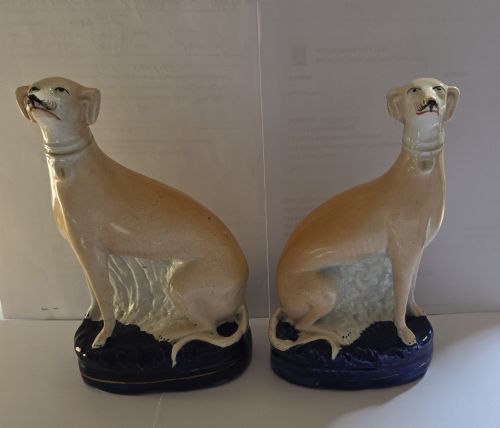
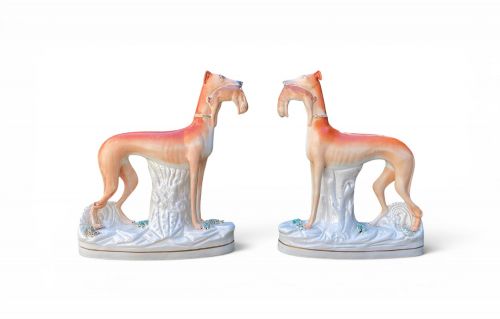
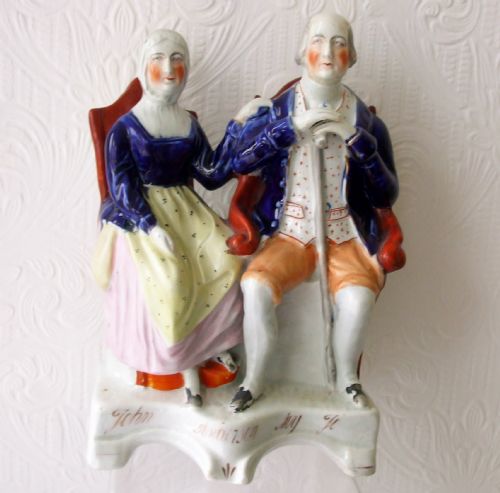
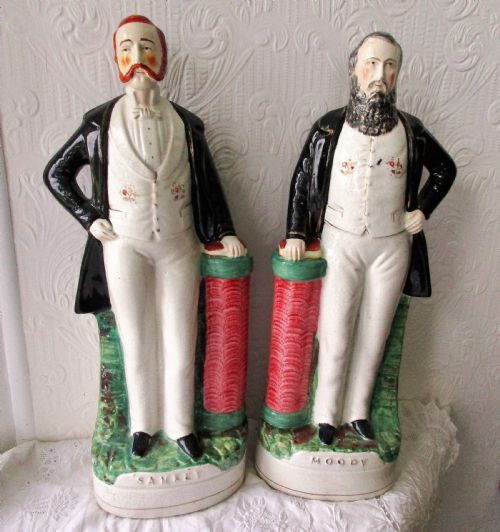
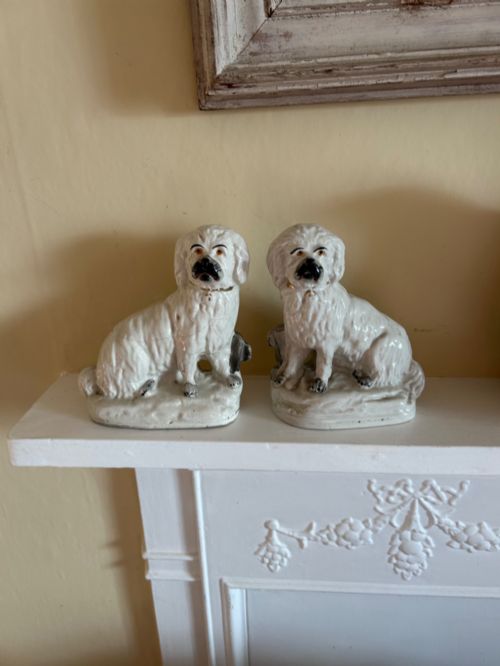
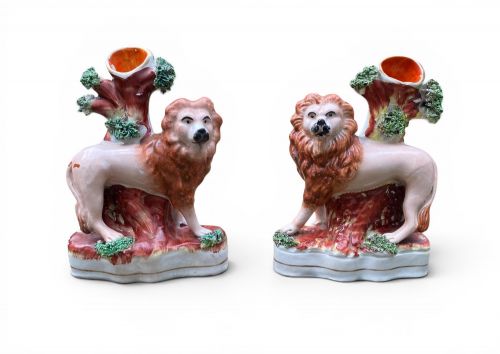
Earthenware mantel figures comprise nineteenth-century Staffordshire pottery and related ceramic groups intended for display on chimney pieces. Buyers encounter seated spaniels, greyhounds, lions, portrait figures, and spill vases shaped as animals or castles. Most examples date from the Victorian era, spanning decades from eighteen-forty to nineteen-hundred.
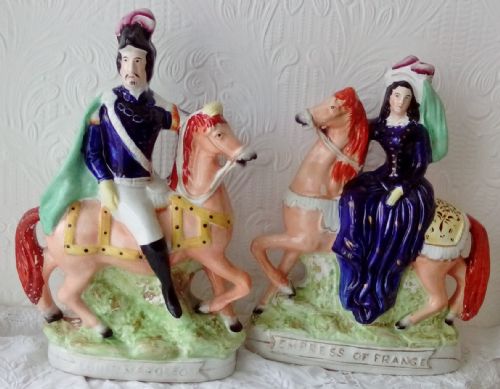
The assortment on this page leans heavily toward pairs of dogs and flatback portrait pieces depicting historical figures, literary characters, and royals. Makers also produced equestrian groups, watch holders, and architectural subjects like castles designed to stand against a wall.
Materials and Manufacture
Potters shaped these earthenware figures using press moulds, joining front and back sections to create hollow flatback bodies suited for mantel placement. Workers applied lead glaze and enamel paint by hand, sometimes adding gold leaf highlights before firing the ceramic bodies.
Firing temperatures and glaze compositions varied across potteries, yielding differences in surface gloss and enamel adherence. Cobalt and iron oxides provided the deep blues and reds seen on spaniels, lions, and spill vases.
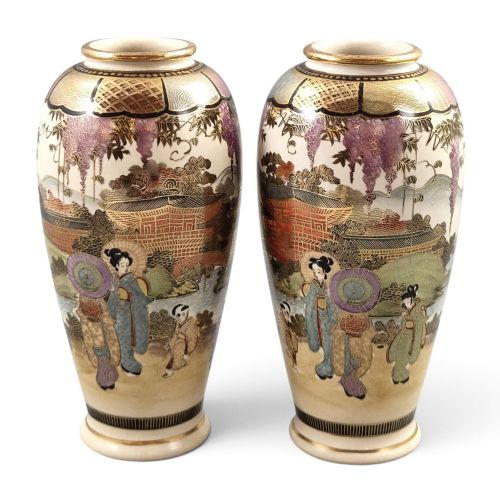
Listings feature Victorian earthenware alongside Japanese Meiji period ceramics from nineteen-hundred.
Judging Quality
Thomas Parr·Beswick
The Earthenware Mantel Figures Glossary
- Flatback
- A figure moulded with a finished front and a plain, unadorned flat rear designed to sit flush against a wall.
- Spill vase
- A hollow cylindrical holder incorporated into a figure, used to store wooden tapers for lighting pipes or candles.
- Lead glaze
- A glossy vitreous coating applied to earthenware before firing, giving the ceramic surface its reflective sheen.
- Enamel paint
- Opaque vitreous colours brushed over the fired glaze and subjected to a low second firing to fix the pigment.
- Meiji period
- The era of Japanese history spanning eighteen-sixty-eight to nineteen-and-twelve, represented by imported Satsuma wares found alongside British pottery.
Earthenware Mantel Figures: Frequently Asked Questions
What are earthenware mantel figures?
These pieces are nineteenth-century ceramic ornaments shaped as animals, people, and architectural subjects for display on fireplace mantels.
Potteries across Staffordshire and beyond produced them in large numbers during the Victorian period, using moulds and hand-painted glazes.
How were Staffordshire dogs displayed?
Owners placed matched pairs of spaniels, greyhounds, or poodles facing each other at either end of a mantelpiece.
This symmetrical arrangement was a standard feature of Victorian domestic interiors.
What is a spill vase figure?
A spill vase figure combines a decorative animal or scene with an integrated upright cylinder.
Victorians used these holders to store wooden spills for transferring flames from the hearth to lamps and pipes.
How do you date Victorian pottery figures?
Dating relies on stylistic clues, subject matter, and the nature of the ceramic body and glaze.
Earlier pieces from around eighteen-forty often show finer detail and more subdued enamel palettes compared to later nineteenth-century output.