

Pair of Staffordshire Figures
When you collect a pair of staffordshire figures, you bring home the domestic portraiture and popular theatre of the nineteenth century.
Pair of Staffordshire Figures
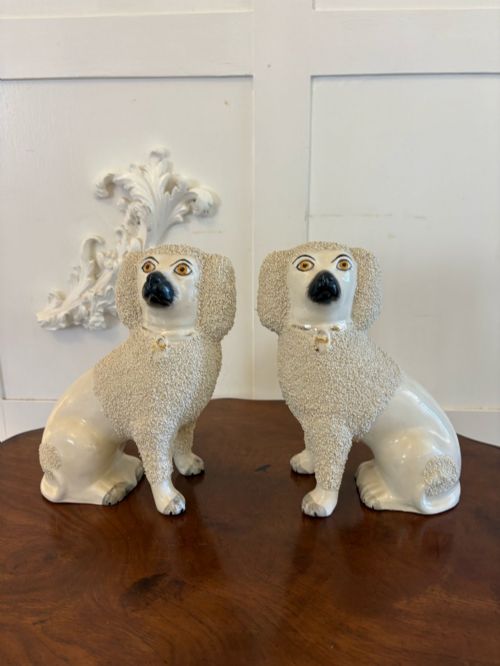
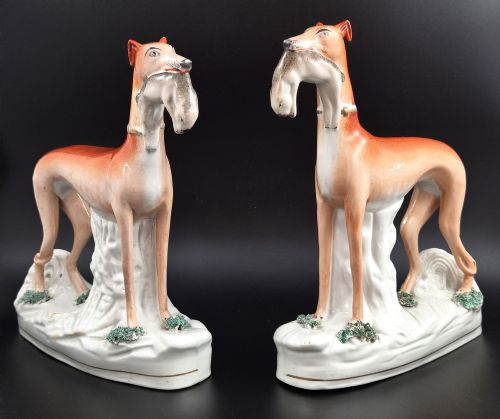
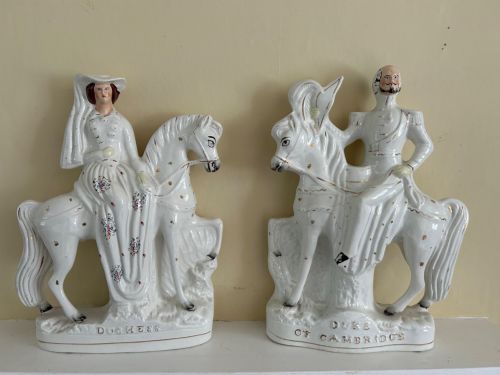
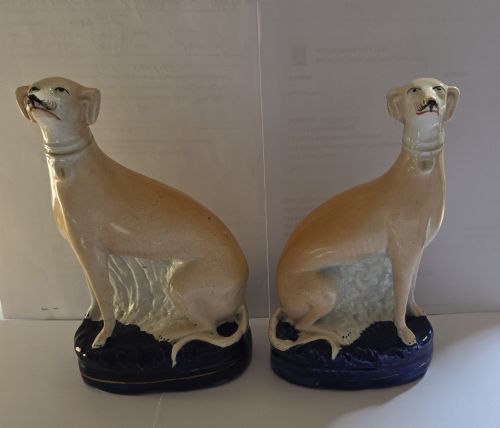
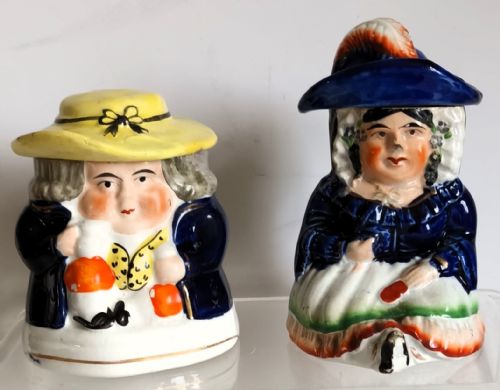
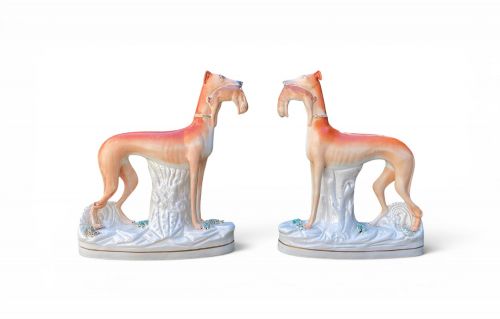
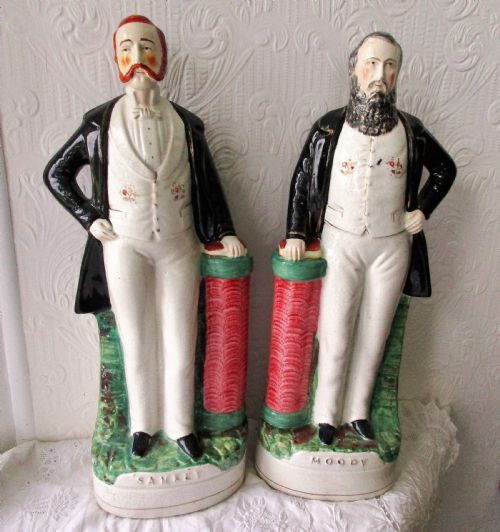
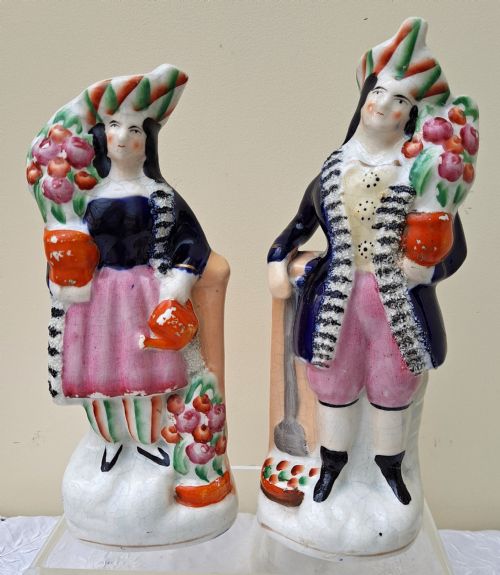
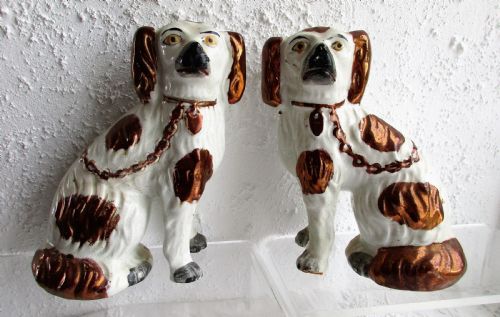
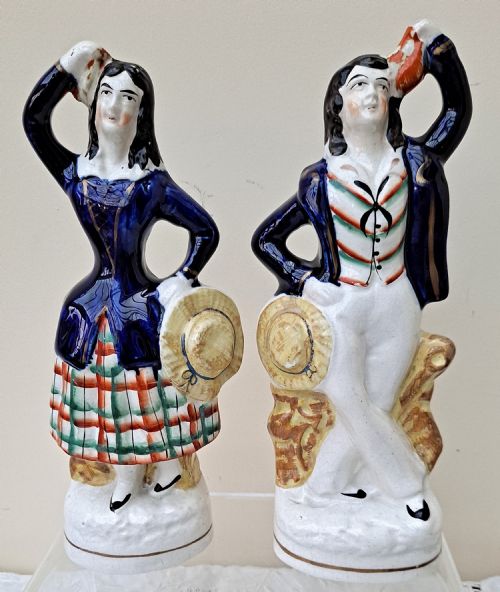
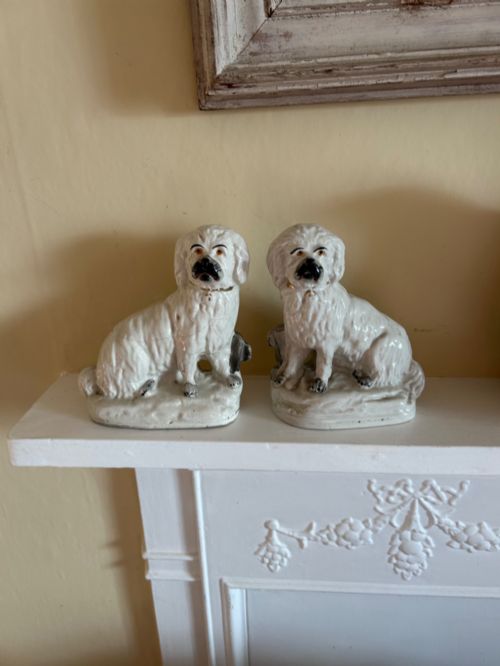
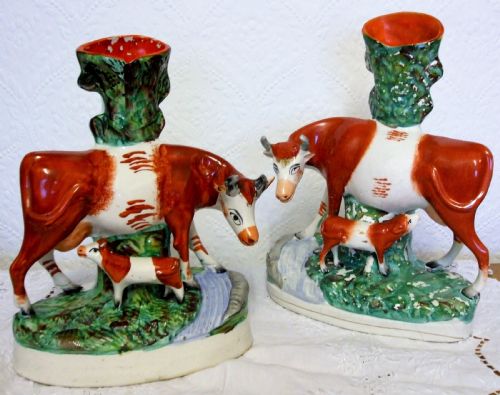
A pair of staffordshire figures comprises matching ceramic ornaments modelled as animals, literary characters, royalty or everyday folk, intended to flank a mantelpiece or sideboard. The pieces seen most often on this page date to the Victorian era, taking the form of seated spaniels, greyhounds, lions and portrait groups.
Makers shaped these pairings to balance symmetry and narrative, creating counterparts that looked toward each other across a room. They range from small tabletop ornaments to large spill vases and inkwells designed for practical daily use alongside decoration.
How They Were Made
Many items received a secondary glaze treatment or copper lustre finish to create metallic sheens, while earlier examples relied on understated underglaze colouring before the widespread adoption of bright enamel palettes.
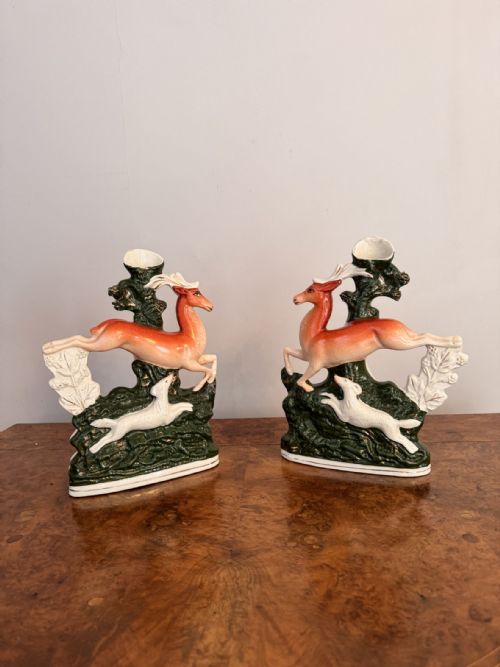
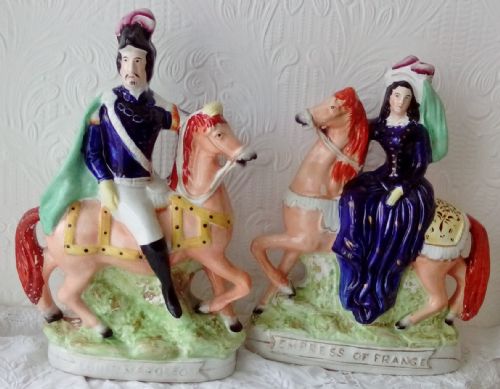
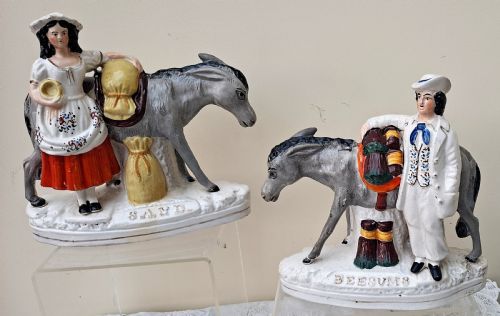
Victorian Staffordshire items on this page include portrait figures of royalty, literary pairs and animal spill vases.
What Varies in Quality
Quality rests in the crispness of the moulding and the confidence of the hand-painting, which separates mass-produced output from spirited studio work. Finer examples retain sharp facial expressions and clean enamel work without bleeding into the surrounding glaze.
The weight of the ceramic body and the depth of the glaze also distinguish standard mantel ornaments from superior models. Pieces with careful detailing to eyes, paws and clothing show the potter spent extra time finishing the work before the kiln firing.
Thomas Parr·Lloyd of Shelton·Sutherland and Sons
The Pair of Staffordshire Figures Glossary
- Flatback
- A figure moulded with a finished front and a plain, unglazed or lightly glazed flat reverse designed to sit flush against a wall.
- Spill vase
- A hollow cylindrical holder incorporated into the figure designed to hold wooden matches or spills for lighting fires.
- Pearlware
- An refined earthenware body developed with a bluish glaze that pooled in recesses to mimic the look of Chinese porcelain.
- Treacle glaze
- A dark, translucent brown glaze that produced a rich, glossy finish over earthenware surfaces.
- Enamel
- Opaque glass-based paints applied over the fired glaze to provide bright surface colours.
Pair of Staffordshire Figures: Frequently Asked Questions
How were these figures displayed?
Victorian households placed these ceramic pairs at either end of a mantelpiece, often flanking a clock or mirror to create visual balance.
Their flat backs allowed them to sit securely on narrow wooden shelves without tipping forward into the room.
Are these figures waterproof?
Most pieces possess a porous earthenware body beneath the glaze, meaning they will absorb moisture if left sitting in water.
Spill vases and inkwells feature glazed interiors to handle their intended contents, but the outer decorative surfaces should remain dry.
How do I spot a reproduction?
Genuine nineteenth-century examples display fine crazing across the glaze and signs of genuine handling wear on the enamel paints.
Modern copies often feel heavier, show uniform machine painting, and lack the soft translucency of period earthenware bodies.
What subjects are most common?
Animals dominate the listings, particularly spaniels, greyhounds, lions and poodles modelled in attentive pairs.
Literary characters, historical figures and theatrical personalities also appear frequently alongside traditional country folk.