




Equestrian Pottery Ornaments
Equestrian pottery ornaments bring the pageantry of mounted figures and historical riders onto the mantelpiece.
Equestrian Pottery Ornaments
Equestrian pottery ornaments represent mounted human figures and animals across various historical periods, capturing everything from royal personages to mythical hunters in clay. Collectors searching this phrase encounter a distinct split between ancient Chinese forms and nineteenth-century English works.
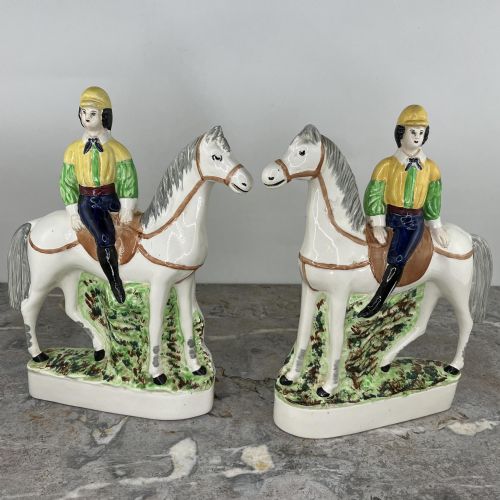
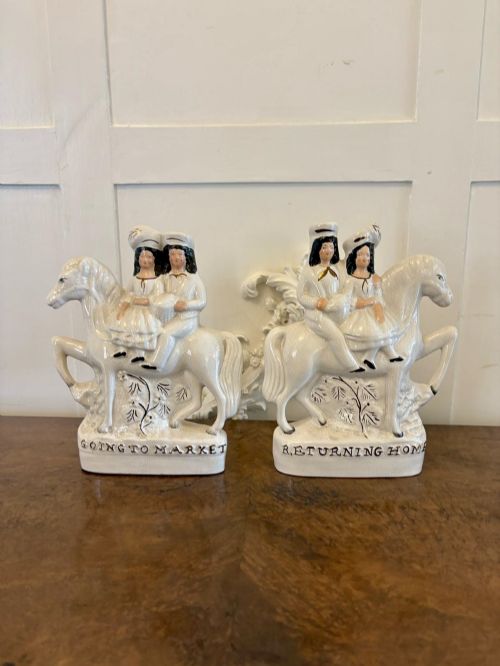
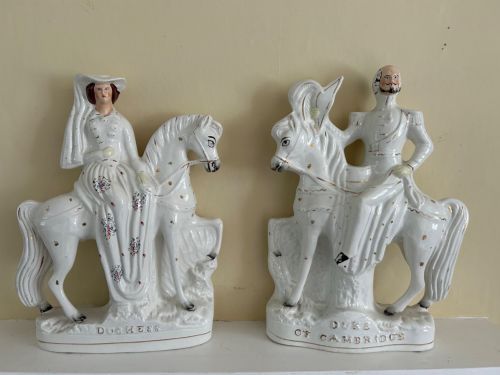
The nineteenth-century examples dominate the selection, heavily weighted towards Victorian Staffordshire flatback figures depicting historical figures, jockeys, and Scottish highlanders on horseback. These domestic mantle ornaments served as popular decorative pieces in British parlours, often modelled as pairs.
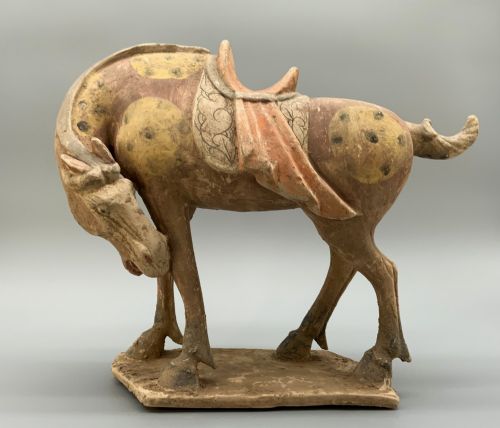
Earlier interpretations also appear, reaching back to pre-sixteenth-century Chinese pieces and later twentieth-century Tang Dynasty style renditions. These ancient and revival items introduce glazed ceramic horses with distinct stylistic lineage compared to the earthenware folk art of the Victorian era.
Materials and construction
Potters relied primarily on earthenware, terracotta, and clay to shape these heavy figures, often employing press moulds for domestic Staffordshire productions. The raw clay was shaped into hollow or flatbacked forms to prevent cracking during the firing process.
Glazes defined the surface finish, ranging from simple lead glazes and enamel highlights to the complex multi-coloured sancai glaze seen on Chinese pieces. These liquid glass coatings were applied to the biscuited ceramic body before a final kiln firing to seal the porous material.
Equestrian Pottery Ornaments Retail Price Guide 2026
Typical asking prices for equestrian pottery ornaments among the pieces listed under this phrase on Sellingantiques today, from the lower quarter to the upper quarter. They describe what is for sale here now, not the wider market.
Listings unite ancient Chinese ceramics with Victorian earthenware, showing how different cultures rendered the horse and rider in clay.
Evaluating the craftsmanship
The fidelity of the modelling and the crispness of the hand-painted enamels dictate the visual success of each piece. Skilled modellers achieved realistic proportions in both the horse and rider, whereas simpler primitive folk art leaned towards charming stylisation rather than anatomical accuracy.
The preservation of the original glaze and the integrity of the ceramic body determine the longevity of the object. Pieces that retain vibrant enamel colours without excessive flaking show superior survival through the centuries.
The Equestrian Pottery Ornaments Glossary
- Flatback
- A figure moulded with a finished front and a plain, unglazed, or flat rear side intended to sit flush against a wall or mantelpiece. This method saved clay and reduced weight.
- Sancai
- A traditional three-colour lead glaze technique used extensively in Chinese pottery, typically combining amber, green, and creamy white tones. These glazes run artistically down the ceramic body during firing.
- Earthenware
- A porous pottery type fired at lower temperatures, requiring a glaze to achieve water resistance. It forms the core material for the vast majority of nineteenth-century decorative figures.
- Staffordshire pottery
- Earthenware figures produced by numerous kilns in the English pottery districts during the Victorian era. They remain famous for depicting contemporary events, royalty, and theatrical personalities.
- Primitive folk art
- Objects created outside formal academic traditions by makers using traditional local techniques. These pieces display naive charm and simplified forms rather than strict proportion.
Equestrian Pottery Ornaments: Frequently Asked Questions
What periods do these figures span?
The selection ranges from ancient ninth-century Chinese Tang Dynasty creations up to nineteenth-century Victorian Staffordshire pieces.
Victorian examples mostly date between eighteen-sixty and eighteen-eighty, capturing figures from British history and domestic life.
How were Staffordshire figures displayed?
Makers designed flatback ornaments to sit securely on mantelpieces, window sills, and high shelves against parlour walls.
Because the backs were left plain or partially finished, viewers only interacted with the detailed, painted front.
What subjects do the riders represent?
The figures depict a wide array of historical personalities, royalty, military leaders, and literary characters on horseback.
Common subjects include figures like Joan of Arc, Garibaldi, highwaymen, Scottish highlanders, and mounted jockeys.
What materials make up the ceramic body?
Makers utilised earthenware, terracotta, and ordinary clay shaped through press moulding or hand-forming techniques.
Surfaces were then finished with lead glazes, enamel paints, or sancai colouring before entering the kiln.