


Antique Ceramic Horses
Antique ceramic horses bring character to a room, spanning rustic Victorian Staffordshire figures and early earthenware tomb models.
Antique Ceramic Horses
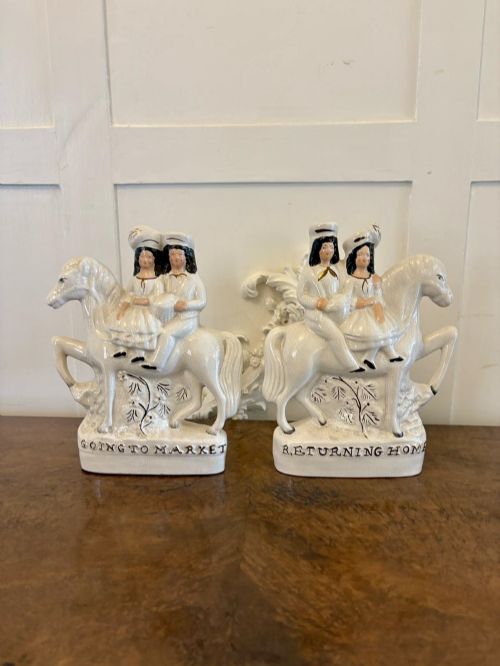
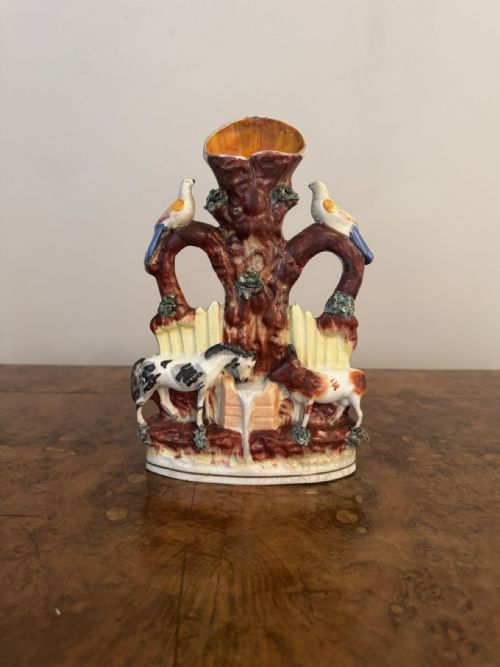
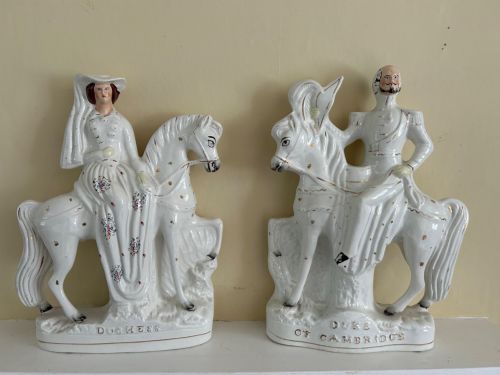
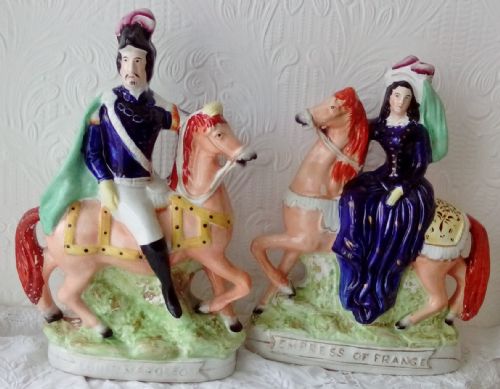
When you search for antique ceramic horses, you encounter a remarkably diverse group of objects ranging from Staffordshire flatbacks to ancient funerary pieces. The most common examples on this page are Victorian Staffordshire figures, often depicting riders, royalty, or equestrian scenes intended for mantelpiece display.
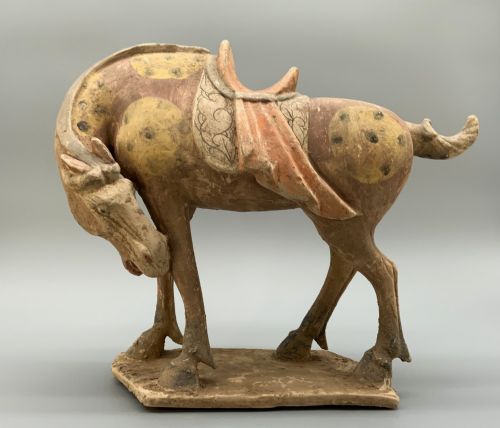
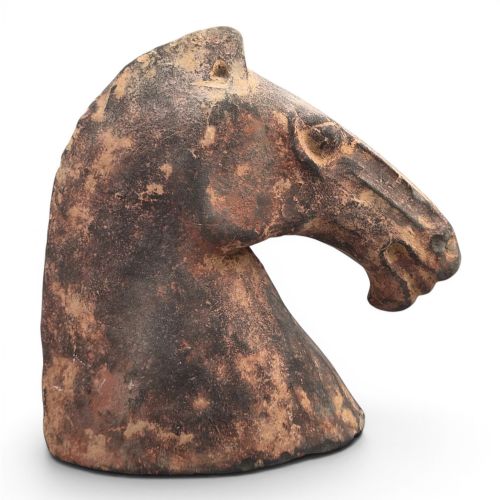
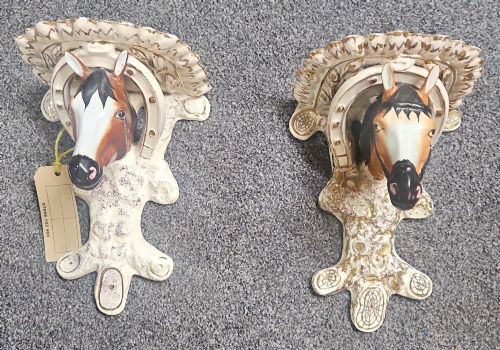
Beyond the domestic British figures, the selection reaches into much earlier eras, including terracotta tomb figures and high-fired art pottery. Buyers find everything from utilitarian wall brackets moulded as horse heads to expressive porcelain recumbent figures and Persian lustre bowls.
The physical scale and context of these pieces vary widely, dictated by their original purpose as household ornaments, wall brackets, or grave goods. Each period brings distinct moulding conventions, glaze choices, and regional interpretations to the enduring subject of the horse.
Materials and production methods
Potters relied primarily on earthenware, terracotta, and porcelain, shaping the clay through moulding or hand-modelling before applying surface decoration. Staffordshire pieces typically utilised earthenware bodies finished with enamel paints and lead glaze, sometimes enhanced with gilt details.
Earlier or foreign examples employed specialised techniques such as Sancai glazing on pottery bodies or lustre painting on Persian ceramics. Kiln firings varied from low temperatures for soft earthenwares to high-fired methods used for twentieth-century art pottery and Asian porcelains.
Object forms range from equestrian portrait figures and wall brackets to Persian bowls and high-fired chargers.
Assessing quality and craftsmanship
The sophistication of the ceramic body and the stability of the glaze also dictate the tier of a piece. Earlier tomb sculptures and detailed Victorian portrait figures display superior sculptural depth compared to mass-produced domestic wares.
Mikawachi Kilns·Royal Dux
The Antique Ceramic Horses Glossary
- Staffordshire figure
- A type of ceramic figurine produced in the pottery districts of Staffordshire, England, typically moulded from earthenware and hand-painted. These domestic ornaments frequently portrayed notable historical figures, animals, or topical events.
- Flatback
- A Staffordshire figure designed with a flat, unpainted rear intended to sit flush against a wall or mantelpiece. This economical construction method characterises many nineteenth-century domestic ornaments.
- Mingqi
- Chinese burial goods placed in tombs to accompany the deceased into the afterlife, including terracotta horse heads and figures. These objects reflect ancient funerary traditions.
- Sancai
- A traditional type of Chinese three-colour glaze used prominently on pottery during the Tang dynasty and later emulated. The glazes typically combine amber, green, and cream or white tones.
- Lustre
- A type of pottery glaze that imparts a metallic sheen through the application of metallic oxides fired in a reducing atmosphere. Persian examples often feature this technique on bowls and vessels.
- Spill vase
- A hollow ceramic figure incorporating a small vertical cylinder designed to hold wooden spills for lighting fires or candles. They combine decorative appeal with household utility.
Antique Ceramic Horses: Frequently Asked Questions
What periods do these ceramic horses cover?
The selection spans a vast chronological range, from ancient Han and Tang dynasty tomb figures to nineteenth-century Staffordshire pieces and early twentieth-century art pottery.
Victorian examples dominate the domestic side of the offerings, whilst Asian and Middle Eastern pieces represent much older ceramic traditions.
How were Staffordshire figures displayed?
Makers designed flatback figures to sit safely on mantelpieces, shelves, or chests of drawers where viewers would only see the front and sides. Wall brackets moulded as horse heads were mounted directly onto walls to support small objects.
Domestic figures served as decorative parlour ornaments that demonstrated topical interests or patriotic sentiments to visitors.
What is the difference between earthenware and porcelain horses?
Earthenware is a porous, lower-fired ceramic body that requires glazes to achieve impermeability, as seen in traditional Staffordshire figures and terracotta tomb models. Porcelain uses refined white clay fired at much higher temperatures, resulting in a denser, non-porous material.
Porcelain figures often exhibit finer detail and smoother surfaces than standard earthenware bodies.