
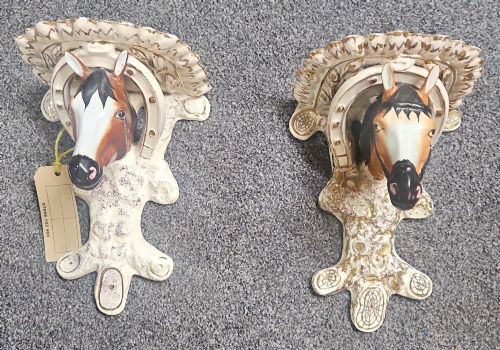




Victorian Ceramic Horses
These victorian ceramic horses bring the bold figures and rural potbanks of the nineteenth century straight onto the mantelpiece.
Victorian Ceramic Horses
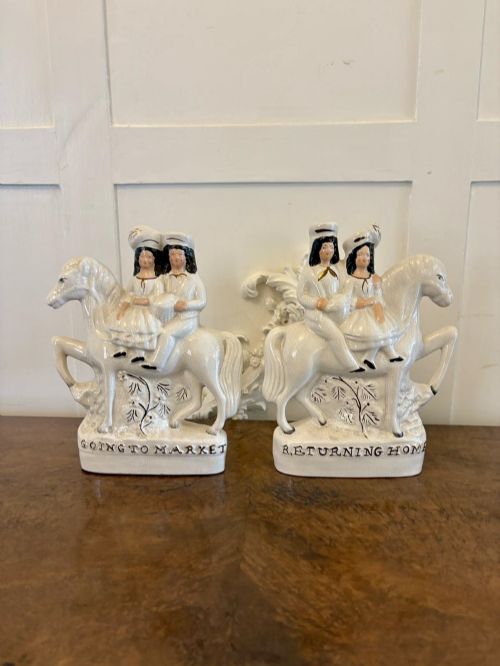
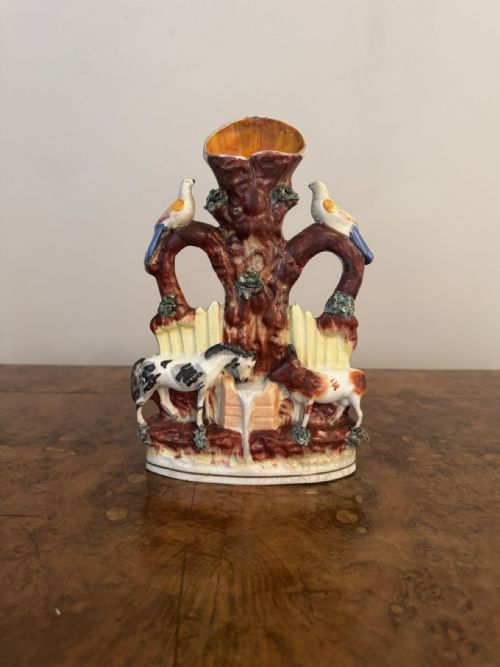
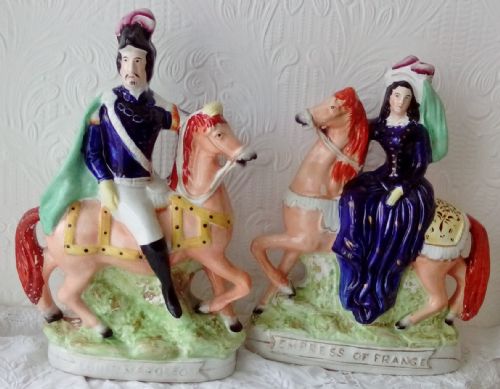
When you search for victorian ceramic horses, you meet sturdy earthenware figures shaped in Staffordshire potteries during the nineteenth century. These pieces include flatback models, spill vases, and equestrian subjects depicting historical figures, royalty, and hunters.
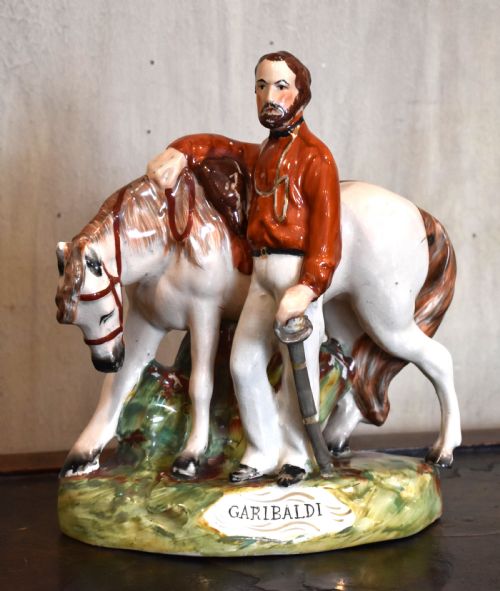
Most examples hail from the Victorian period, spanning decades from eighteen hundred to the late nineteenth century. Makers fashioned pairs of mounted jockeys, Scottish highlanders, and royal children alongside singular portrait figures on horseback.
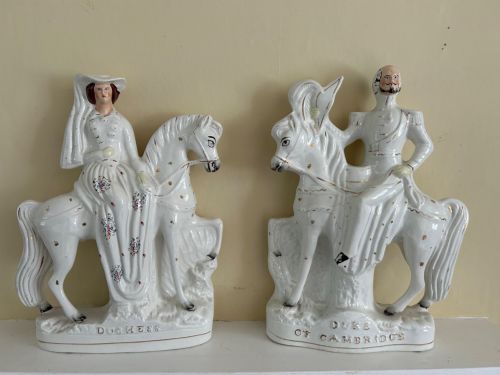
The style ranges from decorative ceramics to primitive folk art. Collectors encounter everything from flatback pottery figures of the Duke and Duchess of Cambridge to highwayman Tom King on horseback.
How they were made
Potters built these earthenware figures using moulds before applying lead glaze and enamel paint for colour and surface sheen. Gilt highlights frequently accent the details of the horses and riders.
Many items take the form of flatback pottery figures, designed to sit neatly against a wall rather than stand completely in the round. Artisans finished each piece with hand-painted enamels over a glazed ceramic body.
Listings feature earthenware glazed ceramic figures spanning the Victorian period, incorporating lead glaze, enamel paint, and gilt.
What varies in quality
The finish of the lead glaze and the presence of well-modelled pairs also separate standard production from finer output. Finer pieces maintain strong colour vibrancy across the ceramic surface.
The Victorian Ceramic Horses Glossary
- Flatback
- A pottery figure with a finished front and sides but a flat, unpainted rear designed to face a wall. This construction saved clay and time during manufacture.
- Earthenware
- A porous pottery body fired at lower temperatures than stoneware or porcelain. It requires a glaze to become impermeable to liquids.
- Lead glaze
- A glossy coating containing lead oxide applied to earthenware before firing. It creates a smooth, shiny surface that enhances painted decoration.
- Spill vase
- A hollow pottery figure incorporating a small cylindrical holder for wooden spills used to light candles or pipes. These dual-purpose items sat commonly on hearths.
- Enamel paint
- A vitreous or oil-based coloured pigment applied over fired glaze and fixed with a lower second firing. It provides the bright hues seen on nineteenth-century figures.
Victorian Ceramic Horses: Frequently Asked Questions
Are these figures glazed?
Yes, potters used lead glaze over earthenware bodies to give the figures their characteristic shine.
The glossy surface also protected the underlying enamel paint and gilt details from wear.
Where were they made?
These ceramic pieces originated primarily in Staffordshire pottery workshops during the nineteenth century.
Some examples also stem from Scottish potteries such as Portobello during the early decades of the eighteen hundreds.
Why are some flat at the back?
Makers designed flatback figures to sit on narrow mantelpieces or shelves against cottage walls.
This technique saved materials while putting all the visual detail on the front and sides where people could see it.
What subjects do they show?
The pieces depict royalty, historical figures, military leaders, and literary characters on horseback.
Common subjects include jockeys, highwaymen, Scottish highlanders, and political figures like Garibaldi.