




Earthenware Equestrian Ornaments
These earthenware equestrian ornaments capture horse and rider in ceramic, offering collectors a striking piece of Victorian folk history or ancient tradition.
Earthenware Equestrian Ornaments
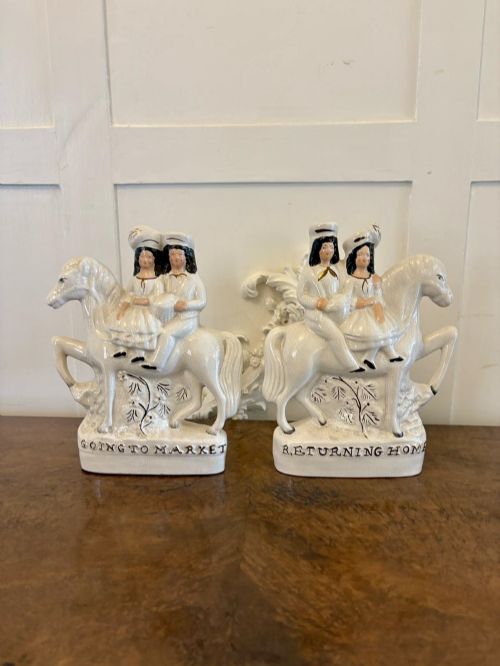
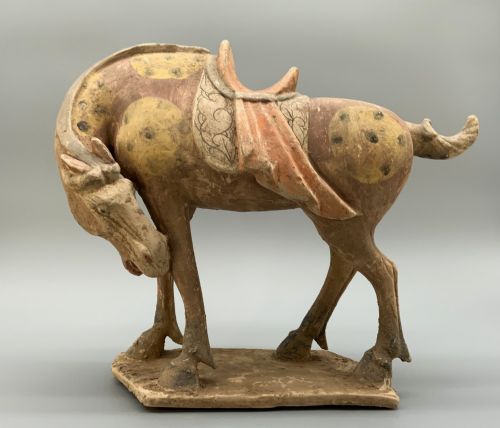
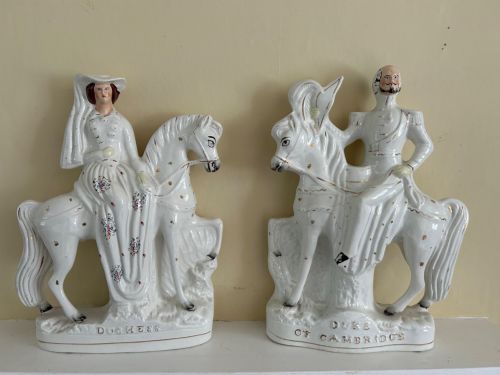
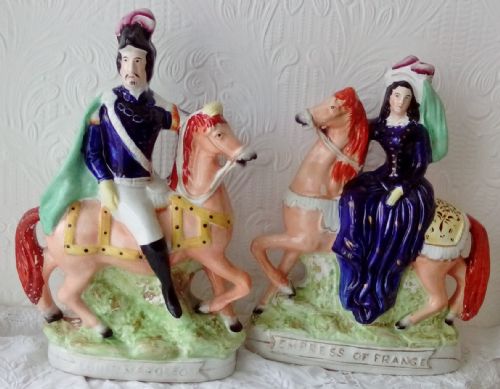
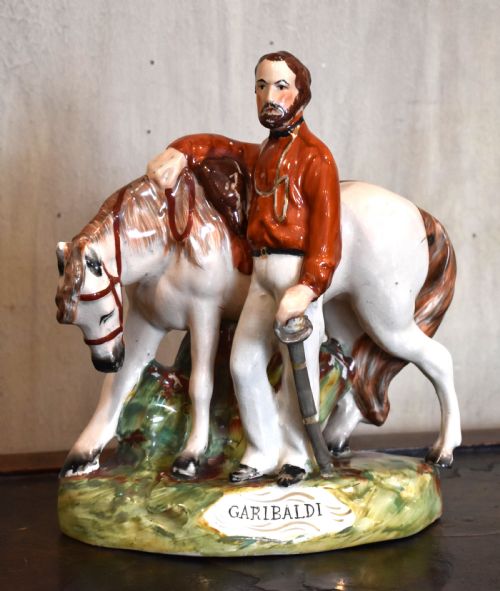
Earthenware equestrian ornaments encompass moulded ceramic figures of riders and mounts, ranging from ancient Chinese funerary pieces to British domestic chimney figures. You are most likely to meet nineteenth-century Victorian Staffordshire pottery depicting generals, royals, and historical riders on horseback.
The selection bridges two distinct aesthetic worlds through earthenware and terracotta. Alongside early Asian funerary works, nineteenth-century British flatbacks dominate the offerings, portraying mounted jockeys, Scottish Highlanders, and famous historical figures.
These ceramic sculptures function primarily as decorative mantel ornaments rather than utilitarian vessels. Makers captured contemporary fascination with famous personalities, explorers, and military leaders, translating public figures into colourful glazed ceramic groups.
How they were made
Makers utilised slip casting and pressing techniques into multiple mould pieces to form the hollow bodies of these figures. Clay and terracotta formed the foundational body before the application of coloured glazes and mineral pigments.
Earthenware Equestrian Ornaments Retail Price Guide 2026
Typical asking prices for earthenware equestrian ornaments among the pieces listed under this phrase on Sellingantiques today, from the lower quarter to the upper quarter. They describe what is for sale here now, not the wider market.
Glazing materials on these pieces range from simple enamel and mineral pigment to vibrant Sancai finishes.
What varies in quality
The Earthenware Equestrian Ornaments Glossary
- Flatback
- A figure moulded primarily for display against a wall, leaving the reverse largely unadorned and unglazed. This technique saved materials and kept the weight down for mantelpiece placement.
- Staffordshire pottery
- Earthenware produced in the pottery districts of England during the nineteenth century. These works are well known for colourful depictions of historical figures and animals.
- Sancai
- A three-colour glaze tradition associated with ancient Chinese ceramics. The palette typically combines amber, green, and creamy white tones running naturally across the clay body.
- Terracotta
- Fired unglazed clay possessing a reddish-brown hue. The porous material served as the sculptural base for numerous early figures before the widespread adoption of glossy tin or lead glazes.
Earthenware Equestrian Ornaments: Frequently Asked Questions
Are these figures solid clay?
Most nineteenth-century Staffordshire examples are hollow, formed from slip cast or pressed moulds to reduce weight and prevent cracking during firing.
Earlier ceramic traditions sometimes utilised denser clay bodies, but hollow construction remained standard for larger decorative mantel ornaments.
How do I identify a flatback?
Turn the piece around to check the reverse side. Flatbacks feature a plain or minimally finished back because makers intended them to stand directly against a cottage or parlour wall.
Fully modelled figures show detailed carving and glazing all the way around, designed for central table placement.
What subjects appear most often?
Nineteenth-century British pieces frequently depict royalty, military heroes, literary characters, and equestrian sports like horse racing. You will regularly encounter figures of generals, jockeys, and highwaymen.
Ancient examples lean toward traditional horses and funerary attendants associated with early dynasty burial practices.
How should I clean my earthenware ornament?
Dust the surface gently with a soft, dry brush to remove settled particles. Avoid harsh chemical cleaners or soaking the ceramic in water.
Old glazes and enamel details can be fragile, so minimal intervention preserves the original finish and pigment layers.