




Equestrian Flatback Ornaments
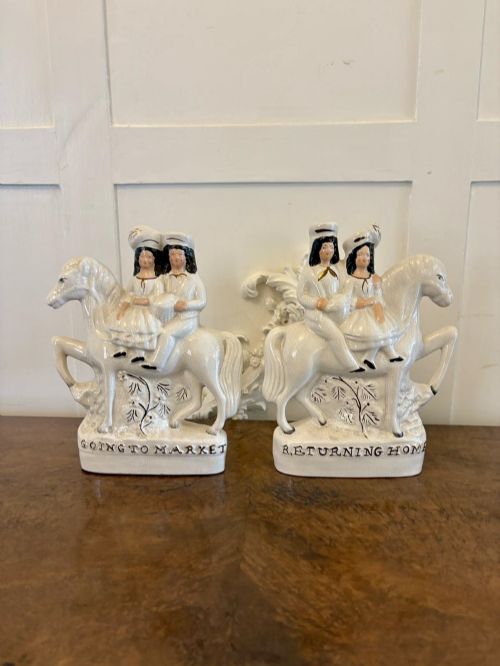
These equestrian flatback ornaments are nineteenth-century Victorian Staffordshire figures depicting mounted historical personalities, royals, and riders designed to sit against a wall.
Equestrian Flatback Ornaments
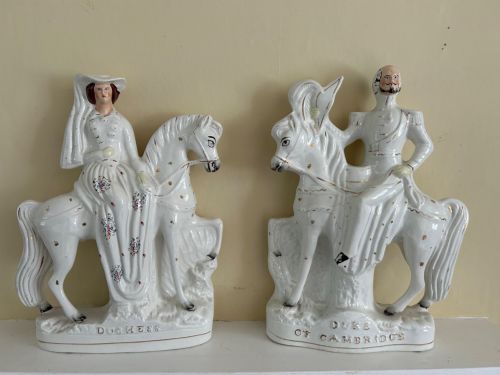
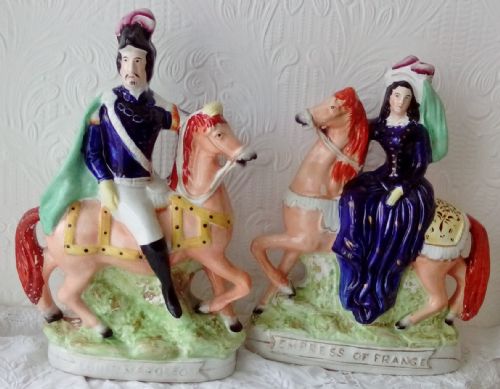
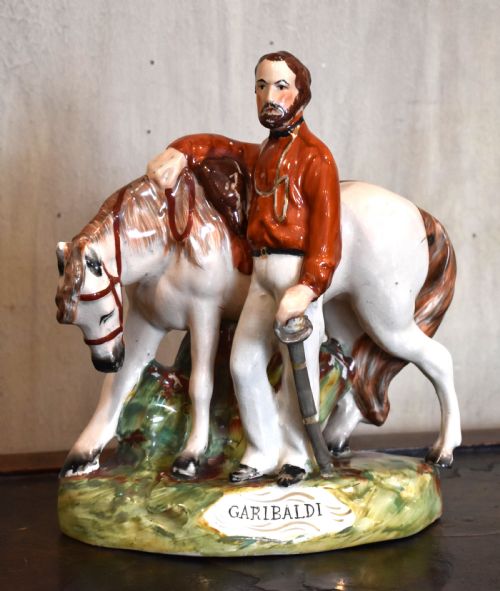
Equestrian flatback ornaments are ceramic figures produced by Staffordshire potteries during the nineteenth century, specifically modelled with flat unglazed backs for display on mantelpieces or shelves. The examples seen here include pairs and single pieces representing figures such as the Duke and Duchess of Cambridge, Louis Napoleon and the Empress of France, Joan of Arc, Garibaldi, and highwayman Tom King on horseback.
Buyers seeking these Victorian Staffordshire pottery figures encounter various subjects spanning royalty, military leaders, hunters, jockeys, and Scottish Highlanders. Most listings comprise earthenware figures decorated with glaze and enamel, often modelled as pairs or distinct sculptural groups representing popular subjects of the era.
The form developed as a popular genre of decorative ceramics during the Victorian period, capturing contemporary public fascination with historical heroes, royalty, and sensational figures. These pottery figurines and ornaments remain distinctive collectables defined by their characteristic flat-backed construction and equestrian subjects.
How they were made
Potters constructed these figures using earthenware, shaping the clay through moulding techniques that allowed for repeatable production of complex equestrian forms. The resulting pottery pieces received lead glaze finishes alongside hand-painted enamel colours and occasional gilt highlights to define the details of rider and horse.
The defining flatback construction meant makers left the reverse sides unglazed and largely unmodelled, as the ornaments were intended exclusively for frontal display on high shelves or mantels. Kiln firing fixed the earthenware bodies before artists applied surface decoration including painted glazes and enamels.
Highwayman Tom King shares shelf space here with Joan of Arc and the Duchess of Cambridge.
What varies in quality
The crispness of the pottery definition distinguishes finer models from softer, worn examples where repeated use of moulds dulled the surface details. Additionally, the survival of bright, unblemished enamel and gilt highlights separates well-preserved specimens from those with heavy surface wear.
The Equestrian Flatback Ornaments Glossary
- Flatback
- A ceramic figure modelled with a finished front and a flat, unglazed reverse side designed to stand flush against a wall. This construction saved clay and production time during the Victorian manufacturing process.
- Earthenware
- A porous pottery body fired at lower temperatures than stoneware or porcelain, requiring a glaze to achieve impermeability. Most nineteenth-century Staffordshire figures utilise this accessible material.
- Enamel
- Opaque vitreous colours painted onto glazed ceramic surfaces and refired at a lower temperature to fuse with the glaze. These pigments provide the bright coats, faces, and decorative details seen on Victorian figures.
- Lead glaze
- A glossy liquid coating containing lead oxide applied to pottery before firing to create a smooth, waterproof surface. It gives these nineteenth-century pieces their characteristic shiny finish.
- Staffordshire pottery
- Earthenware and ceramic wares produced in the various pottery towns of Staffordshire, England. The region dominated British figure production throughout the Victorian era.
Equestrian Flatback Ornaments: Frequently Asked Questions
What are equestrian flatback ornaments?
These pieces are nineteenth-century Victorian Staffordshire earthenware figures depicting riders on horseback, ranging from royalty and historical commanders to literary and theatrical characters.
Makers designed them with flat backs so they could sit neatly against mantelpiece walls during the Victorian era.
How were these figures displayed?
Victorian households typically placed these flatback ornaments on mantelpieces, high shelves, or console tables where their unglazed backs would face the wall.
Pairs were often arranged symmetrically to flank clocks or other decorative objects in nineteenth-century parlours.
How do I date these figures?
Dating relies on historical subjects, costume details, and ceramic characteristics associated with nineteenth-century Victorian production between 1860 and 1880.
Subjects like specific political figures, military campaigns, or royal pairings help narrow the manufacturing period.
What subjects do they show?
The subjects include British and European royalty, military heroes such as Joan of Arc, political figures like Garibaldi, and literary or criminal legends.
Equestrian groups also feature jockeys, Scottish Highlanders, leopard hunters, and musicians on horseback.