


English Pottery Mantel Figures
English pottery mantel figures bring nineteenth-century hearths alive through earthy ceramic portraiture and animal groups.
English Pottery Mantel Figures
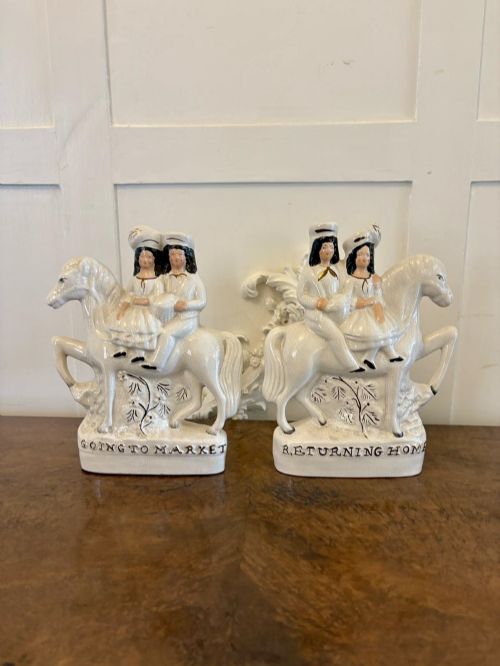
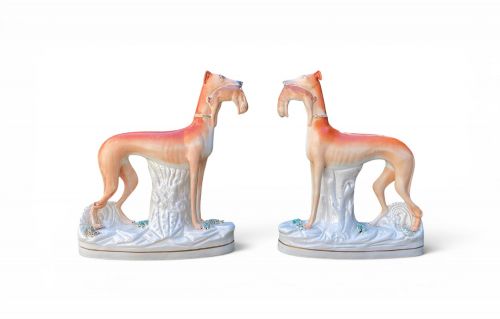
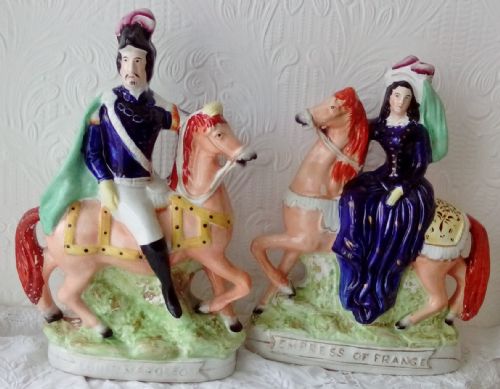
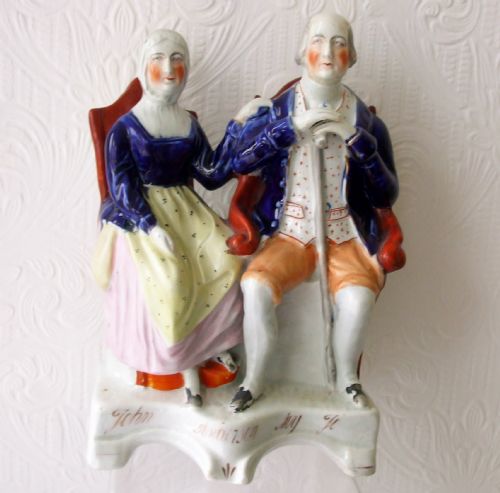
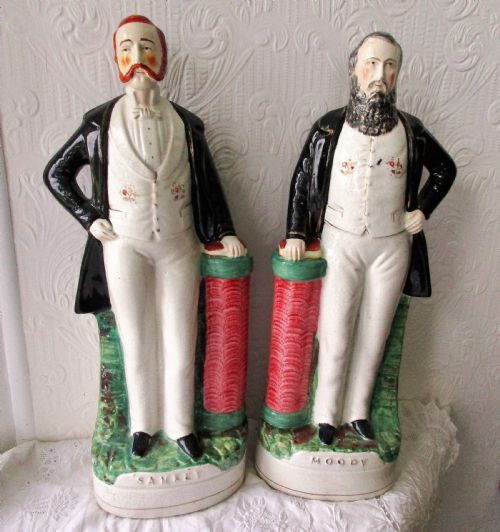
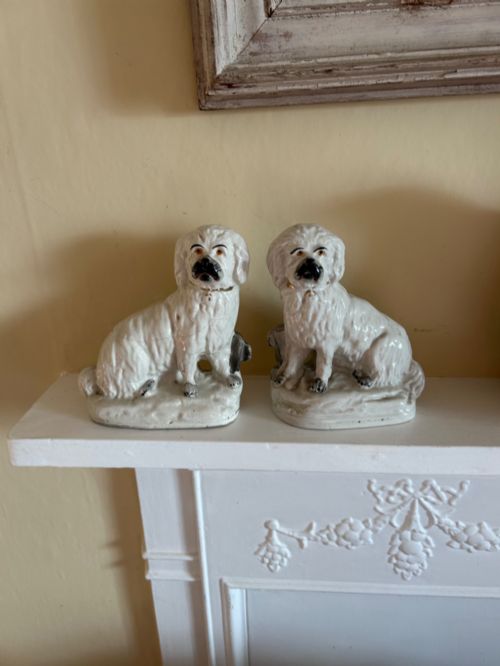
English pottery mantel figures are decorative earthenware ornaments created to stand upon fireplace shelves during the nineteenth century. Buyers searching this phrase meet nineteenth-century Victorian pieces including Staffordshire flat backs, portrait subjects, and pairs of dogs, lions, or greyhounds.
The selections span mid to late Victorian decades, featuring rustic country pottery and folk art alongside formal portraiture. Common forms take the shape of seated spaniels, historical figures, literary characters, and domestic animals made to decorate domestic interiors.
Materials and Technique
The earthenware body is typically fired at moderate temperatures to receive the smooth glaze coat. Artisans then hand-painted details onto the ceramic surface, adding distinct colours to costumes and animal markings.
Comforter spaniels wore painted golden lockets and red chains, standing guard on nineteenth-century mantelpieces without ever begging for biscuits.
Quality Variations
Quality rests in the crispness of the moulding and the precision of the hand-painted enamel work. Superior examples display clear facial expressions and carefully applied gold leaf rather than rushed, heavy brushstrokes.
The English Pottery Mantel Figures Glossary
- Flat back
- A style of ceramic figure moulded with a flat unpainted rear side intended to stand flush against a wall or mantelpiece.
- Earthenware
- A porous type of pottery fired at lower temperatures, requiring a glaze layer to hold liquids or provide a smooth decorative surface.
- Lead glaze
- A glossy vitreous coating containing lead compounds, commonly used on nineteenth-century ceramics to create a shiny protective finish.
- Spill vase
- A hollow cylindrical ceramic holder attached to a figure, designed to store wooden spills used for lighting fires or pipes.
- Enamel paint
- Coloured vitreous or oil-based pigments applied over a glazed ceramic surface and fired again to fuse the decoration.
English Pottery Mantel Figures: Frequently Asked Questions
Where did these figures sit?
These ornaments stood upon the mantelpiece above domestic fireplaces in nineteenth-century homes.
They were arranged in matched pairs to frame clocks, mirrors, or mirrors on the shelf.
What subjects do they show?
The subjects include Victorian portrait figures, literary characters, historical leaders, and domestic animals such as spaniels and greyhounds.
Pairs of seated dogs and lions represent the most frequent animal subjects encountered in these listings.
How do I spot a pair?
Matched pairs face one another as mirror images, designed to balance each other on opposite ends of a mantel.
Check the base moulding and enamel palette to confirm they were produced together by the same pottery.
What is a flat back?
A flat back figure has an unglazed or undecorated reverse side that is completely flat.
This construction allowed the pottery to sit flush against a wall rather than occupying space in the room centre.