
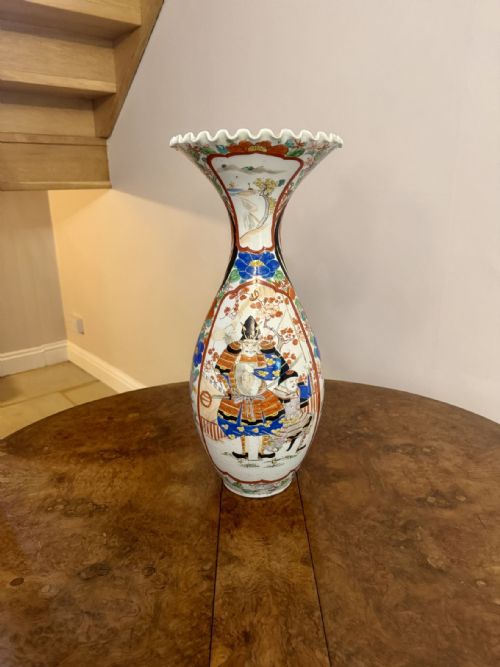
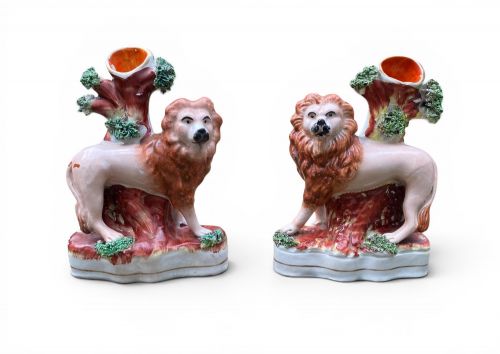


Orange Ceramic Figures
These orange ceramic figures are sculptural works of earthenware and porcelain depicting animals and characters, sought after for their vivid palette and distinct period character.
Orange Ceramic Figures
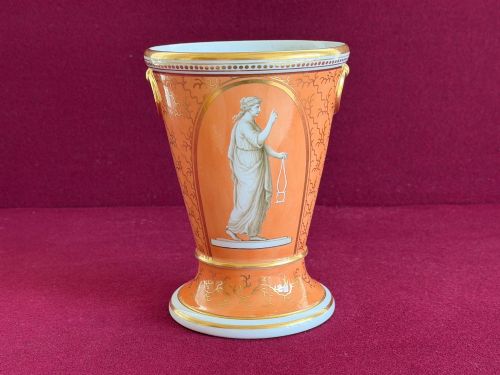
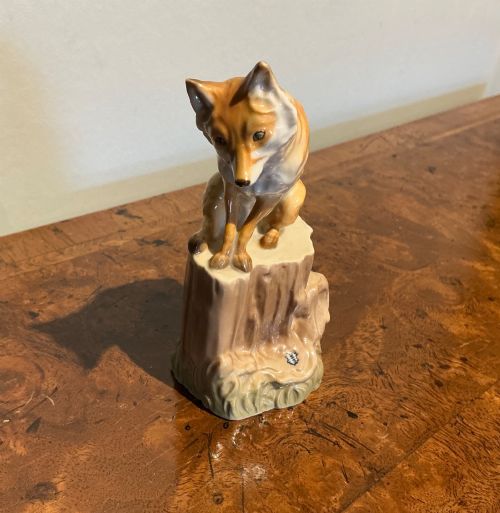
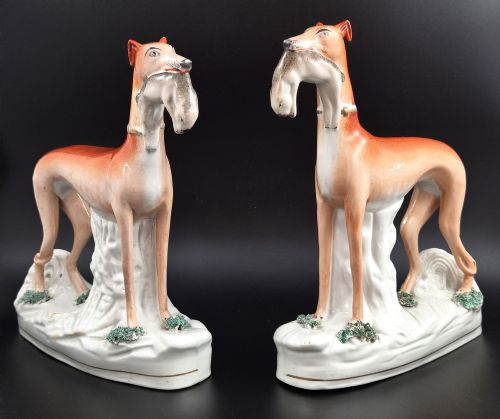
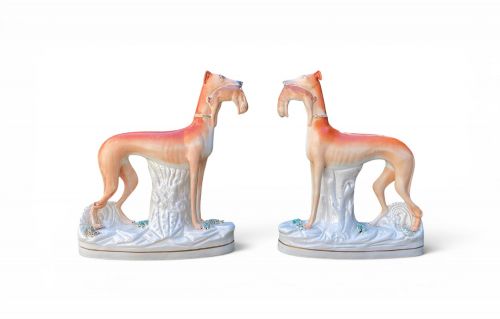
When searching for orange ceramic figures, collectors encounter an array of sculptural forms ranging from Victorian Staffordshire dogs and greyhounds to Japanese Imari vases and continental porcelain birds.
The pieces span multiple eras, including Georgian items from Worcester, 19th-century Staffordshire pottery figures, and Meissen porcelain productions from the late 19th century.
Forms include spill vases, bookends, jardinieres, and freestanding animal sculptures, reflecting the diverse domestic uses favoured in British and international households.
How they were made
Potters utilised earthenware and porcelain bodies, shaping them by hand or moulding them before applying lead glaze, enamel, and enamel paint.
Details were often heightened with gold leaf, particularly on decorative porcelain and pottery pieces originating from English and European factories.
Kiln firing set the ceramic body and fixed the surface glaze, after which hand-painted highlights brought definition to subjects such as figures and animals.
Greyhounds were a popular subject for Staffordshire potters, often guarding unfortunate hares beneath their paws.
What varies in quality
The standard of modelling defines the finer examples, where facial expressions and anatomical details of figures and animals display precision and vigour.
Surface decoration sets tiers of workmanship apart, distinguishing carefully applied hand-painted enamel and crisp gilding from simpler commercial output.
The preservation of the original glaze and the integrity of the ceramic body dictate the overall standing of each piece within its period.
Flight and Barr Worcester·Thomas Parr·Gao Hengsheng
The Orange Ceramic Figures Glossary
- Staffordshire pottery
- Earthenware manufactured in the pottery district of Staffordshire, widely known for utilitarian and decorative figures.
- Spill vase
- A hollow cylindrical container attached to a ceramic figure, designed to hold wooden spills for lighting fires.
- Lead glaze
- A shiny coating containing lead oxide applied to ceramics to waterproof the body and impart a glossy finish.
- Imari
- A style of Japanese export porcelain characterised by a distinctive palette including iron red and applied gilding.
Orange Ceramic Figures: Frequently Asked Questions
What are ceramic spill vases used for?
Spill vases served a practical domestic purpose in homes before the invention of safety matches. They held thin wooden splints, known as spills, which were lit from the fireplace to transfer a flame to candles or lamps.
Over time, these functional objects evolved into highly decorative mantelpiece ornaments, often modelled as animals or figures holding the cylindrical container.
How do you identify Victorian Staffordshire pottery?
Victorian Staffordshire pottery figures are typically fashioned from earthenware and finished with hand-painted enamel colours. They frequently depict domestic animals, literary characters, or historical personalities.
Many pieces show crackle in the glaze and feature simple hollow bases with vent holes, characteristic of mid-19th-century slip-casting and moulding techniques.
What is Japanese Imari porcelain?
Japanese Imari porcelain refers to wares produced in Arita and exported through the port of Imari. They are recognised by their robust porcelain bodies and distinct decorative schemes.
The palette relies on underglaze blue combined with iron red, enamel paint, and gold leaf, creating dense floral and geometric patterns.
How should ceramic figures be displayed?
Ceramic figures require stable shelving away from direct sunlight to protect enamel paintwork and gold leaf from fading. Placement should avoid areas prone to heavy vibrations or accidental knocks.
Gentle dusting with a soft brush keeps the lead glaze and delicate painted surfaces clean without risking abrasion to the antique body.