


Antique Ceramic Flatback
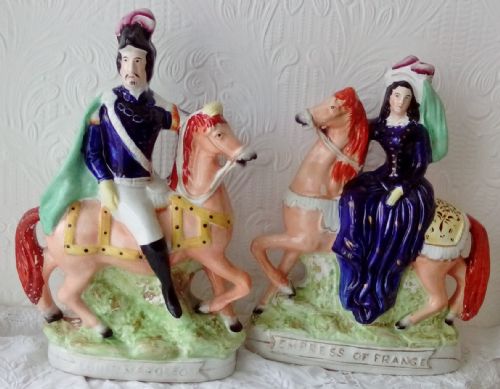
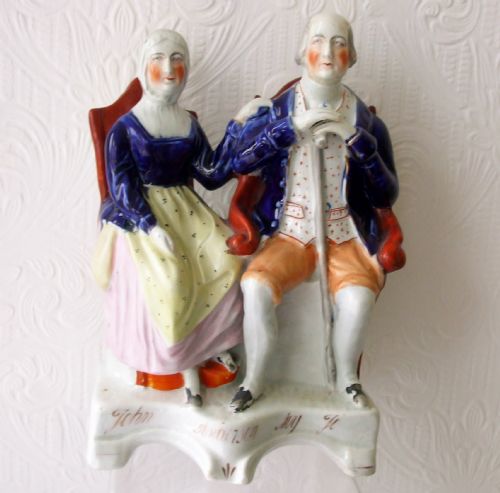
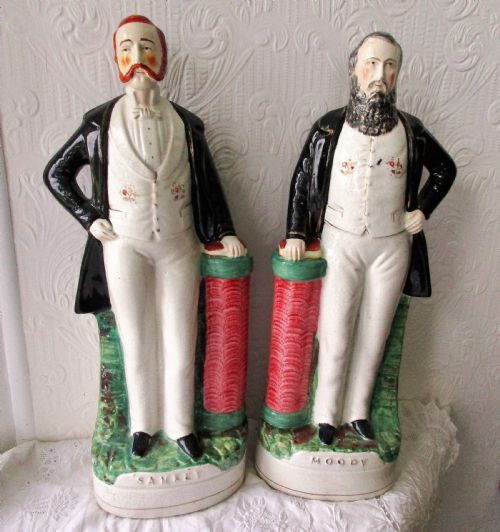
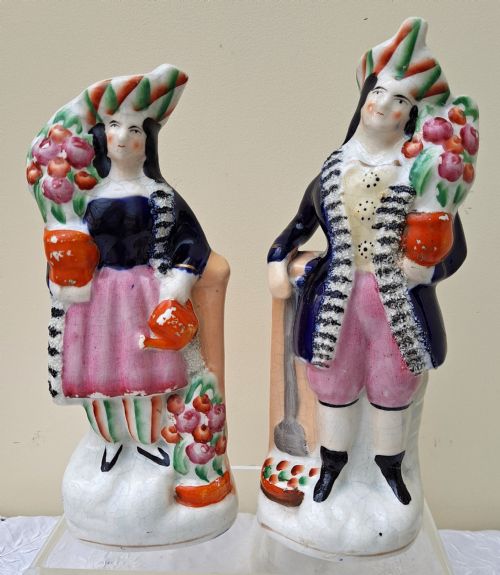
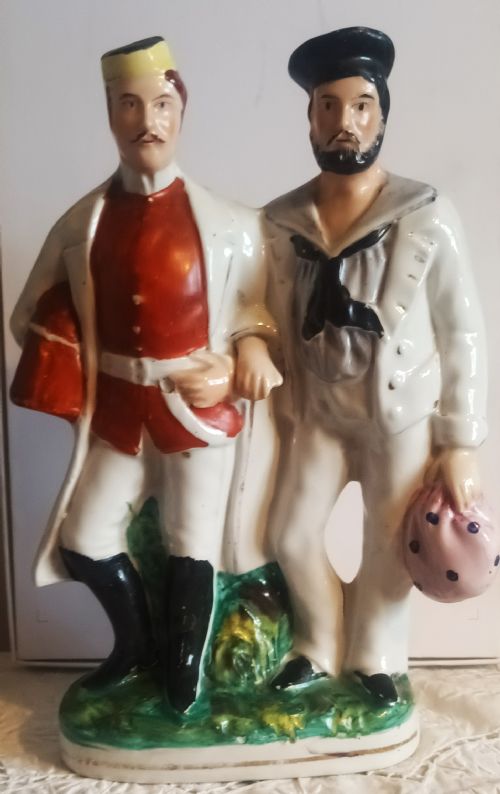
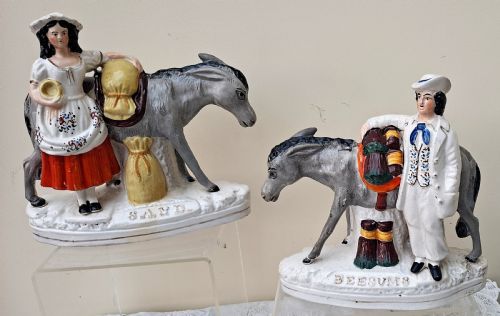
Antique ceramic flatback figures bring Victorian parlour theatre straight to your mantelpiece, capturing royals and notables in charmingly naive earthenware.

What antique ceramic flatback pieces are
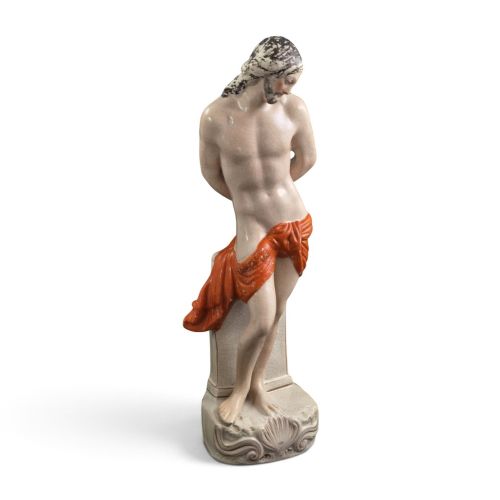
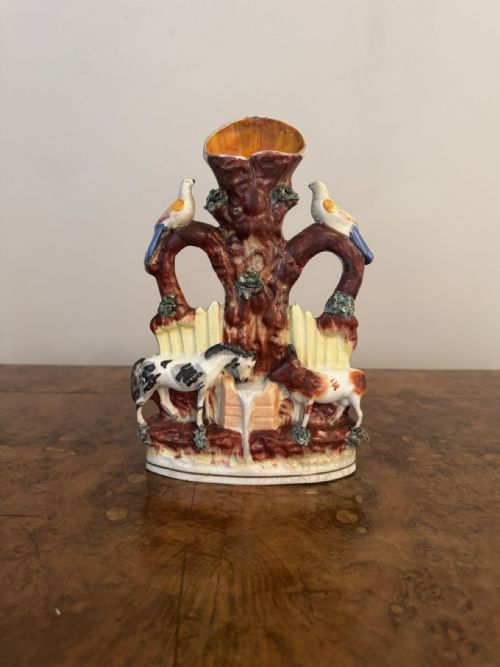
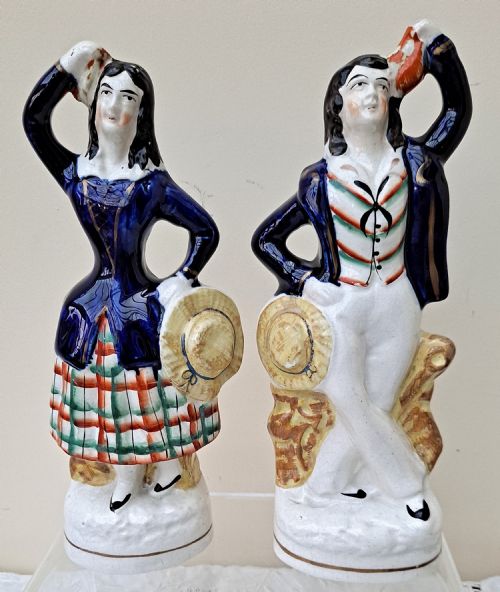
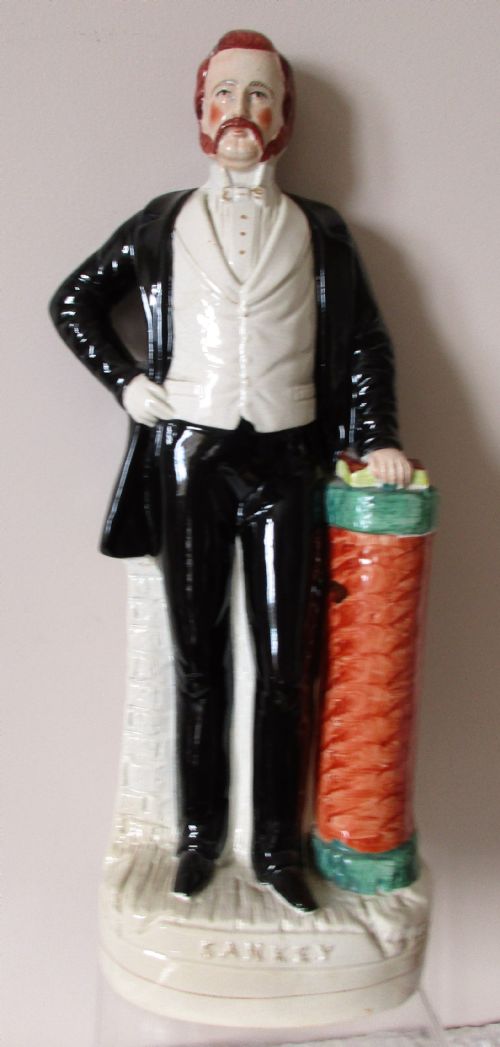
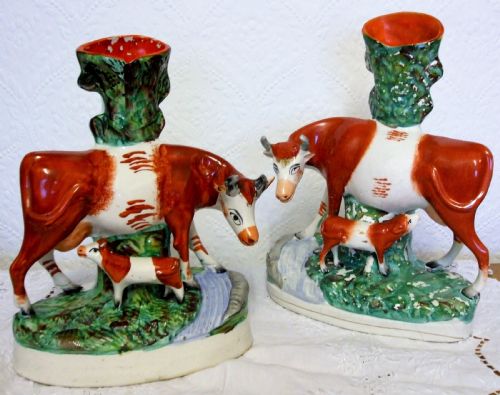
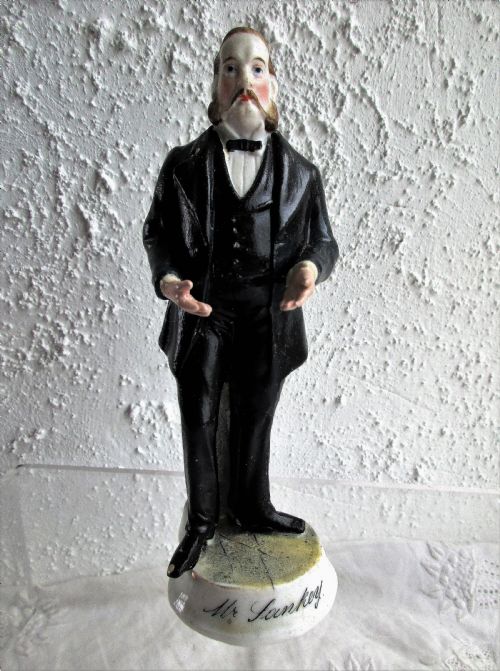
When you search for antique ceramic flatback items, you encounter Staffordshire pottery figures modelled primarily for display on shelves and mantelpieces during the nineteenth century. These sculptural pieces present a flat, unadorned reverse because they stood against cottage walls, saving on expensive glaze and materials.
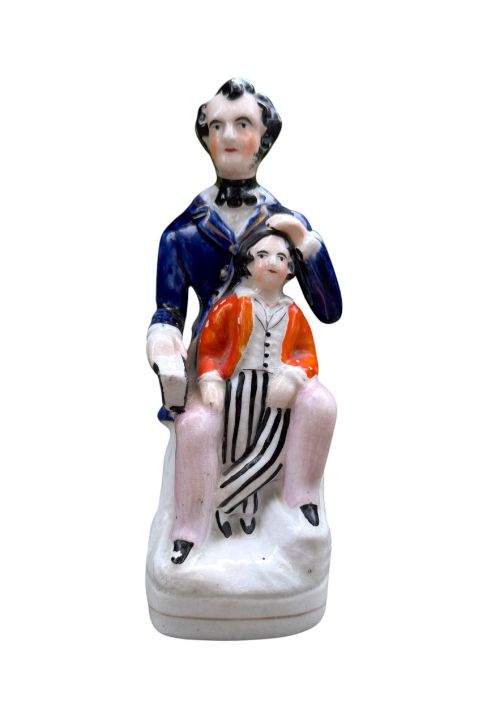
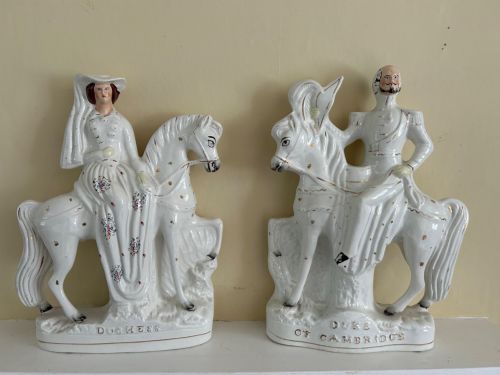
The versions you meet on this page hail predominantly from the Victorian period, including specific examples dated around eighteen-eighty. They depict royal portrait subjects such as the Duke and Duchess of Cambridge and Princess Alice with Louis of Hesse.
Makers produced these decorative figurines to satisfy a popular domestic demand for likenesses of public figures and historical personages. They function purely as ornamental pottery rather than utilitarian vessels.
How they were made
The finishing process involved firing the painted and glazed earthenware in kilns to fix the colours and create a glossy surface. Artisans then added gilt details by hand to enhance the costume and regalia of the portrait subjects.
Retail Price Guide 2026
Typical UK retail prices for ceramic flatback, calculated from the Sellingantiques database of over a million retail prices indexed since 2003. This retail price guide relies exclusively on Sellingantiques data; no external sources or auction records are used, so the figures do not describe the wider market.
Listings span the nineteenth century and the Victorian period, using earthenware, lead glaze, enamel, and gilt.
What varies in quality
Lesser pieces show softer modelling and more hurried application of enamel, where the brushwork lacks definition. The depth of the lead glaze and the richness of the underlying earthenware also distinguish the standard of production.
The Antique Ceramic Flatback Glossary
- Flatback
- A pottery figure with a finished front and a flat, unpainted reverse designed to sit flush against a wall.
- Earthenware
- A porous type of pottery fired at lower temperatures, commonly used for nineteenth-century decorative figurines before being glazed.
- Lead glaze
- A shiny coating applied to pottery before firing that gives the surface a glossy finish and protects the underlying enamel.
- Enamel
- Opaque glass-like paint applied over the glaze to add colour to the figures.
Frequently Asked Questions
What is a ceramic flatback?
A ceramic flatback is a nineteenth-century pottery figure moulded with a detailed front and a flat unadorned back.
Potters designed them this way to save materials since the figures stood against cottage walls and mantelpieces.
How old are Victorian flatbacks?
Victorian flatbacks date from the nineteenth century, with many examples originating around eighteen-eighty.
They reflect the popular taste of the era for portrait figures of royals and public personalities.
What are they made of?
These figures consist of earthenware pottery finished with a lead glaze.
Artisans added enamel colours and gilt details by hand to decorate the surfaces.
Who do these figures depict?
The pieces frequently portray members of the royal family, including figures like the Duke and Duchess of Cambridge.
Makers also captured other notable figures such as Princess Alice and Louis of Hesse.