


English Pottery Figurine
An English pottery figurine brings the character, portraiture and domestic animal life of the nineteenth century straight onto the mantelpiece.
English Pottery Figurine
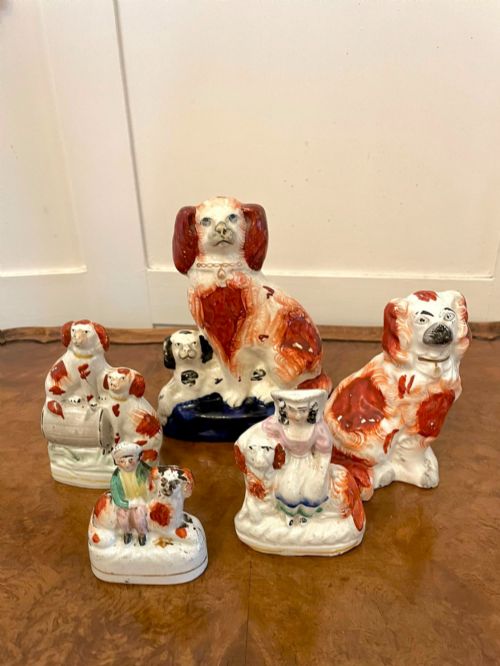
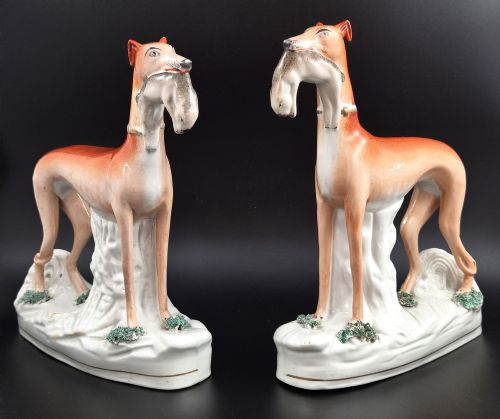
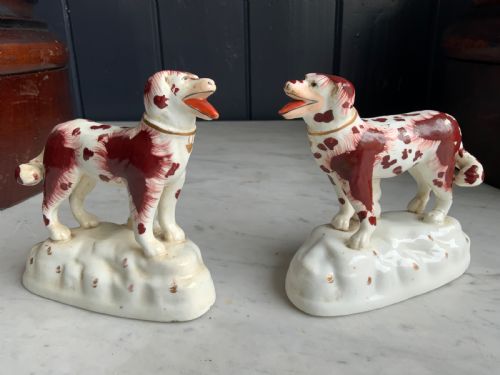
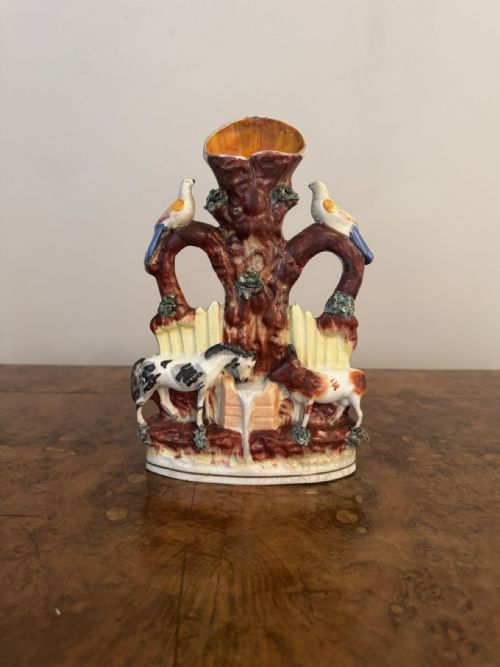
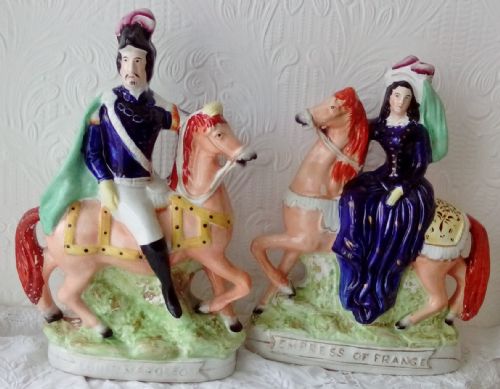
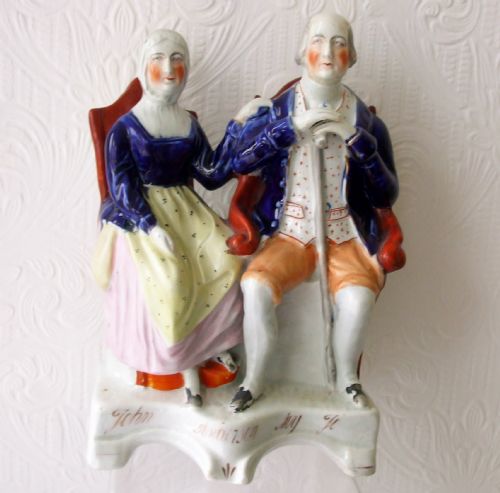
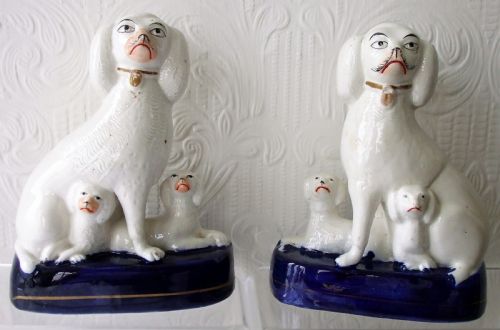
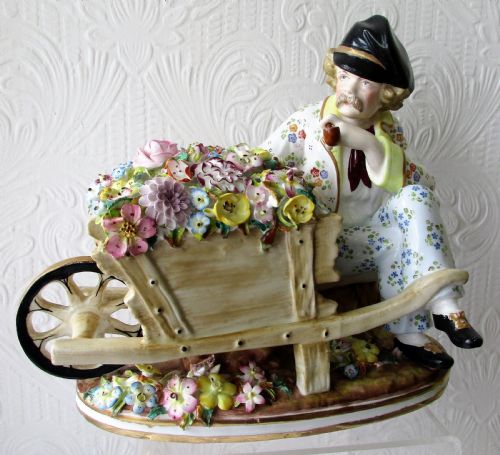
An English pottery figurine encompasses the portrait figures, theatrical groups, spill vases and animal pairs that populated Victorian parlours. These objects range from early pearlware lions and Georgian pepper pots to mid-nineteenth-century Staffordshire greyhounds, spaniels and military heroes.
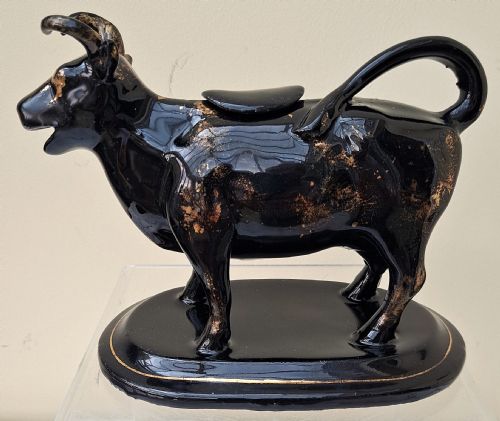
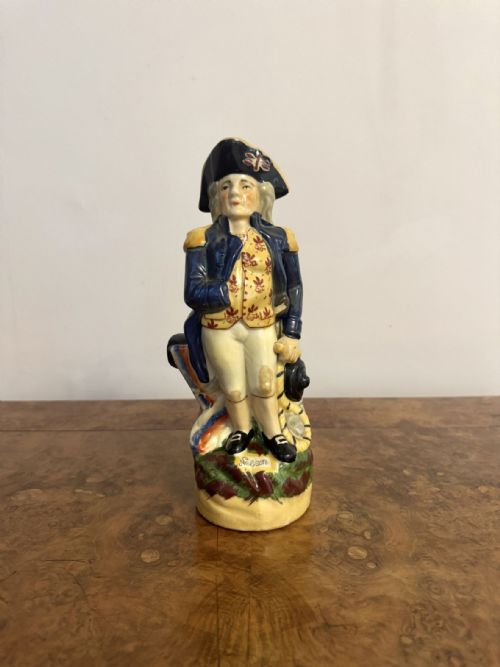
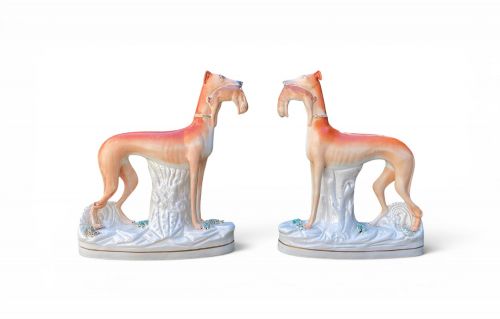
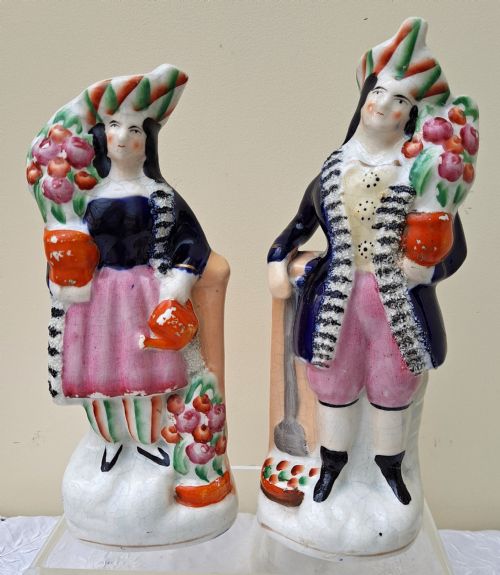
The most common version met on this page is the Victorian Staffordshire figure, often shaped as a pair of dogs, a theatrical couple or a portrait subject. Makers also produced tobacco jars, cow creamers and castle flat backs alongside standard decorative figures.
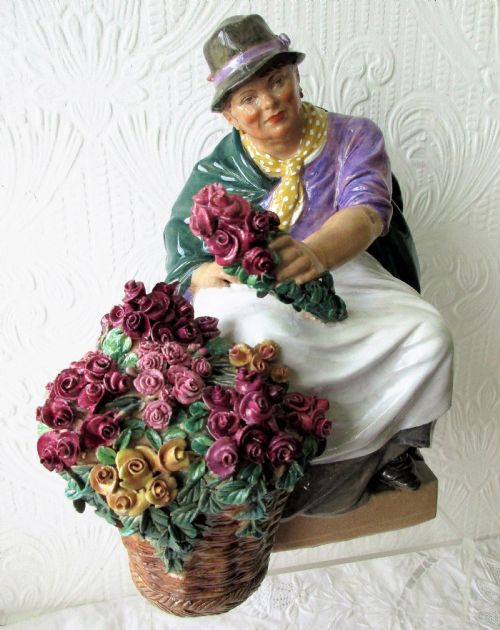
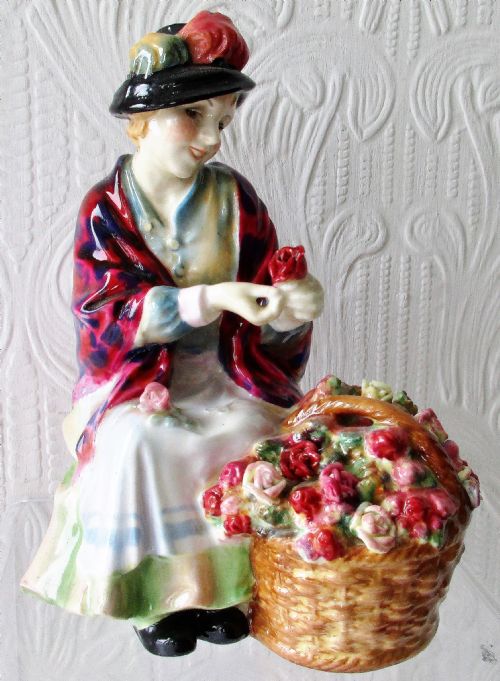
Pieces stretch from the Regency and Georgian eras through the Victorian decades into twentieth-century studio pottery and Art Deco porcelain. Collectors encounter everything from robust earthenware and treacle glaze to delicate porcelain and pearlware.
Materials and methods
Potters shaped these figures primarily from earthenware, pearlware or porcelain, utilising ceramic bodies that suited the specific modelling requirements of animals and human subjects. Lead glazes and enamels provided the protective sheen and surface colour.
English Pottery Figurine Retail Price Guide 2026
Typical asking prices for english pottery figurine among the pieces listed under this phrase on Sellingantiques today, from the lower quarter to the upper quarter. They describe what is for sale here now, not the wider market.
The selection includes portrait figures of historical leaders, literary characters and sailors alongside dogs, lions and garden animals.
Factors of quality
The depth and uniformity of the glaze separation distinguish superior output from standard commercial production. Well-fired earthenware and crisp pearlware retain their vibrance across the entire surface.
Charles Vyse·John Bevington·Thomas Parr
The English Pottery Figurine Glossary
- Pearlware
- A refined earthenware developed in the late eighteenth century featuring a thin glaze with a faint bluish tinge. This body sits chronologically between creamware and later nineteenth-century white earthenwares.
- Spill vase
- A hollow ceramic figure incorporating an attached cylindrical holder designed to store wooden spills for lighting pipes and fires. These functional vessels frequently depict animals or pastoral scenes.
- Flat back
- A Staffordshire figure modelled with a plain, unpainted reverse intended to stand against a wall on a mantelpiece. This construction method saved labour and materials during manufacture.
- Cow creamer
- A ceramic vessel shaped as a cow with a milk-pouring opening on the back and a tail forming the handle. These practical pieces combined domestic utility with whimsical sculptural form.
- Treacle glaze
- A dark, translucent brown lead glaze that created a rich, glossy finish on nineteenth-century pottery. It appears frequently on lions and animal figures.
English Pottery Figurine: Frequently Asked Questions
How do I date a pottery figurine?
Dating relies on identifying the ceramic body, such as pearlware versus later earthenware, alongside the glazing technique and subject matter. Victorian military figures and portrait subjects usually correspond to specific historical events.
Clothing styles and facial painting also offer clues to the decade of manufacture. Unmarked pieces require comparison with documented studio pottery or factory output.
Were these figures meant for display?
Most decorative figurines and animal pairs served as ornamental objects for parlour mantelpieces and side tables. They brought portraits of royalty, actors and literary characters into ordinary homes.
Some pieces, such as spill vases and tobacco jars, combined display with household utility. Others functioned as creamers or pepper pots on the dining table.
What is a flat back figure?
A flat back figure is a ceramic sculpture designed with an unpainted, flat reverse side. This allowed the piece to sit flush against a wall or shelf.
Potters adopted this technique to speed up production and reduce weight. It distinguishes mantelpiece ornaments from fully rounded table centerpieces.