
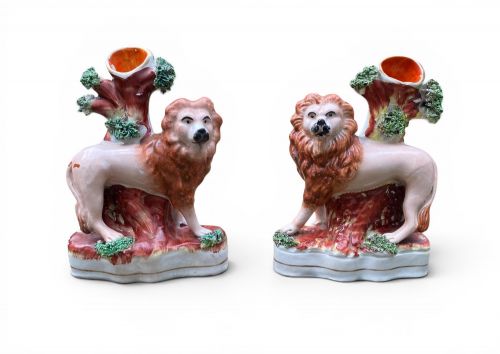


Staffordshire Spill Vase
A Staffordshire spill vase holds taper matches on a mantelpiece while picturing animals, figures and castles in earthenware.
The Form and Character
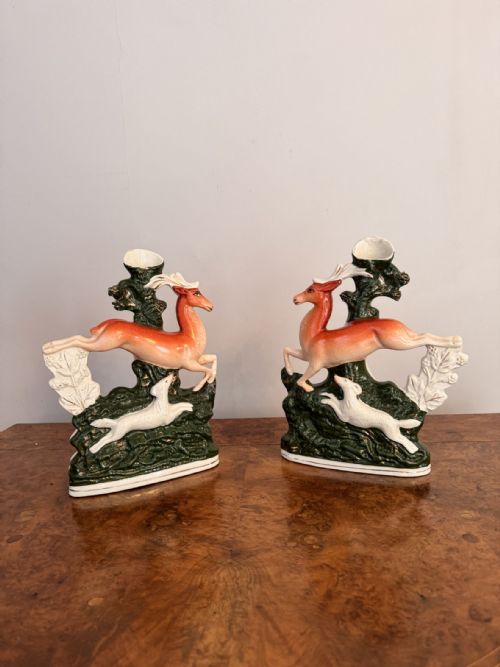
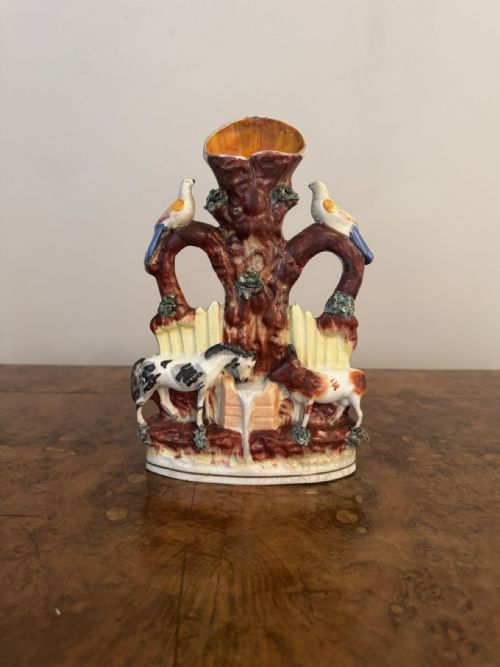
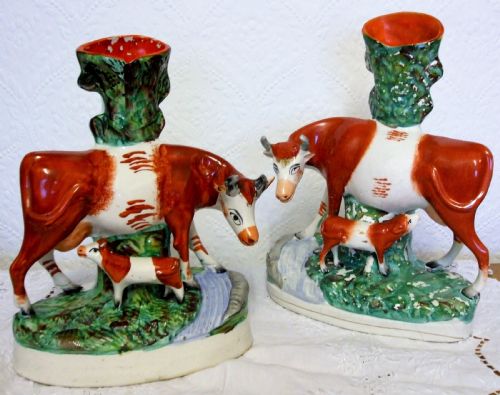
A Staffordshire spill vase combines a hollow tube for holding wooden matches with an ornamental figure group, often depicting animals, pastoral scenes or historical subjects. These mantel ornaments date principally from the nineteenth century, spanning the Georgian and Victorian eras.
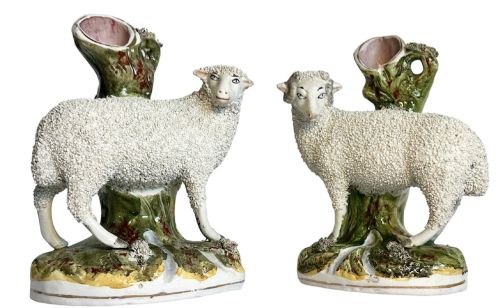
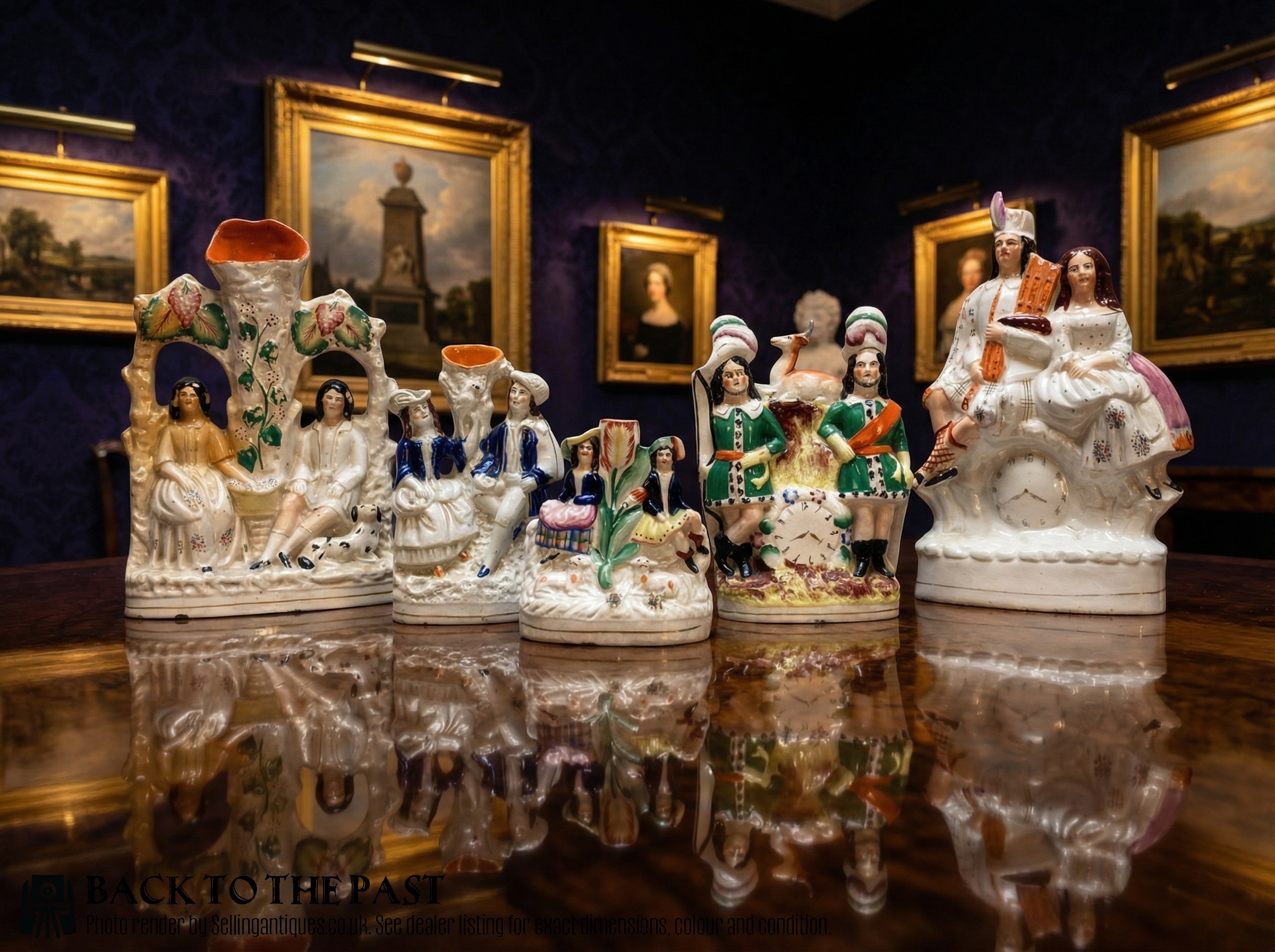
The objects seen here range from pairs of spaniels, sheep and horses to castles, milkmaids and literary characters like William Tell. Figures are typically modelled as flatbacks designed to stand against a wall, or as fully rounded groups intended for central placement.
Makers ranged from small potteries to known manufacturers such as Thomas Parr and Kent, producing earthenware figures finished with lead glaze and enamel pigments. Collectors encounter these pieces as single items or balanced pairs intended to flank a fireplace.
Materials and Technique
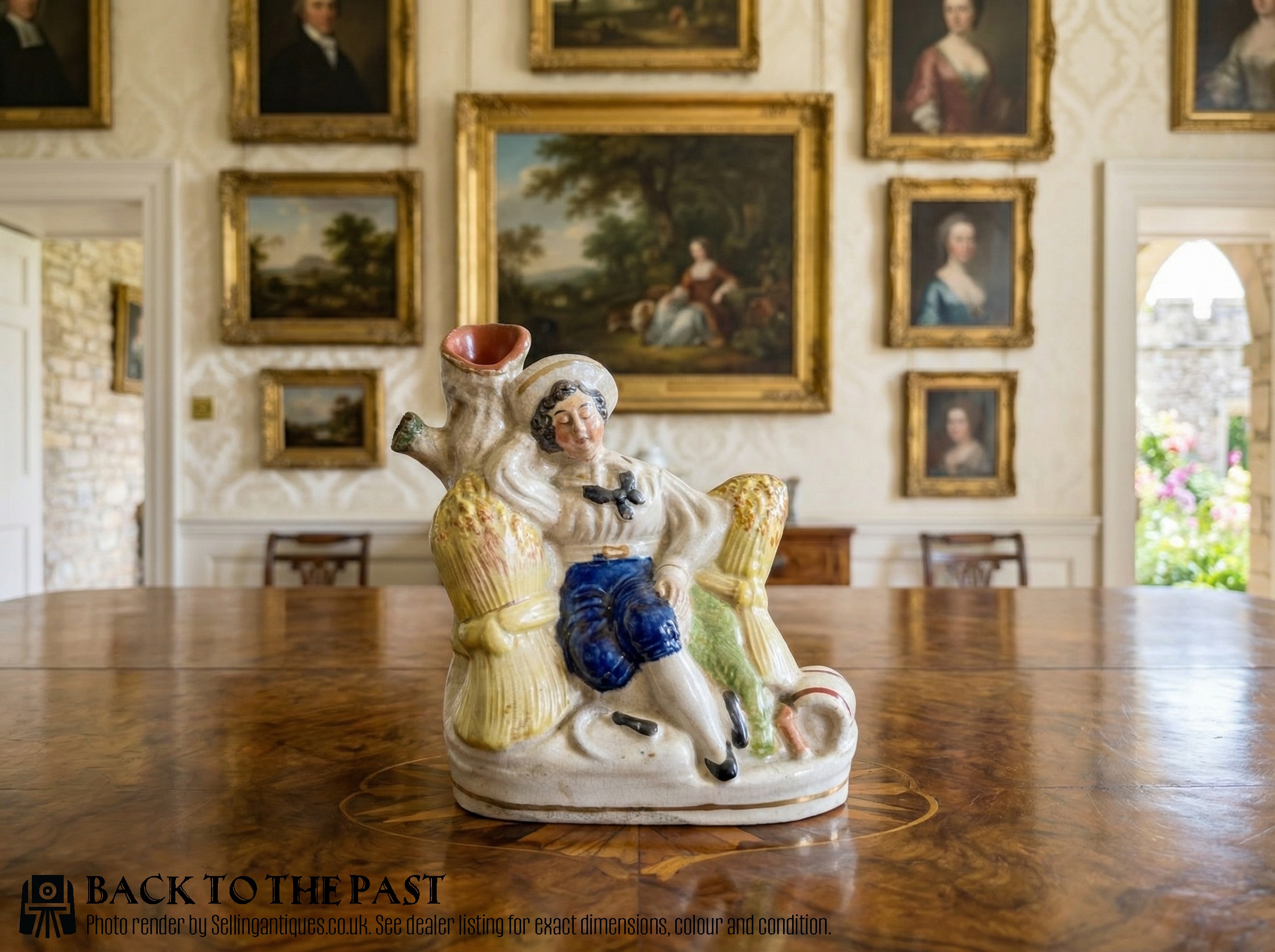
Potters shaped these figures from earthenware clay, sometimes utilising pearlware glaze for earlier pieces, before firing the body in a kiln. The dried clay was pressed into moulds, creating hollow forms that allowed the inclusion of an integrated spill tube.
After the initial firing, artisans applied lead glaze, enamel pigments and occasional gold leaf details by hand. Each piece received a final glaze firing to fix the colours, resulting in the glossy finish characteristic of Victorian pottery.
Retail Price Guide 2026
Typical UK retail prices for staffordshire spill vase, calculated from the Sellingantiques database of over a million retail prices indexed since 2003. This retail price guide relies exclusively on Sellingantiques data; no external sources or auction records are used, so the figures do not describe the wider market.
Milkmaids, cricketers and stray dogs share the mantelpiece with magnificent zebras and massive castles.
Judging Quality and Execution
Larger proportions, such as massive figures or matched pairs, generally demand greater skill in firing and typically represent the more ambitious output of the potteries. The presence of secondary details, like textured fleece on sheep or detailed foliage around a castle, distinguishes finer works from mass-produced output.
Thomas Parr·Kent
The Staffordshire Spill Vase Glossary
- Spill
- A thin slip of wood or paper used for transferring a flame from a fireplace to a candle or pipe. The vase incorporates a vertical cylinder specifically to store these tapers.
- Flatback
- A figure modelled with a detailed front and a largely unadorned, flat rear side. This construction allowed the piece to sit flush against a wall or mantelpiece.
- Lead glaze
- A glossy coating applied to earthenware and fired to create a waterproof and shiny surface. It gives nineteenth-century figures their characteristic reflective sheen.
- Enamel
- Vitreous pigments painted over the glazed pottery body. These colours required a low-temperature firing to bond permanently with the underlying glaze.
Frequently Asked Questions
What is a Staffordshire spill vase used for?
These ceramic vessels held wooden taper matches called spills on nineteenth-century mantelpieces. The integrated tube kept matches dry and close at hand for lighting candles or fires.
Beyond their practical function, they served as decorative ornaments displaying popular animals, historical figures or architectural scenes.
How do you date a Staffordshire spill vase?
Dating relies on stylistic clues, ceramic bodies and modelling techniques. Pieces from the early nineteenth century often utilise pearlware glaze, while Victorian examples commonly feature flat backs and bright enamel colours.
Marked pieces or documented factory attributions also help narrow the period of production, though many nineteenth-century pieces remain unmarked.
Were these vases made in pairs?
Many animal figures, such as spaniels, sheep and horses, were produced as symmetrical pairs to flank a fireplace or clock. Other subjects, including architectural castles and specific character groups, typically appear as single pieces.
Collectors often seek out surviving pairs, though single figures remain equally characteristic of the genre.
How should I clean my spill vase?
Dust gently with a soft, dry brush to remove surface particles. Avoid submerging antique earthenware in water, as moisture can penetrate old glaze crazing and damage the porous clay body underneath.
Harsh chemical cleaners will strip the delicate enamel pigments and gold leaf details applied over the glaze.