
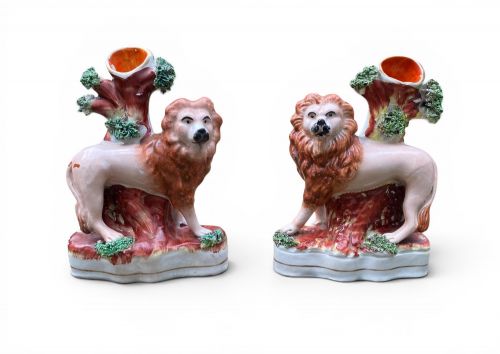


Victorian Staffordshire Spill Vase
These Victorian Staffordshire spill vases bring animal groups and figural scenes into the home, holding matches while adding ceramic colour to the mantelpiece.
Victorian Staffordshire Spill Vase
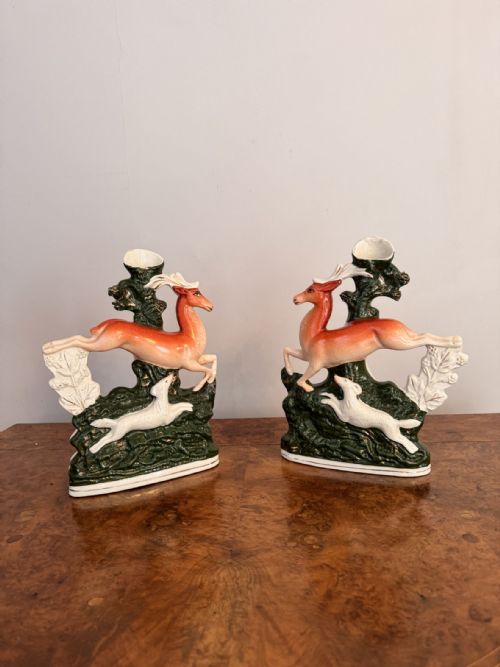
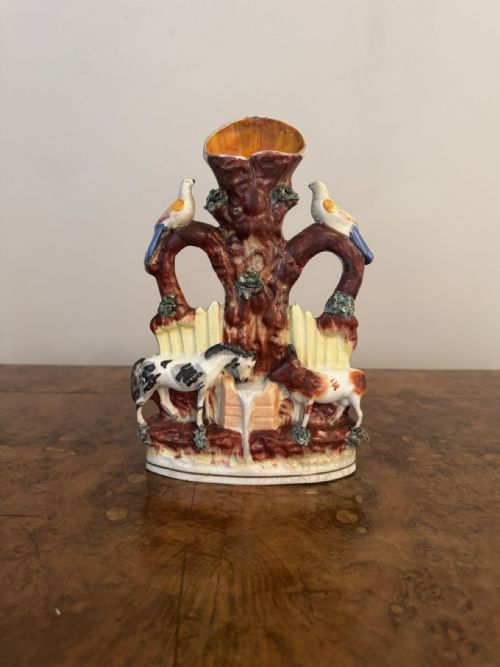
When searching for a victorian staffordshire spill vase, you encounter earthenware pottery shaped into figures, animals, and architectural groups from the nineteenth century. These pieces combine a hollow tubular holder for wooden matches with a modelled figural scene, often appearing as pairs or individual flat back ornaments designed to stand against a wall.
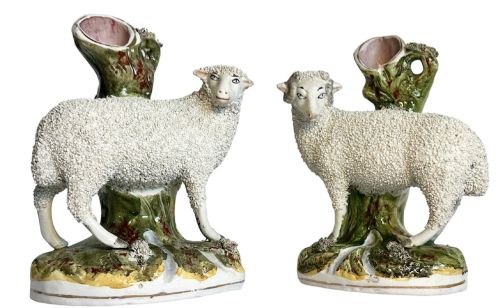
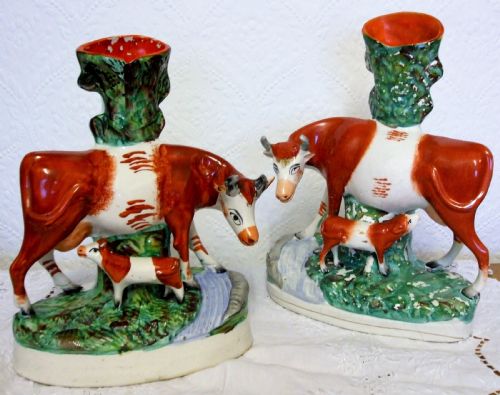
The subjects span domestic animals like sheep, cows, dogs, and swans alongside wildlife including deer, lions, and zebras. Figural groups depicting human characters, literary scenes, and castles also function as spill holders, serving both decorative and practical purposes in the Victorian interior.
What varies in quality
Size and scale influence the presence of a piece, with larger pairs and complex figure groups demanding greater skill from the potter. The crispness of the flat back moulding and the smoothness of the glazed ceramic finish indicate the level of craftsmanship involved.
Zebras join lions and sheep on the mantelpiece, proving nineteenth-century potters possessed wonderfully adventurous imaginations.
The Victorian Staffordshire Spill Vase Glossary
- Spill vase
- A hollow ceramic tube designed to hold wooden spill matches for lighting candles and lamps. These holders form part of the sculptural pottery group.
- Flat back
- A moulding method where the rear of the figure is left flat and plain. This allowed the ceramic to sit flush against a wall or mantelpiece.
- Earthenware
- A porous ceramic body fired at lower temperatures than stoneware or porcelain. It forms the base material for Victorian Staffordshire pottery.
- Lead glaze
- A glossy coating containing lead oxide applied to pottery before firing. It gives the ceramic surface its characteristic shine and protects the enamel colours.
- Enamel
- Coloured glass decoration applied over the fired glaze and fixed with a lower temperature firing. It provides the bright hues on the figures.
Victorian Staffordshire Spill Vase: Frequently Asked Questions
What is a spill vase used for?
These ceramic vessels held wooden spill matches used to transfer fire from the hearth to candles and lamps.
The tubular section kept the matches upright and tidy on the mantelpiece while the figural base decorated the room.
Are these figures glazed all over?
Most pieces feature glaze across the front and sides while the flat back often remains partially unglazed.
This construction method reflects their placement against walls in nineteenth-century interiors.
Why do animals appear so often?
Victorian households favoured domestic livestock and wildlife as decorative subjects for mantelpiece ceramics.
Sheep, cows, dogs, and deer dominate the surviving pottery groups.
How do you date these pieces?
Dating relies on stylistic markers, modelling conventions, and material characteristics spanning the nineteenth century.
Most examples date from the Victorian era between the middle and late decades of the period.