
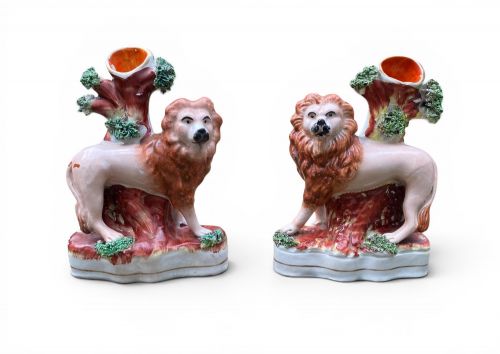


Antique Pottery Spill Vase
An antique pottery spill vase brings hearthside charm into a room, holding the wooden tapers once used to carry a flame from coal fire to candle.
Antique Pottery Spill Vase
An antique pottery spill vase serves a domestic purpose rooted in nineteenth-century daily life, designed to stand on the mantelpiece and store wooden spill sticks. The pieces encountered here span the Victorian era alongside Regency and Meiji period examples, showing how diverse makers interpreted the form.
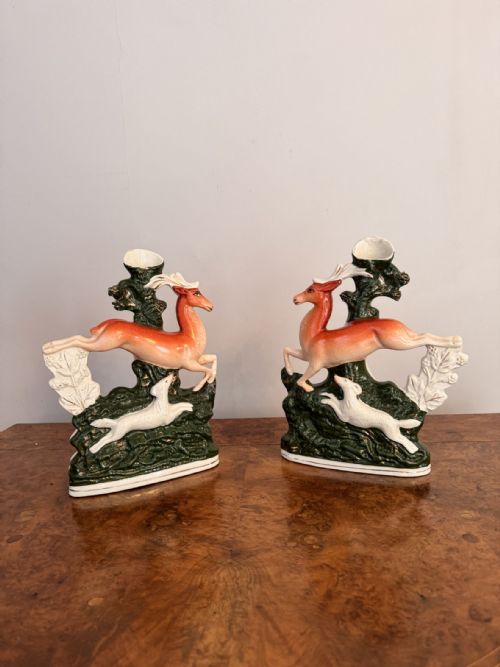
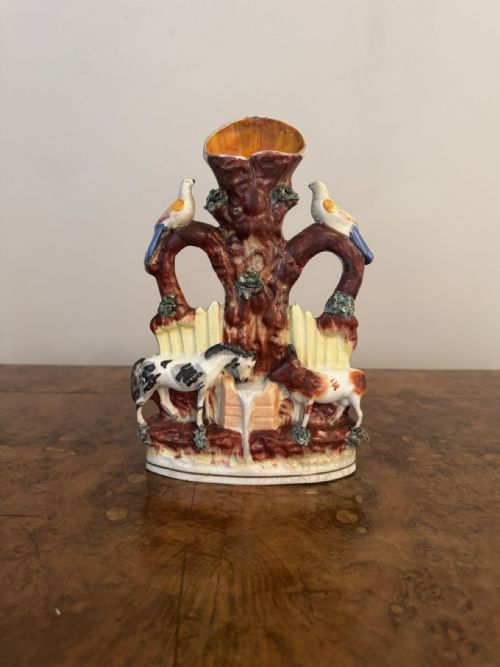
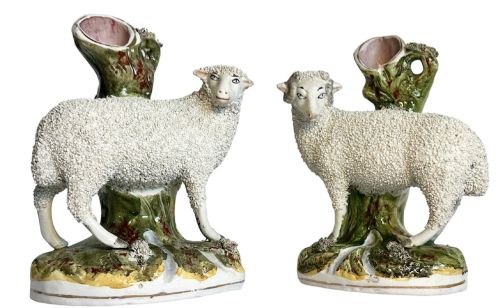
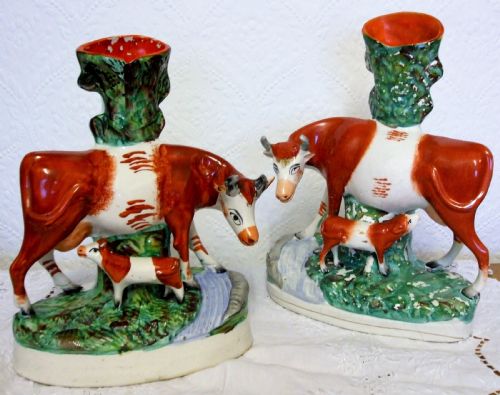
Staffordshire potteries dominate the selection, producing earthenware figures of deer, sheep, lions, and swans that incorporate a hollow cylindrical holder beside the main subject. These mantel ornaments range from simple spill holders featuring cows and calves to elaborate figure groups depicting Scots harvesters or literary scenes.
Beyond English earthenware, buyers find Japanese Satsuma vases and Wedgwood blue jasper relief vessels that utilise the spill function within different aesthetic traditions. Collectors select these objects for their narrative charm and the robust character of nineteenth-century ceramic manufacture.
Materials and Construction
Potters built these figures largely from earthenware and ceramic bodies, shaping them through slip casting or press moulding before applying lead glaze, enamel, or pearlware glaze. Many Staffordshire pieces rely on pearlware glaze to achieve a bright, smooth finish that sets off the painted details.
Listings feature earthenware and ceramic bodies finished with lead glaze, enamel, or pearlware glaze across the nineteenth century.
Distinctions in Quality
The standard of modeling defines the upper tier of these pieces, separating lifelike animal anatomy and expressive human faces from rigid, hastily cast examples. Crisp detail in the moulding of wool, feathers, or architectural elements such as turrets indicates greater care in the workshop.
Painted decoration preserves the vitality of the object when applied with confident brushwork rather than flat, mechanical stenciling. The depth of the glaze and the preservation of original enamel and gold leaf hues dictate the visual impact of the piece on display.
Walton·Ernst Wahliss·Wedgwood
The Antique Pottery Spill Vase Glossary
- Spill
- A thin slip of wood or rolled paper used to transfer a flame from the fireplace to a candle or pipe. These vessels held bundles of them ready for use.
- Pearlware
- An earthenware body developed in the eighteenth century featuring a clear glaze with a faint bluish tint over a whiter body. It remained popular into the Victorian era.
- Flatback
- A figure moulded with a finished front and sides but a flat, unadorned rear designed to stand flush against a wall. This technique saved time and material.
- Moriage
- A decorative technique using slip applied in trails or dots to create raised patterns on Japanese ceramics, often seen on Satsuma ware.
- Jasper
- A fine-grained, unglazed stoneware developed by Wedgwood, typically displaying white classical relief decoration against a coloured ground.
Antique Pottery Spill Vase: Frequently Asked Questions
What were spill vases used for?
These vessels held thin wooden tapers known as spills, which people lit from the hearth fire to carry flame to lamps, candles, or tobacco pipes before safety matches became common.
Placed on the mantelpiece, they combined practical utility with decorative display, keeping tapers dry and close at hand in nineteenth-century parlours.
How do I date a Staffordshire spill vase?
Stylistic clues such as the presence of a flat back, the type of glaze used, and the subject matter help narrow down the period of manufacture. Most pieces date from the Victorian era, particularly the middle decades of the nineteenth century.
Examining the depth of the moulding and the palette of the enamel colours provides further context for dating individual examples.
Are these vases meant to hold water?
Most antique earthenware spill vases were designed to hold dry wooden tapers rather than fresh flowers and water. Using them for floral displays can risk moisture damage to historical ceramic bodies and old glazes.
Collectors generally keep them for dry display or use them strictly for their original purpose alongside a fireplace.
How should I display my spill vase?
These figures look best on a mantelpiece or shelf where their bright enamel colours and sculptural forms can be appreciated at eye level. Because many feature flat backs, placing them against a wall creates a natural backdrop for the scene.
Keeping them away from direct heat sources and strong sunlight protects the painted surface and glaze from deterioration.