


Victorian Flatback Pottery
Victorian flatback pottery figures are sturdy Staffordshire earthenware ornaments designed to sit on a mantelpiece, bringing historical and theatrical characters into the home.
Victorian Flatback Pottery
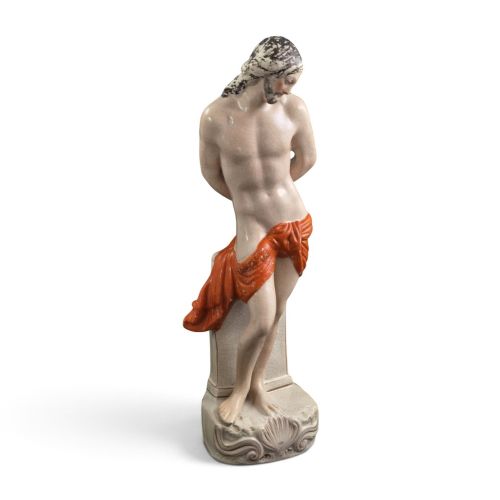
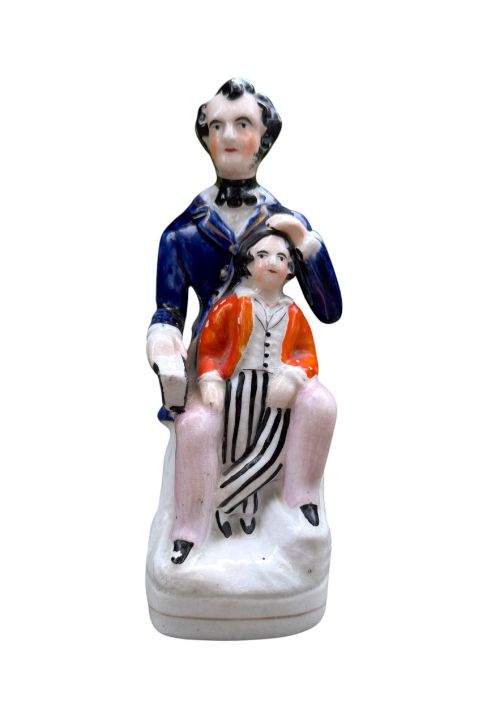
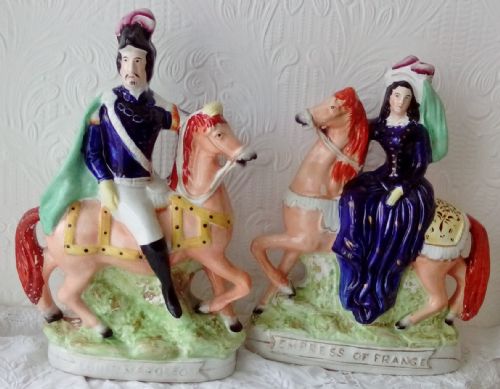
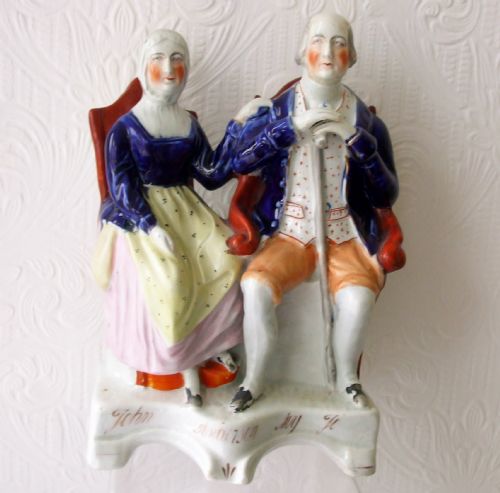
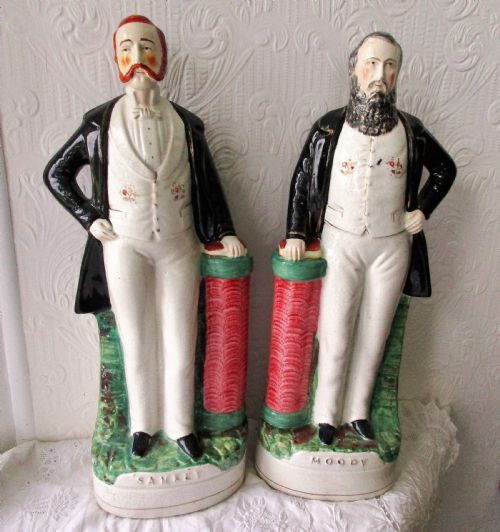
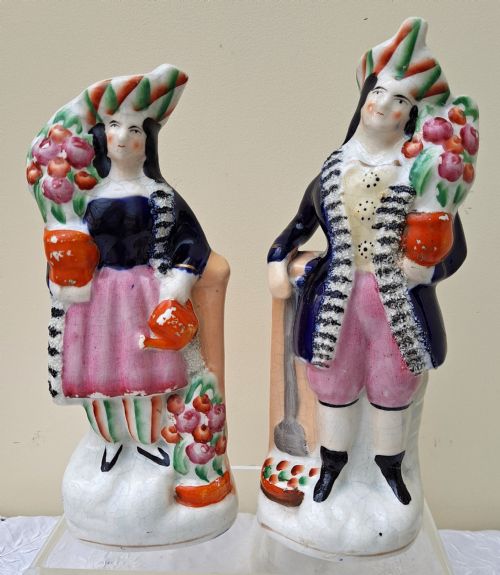
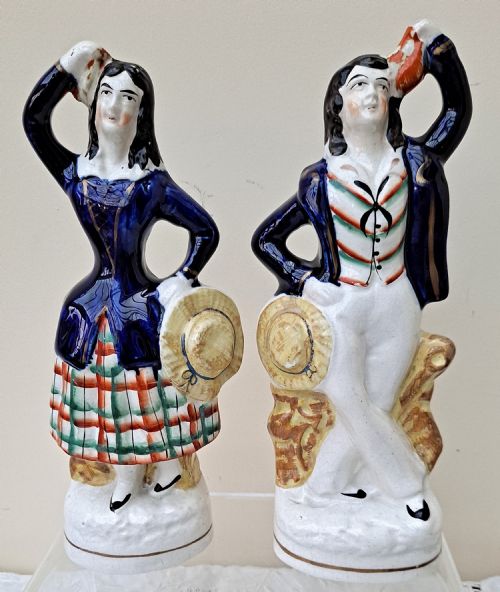
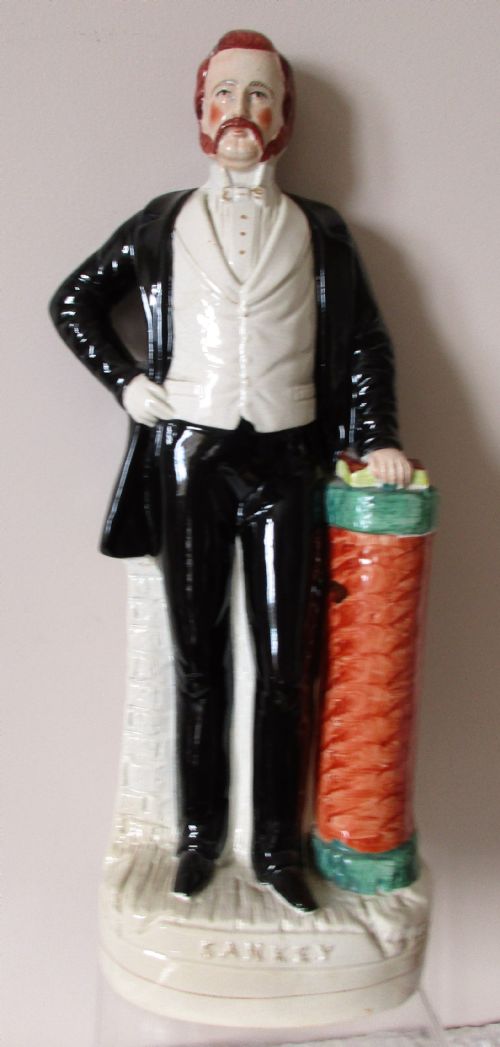
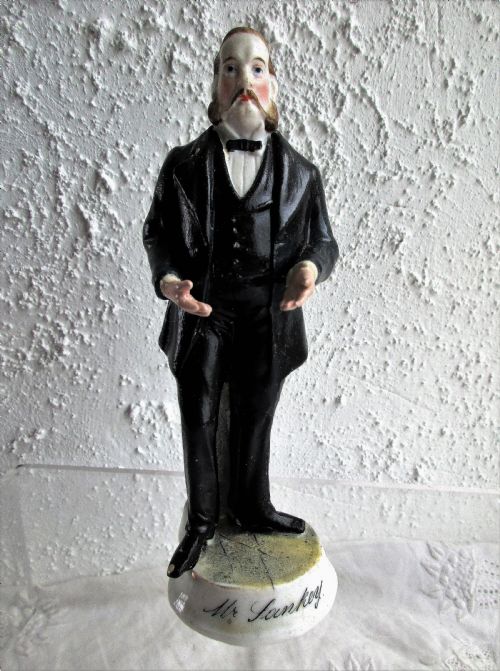
When searching for victorian flatback pottery, collectors encounter moulded earthenware figures produced in the 19th century. These pieces depict royal personages, military heroes, literary characters, and domestic scenes intended primarily for display on a shelf or mantelpiece.
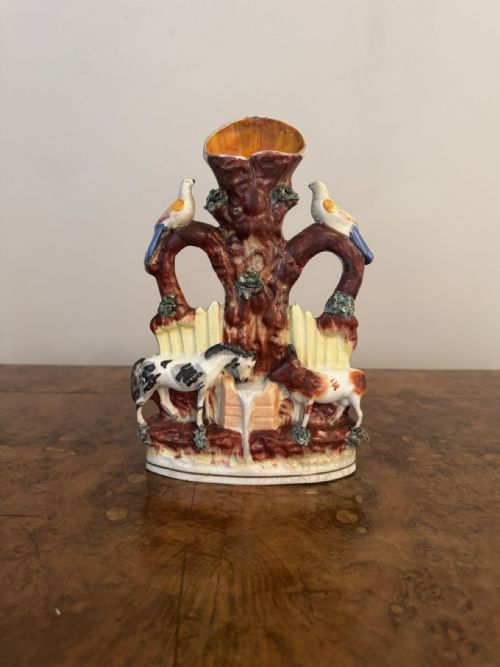
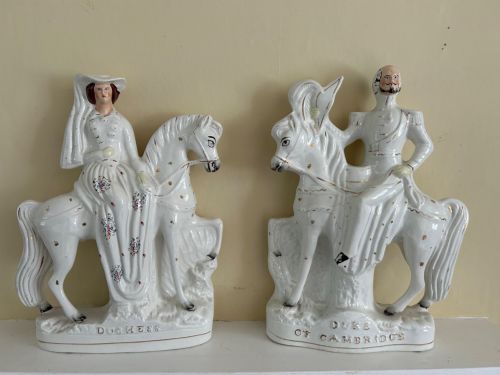
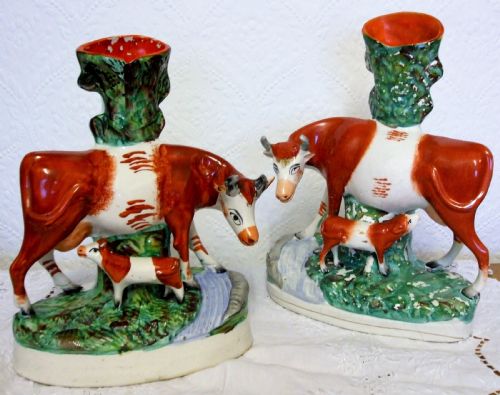
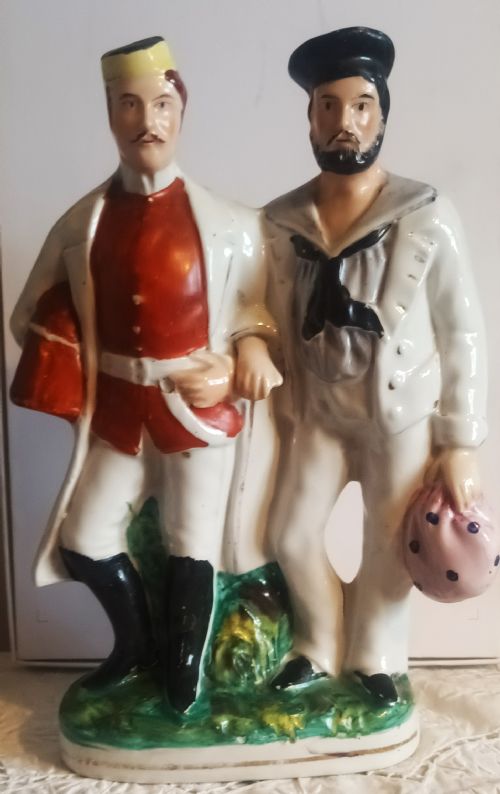
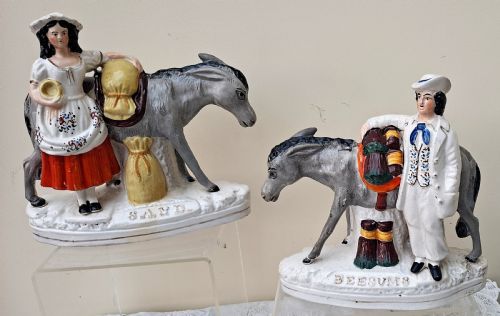
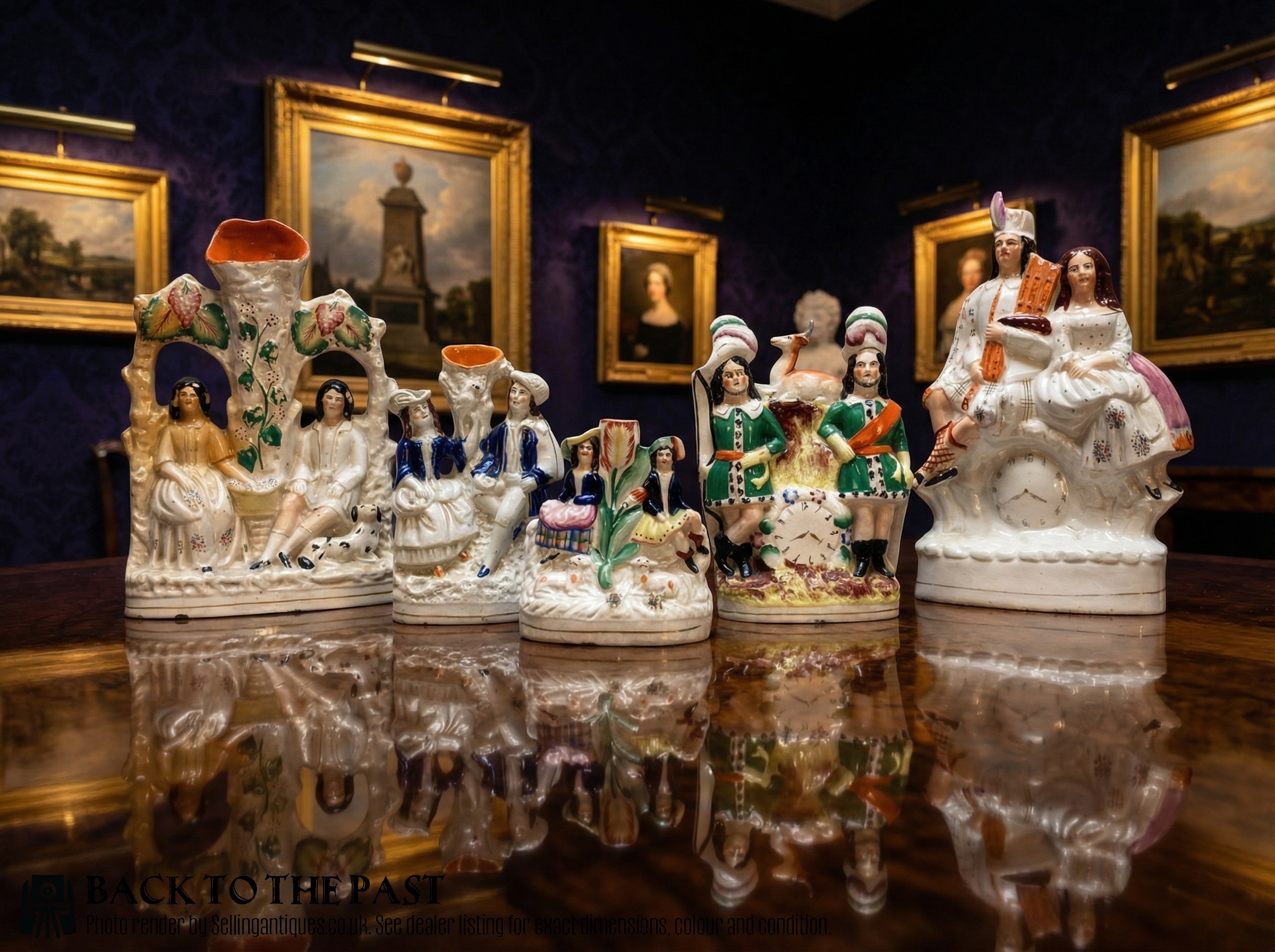
The most common examples on this page take the form of standing portrait figures, pairs of theatrical characters, or utilitarian spill vases. Subjects range from Queen Victoria and military alliances to country couples and rural cottages.
Makers shaped these ornaments to be viewed from the front, leaving the back flat and often unglazed. This specific construction allowed them to sit flush against a wall in Victorian parlours.
How they were made
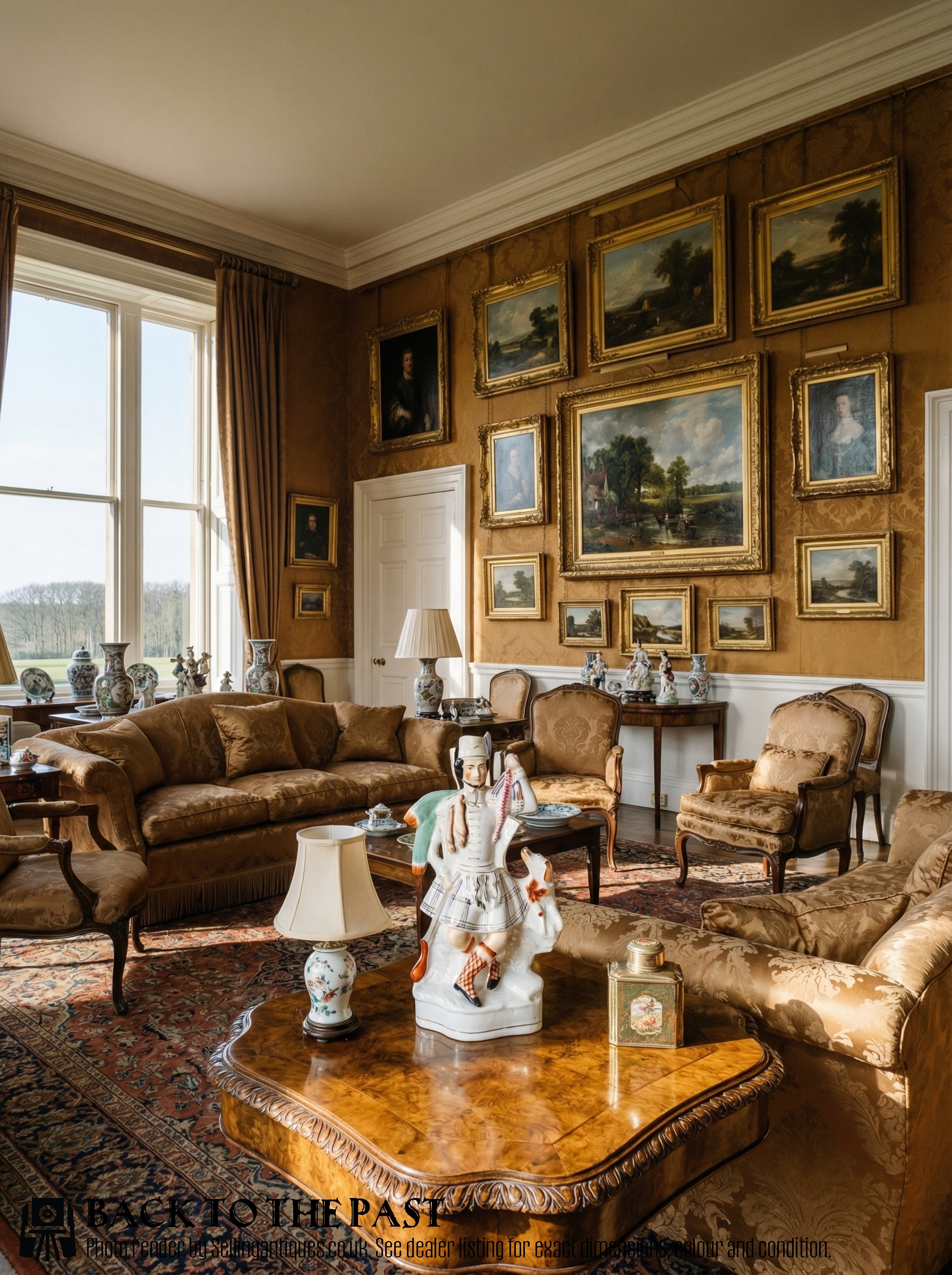
Potters formed these items using earthenware clay pressed into moulds, capturing the outlines of historical figures and animals. Artisans then applied lead glaze to seal the surface before adding enamel paint details by hand.
Many examples incorporate gilt highlights to accentuate costume details, while others rely on cobalt blue pigments for royal portraits and theatrical groups. The combination of slip-casting and hand-painting gave each piece individual character.
Victorian Flatback Pottery Retail Price Guide 2026
Typical asking prices for victorian flatback pottery among the pieces listed under this phrase on Sellingantiques today, from the lower quarter to the upper quarter. They describe what is for sale here now, not the wider market.
Object types include decorative figures, spill vases, watch holders, and architectural forms such as castles and cottages.
What varies in quality
Composition also separates the range, as paired figures and complex architectural forms such as castles or watch holders require greater skill in the kiln. Simpler single figures often exhibit more straightforward modelling and sparser decoration.
The Victorian Flatback Pottery Glossary
- Flatback
- A pottery figure moulded with a flat, unpainted reverse side designed to stand flush against a wall. This method saved materials and production time for mantelpiece ornaments.
- Spill vase
- A hollow ceramic cylinder incorporated into a figure group, intended to hold wooden spills for lighting pipes or fires. These practical vessels often depict animals or romantic couples.
- Earthenware
- A porous pottery body fired at lower temperatures, standard for 19th-century Staffordshire production. It requires a glaze to become impermeable.
- Enamel paint
- A glossy, vitrified paint applied over the glaze and fired a second time to fix the colour. It provides the bright reds, blues, and blacks seen on costumes.
- Watch holder
- A decorative ceramic stand featuring a central niche designed to suspend a pocket watch. These multifunctional pieces often combine architectural elements with figures.
Victorian Flatback Pottery: Frequently Asked Questions
What is victorian flatback pottery?
These objects are moulded earthenware chimney ornaments produced across the 19th century in Staffordshire. They depict famous people, theatrical scenes, and domestic animals.
Potters designed them with flat backs because they stood on high mantelpieces where the rear view remained hidden.
How were these figures used?
Victorian households placed these ceramic ornaments on mantelpieces and side tables to display political loyalties, literary interests, or royal allegiance. Some variants doubled as spill vases to hold wooden tapers.
Living with them involves placing them on secure surfaces away from direct foot traffic where their painted details can be appreciated.
How do I identify different subjects?
Makers inscribed names, titles, or event descriptions directly onto the bases or fronts of many portrait figures. Queen Victoria, military leaders, and literary characters such as Robin Hood appear with characteristic attire.
Comparing the costumes and accompanying animals helps distinguish between theatrical pairs and contemporary royal portraits.
What periods do these pieces date from?
The pieces span the 19th century, with the majority concentrated in the Victorian era between 1850 and 1900. Specific dates can sometimes be inferred from historical events depicted, such as the Crimean War.
Stylistic shifts from simple earthenware bodies to more elaborate glazed ceramic groups occurred across these decades.