


White Ceramic Dog Figurines
White ceramic dog figurines bring the unmistakable charm of nineteenth-century hearths straight into your home.

What white ceramic dog figurines are
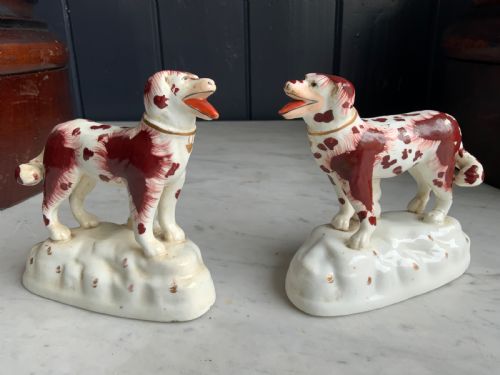
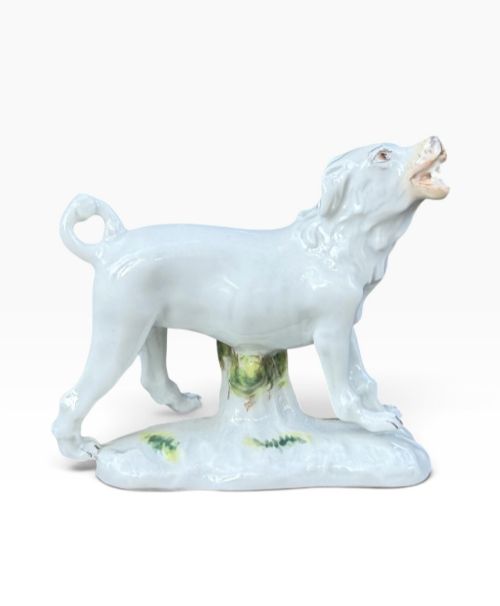
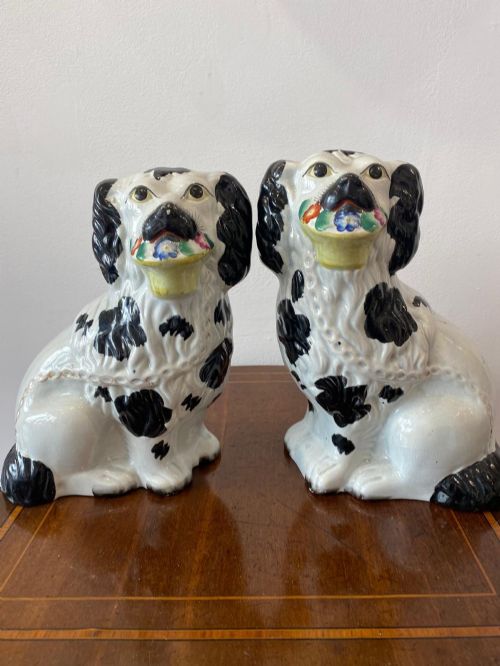
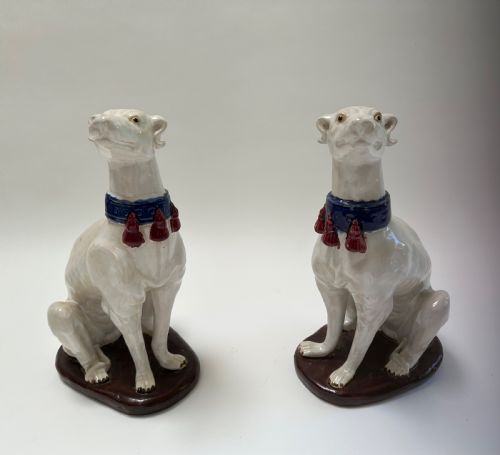
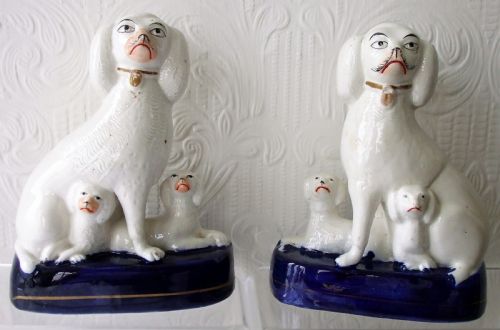
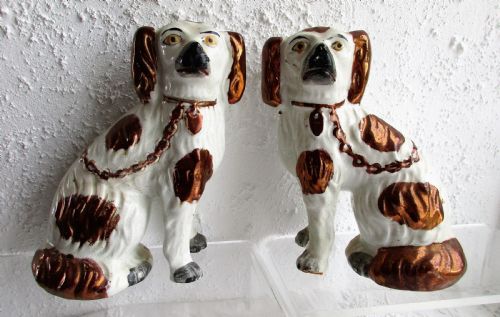
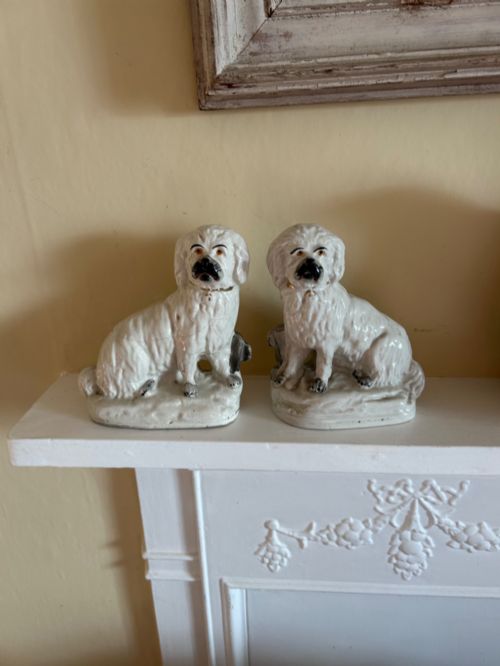
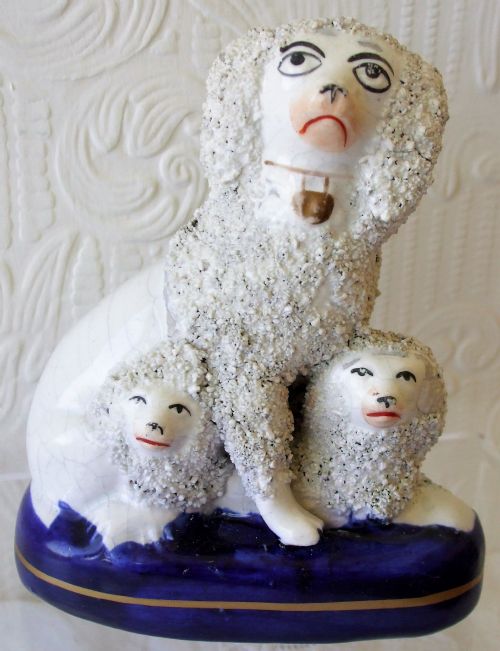
White ceramic dog figurines take the form of Staffordshire spaniels that sat proudly upon Victorian mantelpieces. These decorative figures arrive mostly in pairs, designed to face one another across a hearth or shelf.
The pieces on this page span the nineteenth century, including examples dated around eighteen-sixty and eighteen-ninety. They represent traditional pottery figurines that once anchored the domestic interior of the period.
How they were made
Potters shaped these earthenware figures through traditional moulding techniques before applying a smooth glaze over the ceramic body. Artisans then added surface detail using paint, gold leaf, and copper lustre glaze.
Retail Price Guide 2026
Typical UK retail prices for white ceramic dog figurines, calculated from the Sellingantiques database of over a million retail prices indexed since 2003. This retail price guide relies exclusively on Sellingantiques data; no external sources or auction records are used, so the figures do not describe the wider market.
These watchful ceramic spaniels spent generations staring intently across Victorian mantelpieces without ever chasing a single cat.
What varies in quality
The richness of the gilt and copper lustre glazes distinguishes better pieces from simpler models. Stronger application of gold leaf and lustring elevates the decorative impact of the ceramic.
The White Ceramic Dog Figurines Glossary
- Earthenware
- A porous type of pottery fired at lower temperatures, commonly used for nineteenth-century decorative figures before being glazed and painted. It forms the solid body beneath the white surface.
- Copper Lustre Glaze
- A metallic glaze containing copper that produces an iridescent, coppery sheen when fired. Potters used this technique to accent collars and markings on ceramic animals.
- Gold Leaf
- Beat gold applied to the surface of the ceramic to provide metallic highlights. This material catches the light and frames the painted details of Victorian pottery.
- Staffordshire
- The English region famous for its prolific pottery production during the nineteenth century. Figures attributed here originate from the Staffordshire potteries.
Frequently Asked Questions
Where did these dogs sit?
These pottery figures traditionally occupied the mantelpiece above the fireplace in Victorian sitting rooms. They were arranged as pairs facing inward toward the centre.
Today they sit just as well on bookshelves, sideboards, or occasional tables where their decorative presence warms the room.
How do I date them?
Dating relies on stylistic clues, ceramic body characteristics, and the nature of the glaze. Pieces from the mid nineteenth century often display distinct copper lustre or gilt detailing.
Consulting the specific details provided for each listing helps narrow down the period between eighteen-sixty and eighteen-ninety.
Are they sold in pairs?
Many of these ceramic dogs appear as matched pairs because Victorian hearth display required a pair facing each other. This symmetry was central to their original placement.
Some listings offer multiple pieces together, preserving the traditional arrangement collectors look for.
How do I clean them?
Cleaning requires only a soft, dry cloth to remove dust from the glazed surface and painted details. Harsh modern cleaning products should be avoided to protect the historic paint and gold leaf.
Gentle care preserves the delicate lustre glazes and nineteenth-century pigments for the future.