


Victorian Pottery Spaniels
Victorian pottery spaniels are traditional ceramic figures designed for mantelpiece display, offering a charming touch of nineteenth-century domestic character.

Victorian Pottery Spaniels
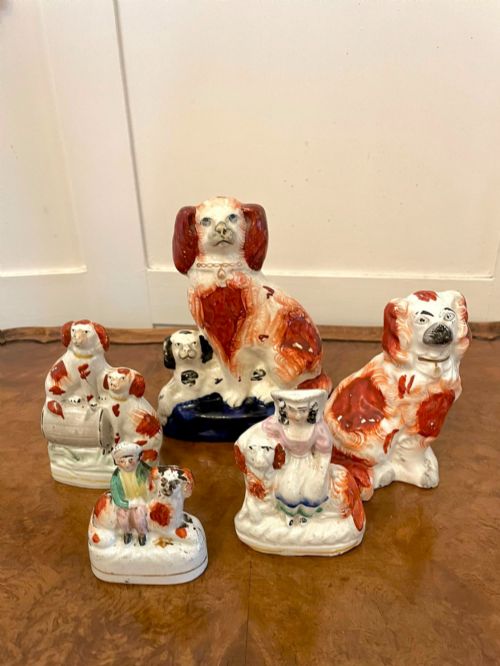
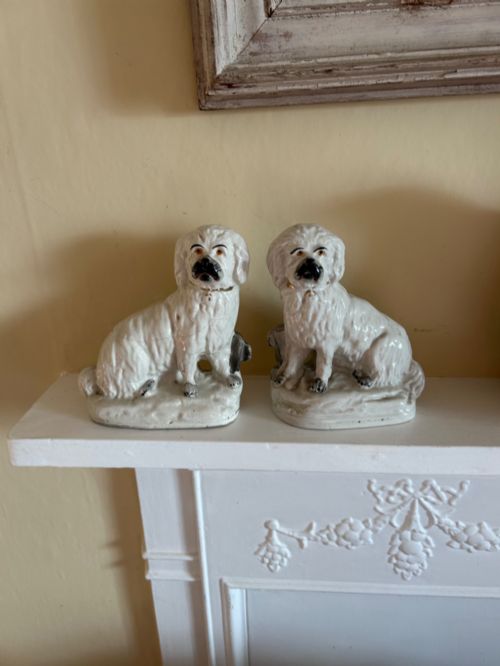
Victorian pottery spaniels encompass earthenware figures and decorative objects produced primarily during the nineteenth century, most frequently appearing in pairs. These ceramic dogs were intended to sit on either side of a fireplace, a placement that earned them the name comforter spaniels.
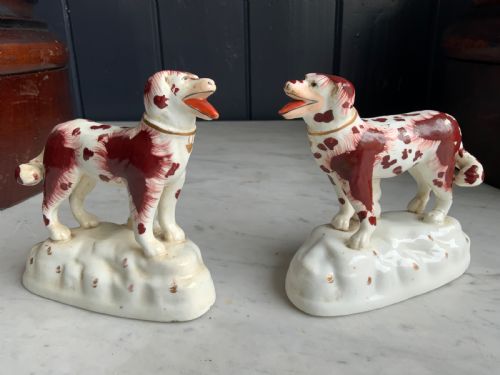
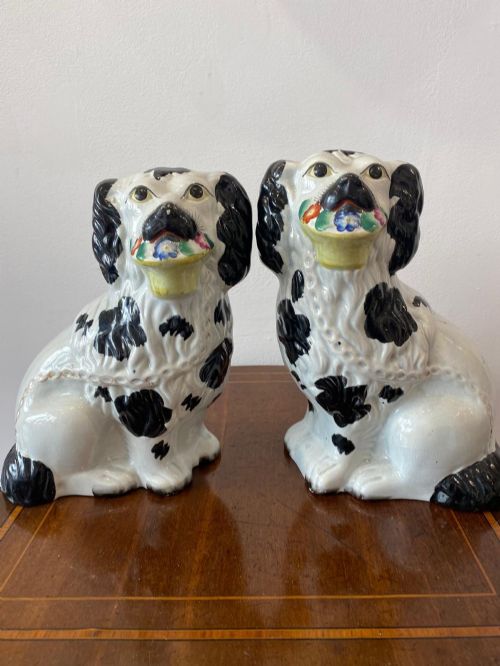
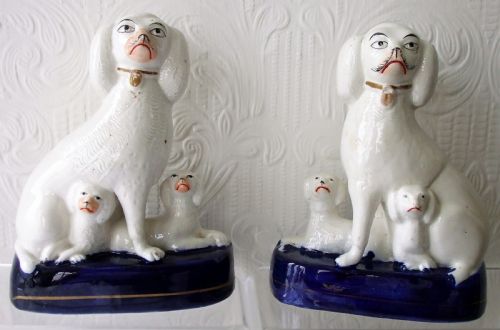
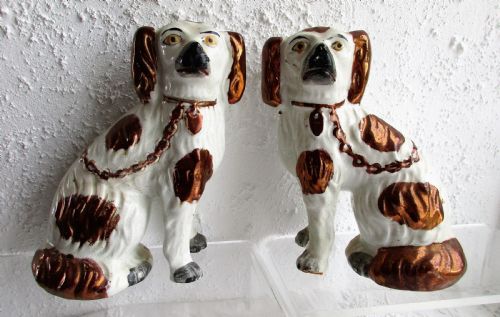
The selections available include standard seated spaniels, pieces accompanied by puppies, and more specialised forms such as money boxes, jugs, and clock groups. Variants featuring black and white, red and white, copper lustre, or white and gilt decoration demonstrate the range of palette choices found within the period.
Materials and Technique
Certain examples incorporated surface details such as blue cushions or textured encrusting to add depth to the figures. Copper lustre finishes and hand-painted touches reflect the varied workshop practices of nineteenth-century potters.
Listings include earthenware spaniels from the nineteenth century featuring enamel paint, glaze, and gilt highlights.
Assessing Quality
Quality rests upon the crispness of the moulding and the precision of the hand painting, which define the expression and detail of the face. Finer examples display carefully applied enamel and gilt work that remains distinct across the form.
The weight and finish of the ceramic body, alongside the uniformity of a matched pair, distinguish superior items from standard production pieces. Consistency in the glaze and the clean application of secondary colours separate the better pieces.
Beswick
The Victorian Pottery Spaniels Glossary
- Comforter spaniels
- Staffordshire pottery dog figures traditionally placed on mantelpieces facing inward toward each other. These ceramic pairs formed a staple of Victorian interior decoration.
- Earthenware
- A porous pottery body fired at lower temperatures, commonly used for nineteenth-century figures. It requires a glaze to become impermeable to liquids.
- Copper lustre
- A metallic glaze technique producing a reflective, coppery sheen on pottery surfaces. This finish appears on specific Victorian spaniel figures.
- Enamel
- Opaque glass-like paint applied over the glaze of ceramic pieces for decoration. It provides the characteristic red, black, and gold markings on the dogs.
- Gilt
- A thin layer of gold or gold leaf applied to accentuate details like chains and lockets. It adds a decorative highlight to white glazed bodies.
Victorian Pottery Spaniels: Frequently Asked Questions
What are Victorian pottery spaniels?
Victorian pottery spaniels are ceramic mantelpiece figures shaped to represent King Charles spaniels and related breeds. Potters produced them extensively in pairs during the nineteenth century.
These earthenware dogs served a purely decorative function in period homes, traditionally positioned on either end of the fireplace shelf.
How were comforter spaniels displayed?
Comforter spaniels were arranged as facing pairs on mantelpieces, watching over the hearth and living space. Their standard placement positioned one dog at each end of the shelf.
This symmetrical arrangement reflected Victorian interior design preferences for order and balance in domestic spaces.
How do I identify a pair?
Genuine pairs consist of two mirror-image figures designed to face each other from opposite ends of a mantelpiece. Matching posture, scale, and decorative palette confirm the pairing.
Look for consistent glaze characteristics and similar potting traits that indicate they emerged from the same workshop at the same time.