


Pair of Spaniel Figurines
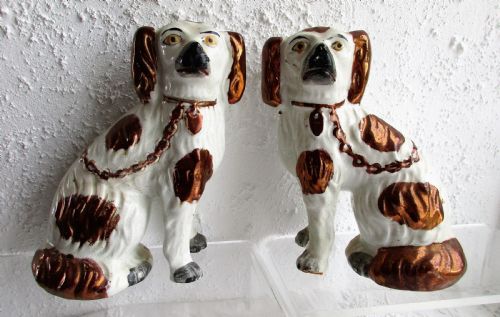
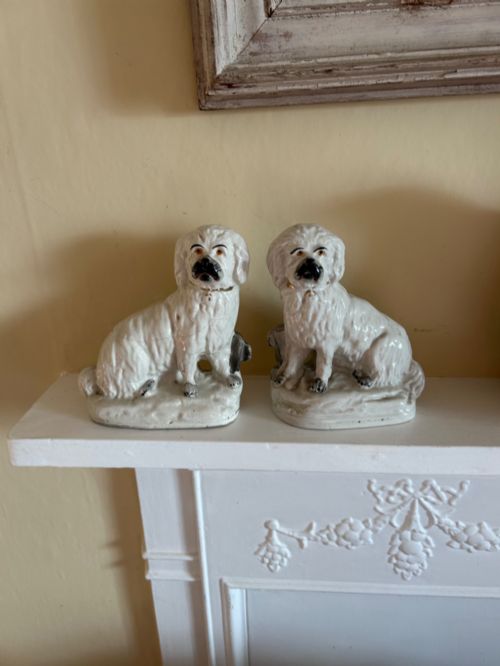
These pair of spaniel figurines bring traditional mantelpiece charm, appearing mostly as Victorian earthenware pottery dogs flanking a fireplace.
Pair of Spaniel Figurines
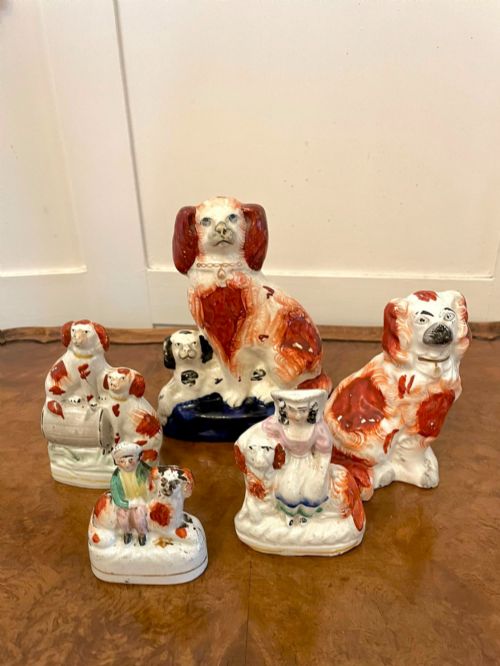
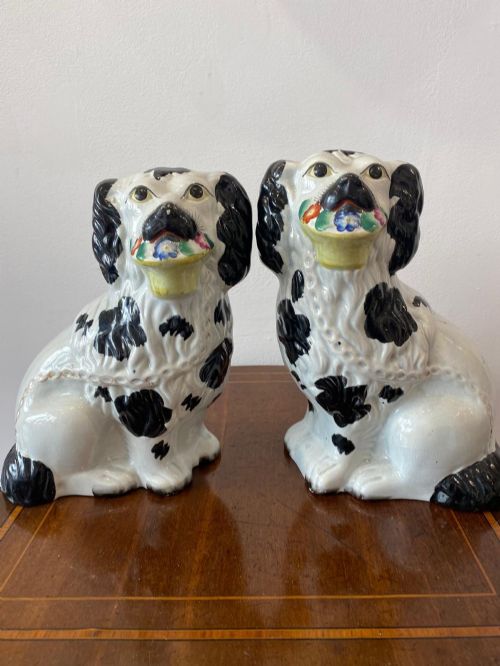
When you search for a pair of spaniel figurines, you encounter domestic ornaments modelled as seated dogs, historically placed on hearths and mantelpieces. The most common version on this page is the Victorian Staffordshire earthenware dog, often called a comforter spaniel.
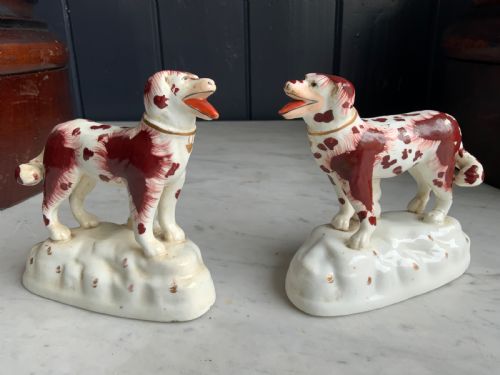
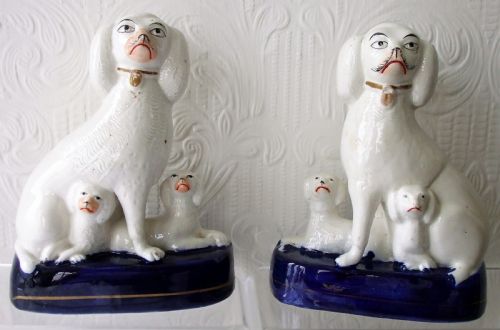
The inventory spans the nineteenth century, taking in Regency origins and extending into Edwardian pieces and later ceramic figures. Alongside spaniels, the selection includes poodles, Maltese terriers, and pugs, sometimes modelled with pups or seated upon cushions.
Makers and regional potteries shaped these figures into distinct decorative objects. While many remain unmarked Staffordshire earthenware, others emerge from later twentieth-century production.
How they were made
Potters shaped these figures from earthenware and porcelain using moulds, applying lead glaze to seal the clay body. Surface decoration relied on hand-painted enamel colours and gilt highlights, sometimes complemented by copper lustre finishes.
Specialist details included glass eyes fitted into the ceramic heads, and applied clay work such as encrusting on cushions. Plaster served as an alternative medium for heavier doorstop forms from the Edwardian period.
Several spaniels stare out with glass eyes, watching over rooms long after their hearths went cold.
What varies in quality
The crispness of the moulded detail and the precision of the hand-painted enamel define the upper tier of these figures. Finer examples retain bright gilt highlights and clear facial expressions without heavy glaze pooling.
Condition and completeness separate standard mantel ornaments from superior survivals. Pairs that retain their original glass eyes or matching markings show greater care in their initial production.
Royal Doulton·Beswick
The Pair of Spaniel Figurines Glossary
- Comforter spaniels
- Staffordshire ceramic dog figures traditionally displayed on mantelpieces flanking a fireplace. These figures were modelled as seated pairs facing one another.
- Earthenware
- Porous ceramic pottery fired at lower temperatures, commonly used for nineteenth-century figures. It requires a glaze to become impermeable.
- Lead glaze
- A glossy coating containing lead oxide applied to pottery before firing. It gives the earthenware surface a smooth, reflective sheen.
- Copper lustre
- A metallic glaze finish producing a coppery, reflective sheen on ceramic surfaces. Potters achieved this effect through metallic oxides fired in a reducing atmosphere.
- Enamel
- Opaque glass-like paint applied over glazed pottery and fired again at a lower temperature. It provides the distinct black, red, and gold markings on the dogs.
Pair of Spaniel Figurines: Frequently Asked Questions
Where were pair of spaniel figurines displayed?
These figures sat traditionally on either end of a domestic mantelpiece above a fireplace. They faced inward toward the centre of the hearth.
Victorian households used them to decorate sitting rooms, often placing them where visitors would immediately notice them upon entering.
What materials were used for spaniel figurines?
Makers primarily used earthenware and ceramic, finished with lead glaze and hand-painted enamel decoration. Some pieces incorporate gilt details or copper lustre.
Later Edwardian versions occasionally utilised plaster, particularly when the objects served a dual purpose as heavy doorstops.
Are all Staffordshire dogs spaniels?
The category includes various breeds alongside spaniels, such as poodles with pups, Maltese terriers, and pugs. Potters modelled whichever popular lapdogs suited domestic tastes of the period.
Most share the same seated posture and Staffordshire earthenware construction regardless of the specific breed represented.