


Pair of Staffordshire Spaniels
These pair of staffordshire spaniels figures bring traditional Victorian hearthside character into a room.

Pair of Staffordshire Spaniels
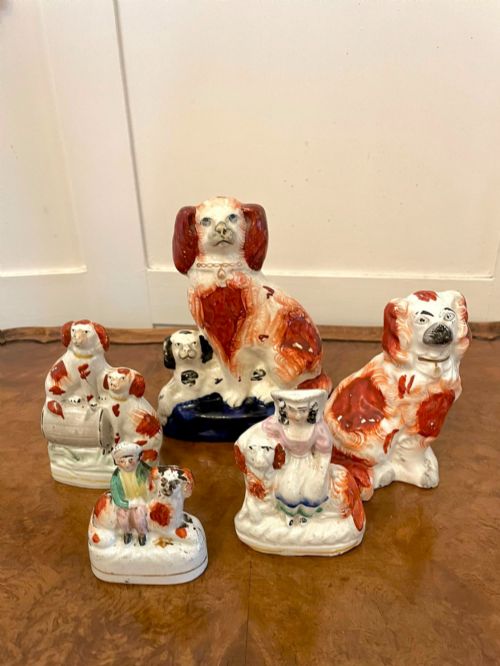
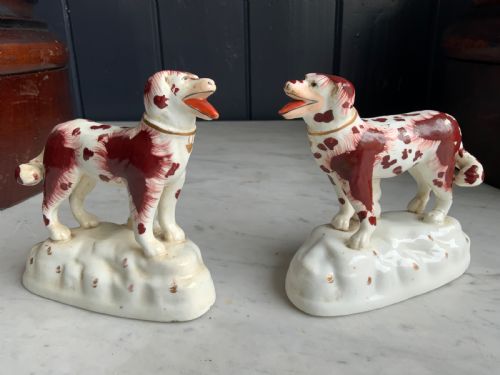
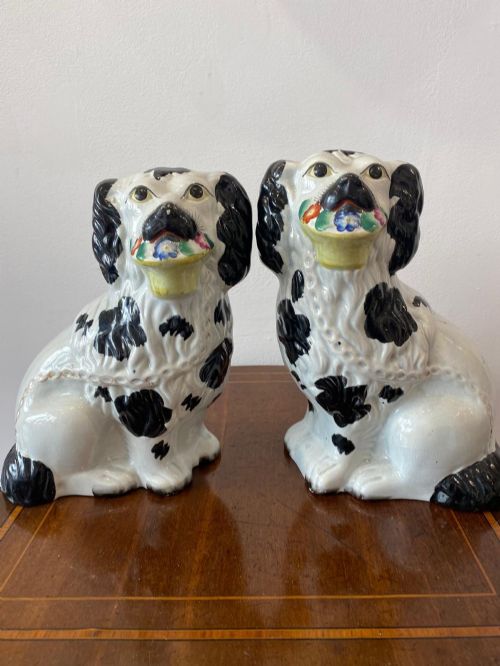
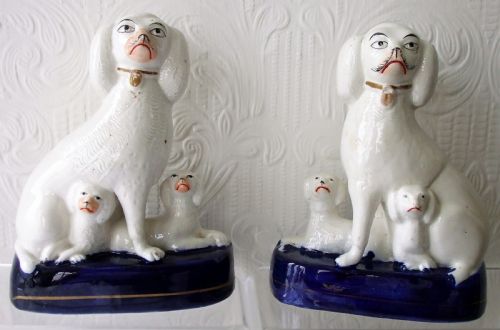
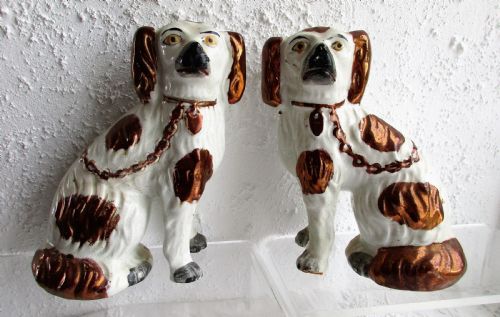
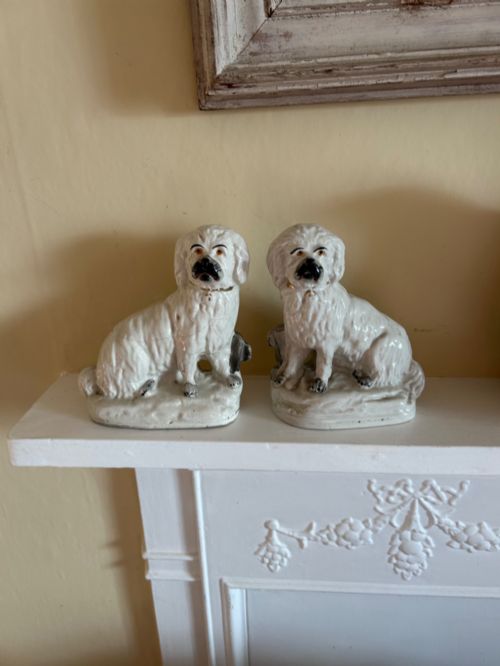
A search for pair of staffordshire spaniels uncovers earthenware and ceramic figures modelled as seated dogs, most frequently associated with the Victorian period. These ornamental mantelpiece companions appear in various forms, including comforter spaniels, quill holders, and spill vases.
The versions met most often on this page originate from the nineteenth century, particularly around the eighteen-sixties and eighteen-eighties. Makers also produced poodles, maltese terriers, and pugs in similar seated or standing postures.
Examples occasionally feature canine companions alongside children, musicians, or resting upon cushions with decorative encrusting. These ceramic figures served as standard mantelpiece decorations in British homes during the nineteenth century.
Judging quality in ceramic dogs
Quality separates through the crispness of the moulding and the care taken with hand painting. Superior examples retain bright, clean enamel details on the face and coat without blurring or smudging.
The depth of the glaze and the precision of the gilding distinguish finer figures from more utilitarian workshop output. Heavier, well-balanced earthenware bodies also indicate superior manufacturing standards.
Pair of Staffordshire Spaniels Retail Price Guide 2026
Typical asking prices for pair of staffordshire spaniels among the pieces listed under this phrase on Sellingantiques today, from the lower quarter to the upper quarter. They describe what is for sale here now, not the wider market.
Listings feature earthenware, porcelain, and glazed ceramic bodies decorated with enamel, gilt, and lead glaze across the nineteenth century.
Royal Dolton·Beswick
The Pair of Staffordshire Spaniels Glossary
- Comforter spaniels
- Staffordshire ceramic dogs traditionally placed on mantelpieces facing inward toward each other. These ornamental figures became staples of Victorian domestic interiors.
- Lead glaze
- A glossy coating applied to pottery before firing to give a smooth, reflective surface. This finish protects the underlying earthenware and enhances enamel colours.
- Spill vase
- A hollow ceramic cylinder incorporated into the figure design to hold wooden spills for lighting fires. These functional vessels match the seated dog form.
- Copper lustre
- A metallic glaze technique producing a coppery, reflective sheen across the ceramic surface. Potters utilised this finish on nineteenth-century earthenware dogs.
- Enamel
- Opaque glass-like paint applied over the glaze to add colour details such as eyes, collars, and patches. Artisans painted these pigments by hand before a final low-temperature firing.
Pair of Staffordshire Spaniels: Frequently Asked Questions
What are comforter spaniels?
Comforter spaniels are ceramic dog figures modelled after Queen Victoria's pet spaniel, Dash. Victorian households placed them symmetrically on mantelpieces.
These ornamental pairs traditionally faced inward toward the hearth, functioning as domestic guardians.
How old are these ceramic dogs?
Most pieces date from the nineteenth century, particularly the Victorian era between eighteen-forty and nineteen-hundred. Earlier Regency examples and later twentieth-century productions also appear.
Potters maintained these traditional Staffordshire styles across several decades with minor changes to painting styles.
Were these dogs used for anything?
While primarily decorative mantelpiece ornaments, certain variations served secondary practical functions. Some models incorporate hollow cylinders designed as quill holders or spill vases for lighting candles and fires.
Others were modelled alongside children or musicians as part of larger decorative table figures.
How can I tell different dog breeds apart?
Potters modelled various breeds including spaniels, poodles, pugs, and maltese terriers based on distinct physical traits. Poodles typically feature detailed clay encrusting to represent curly fur.
Spaniels generally display smooth coats with patches of black, tan, or red, often wearing painted chains and lockets.