


Victorian Ceramic Spaniels
Victorian ceramic spaniels are iconic mantelpiece ornaments capturing the steadfast charm of nineteenth-century domestic life.

Victorian Ceramic Spaniels
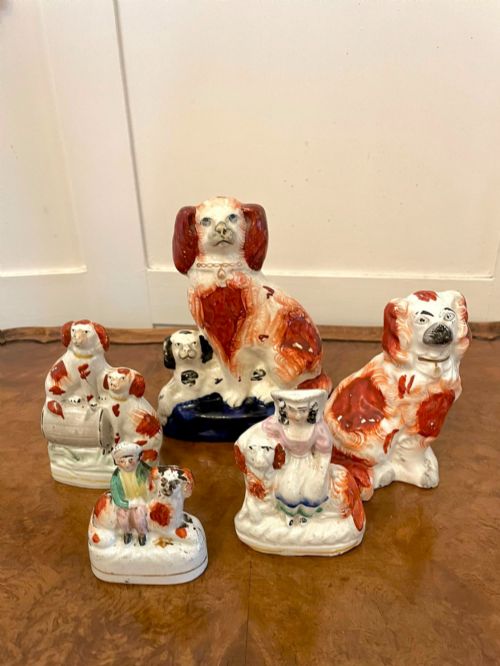
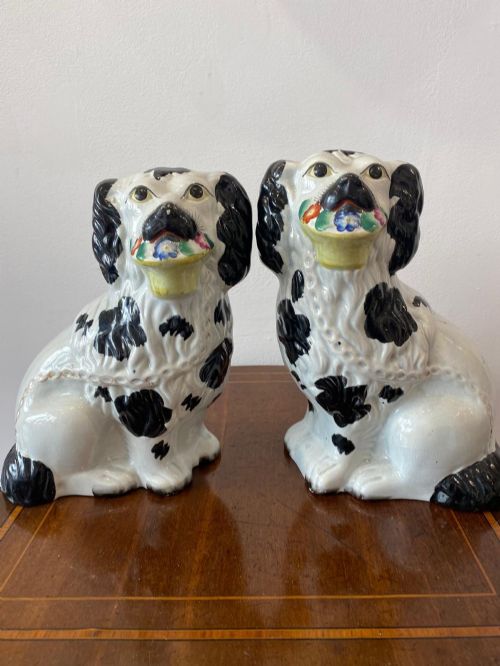
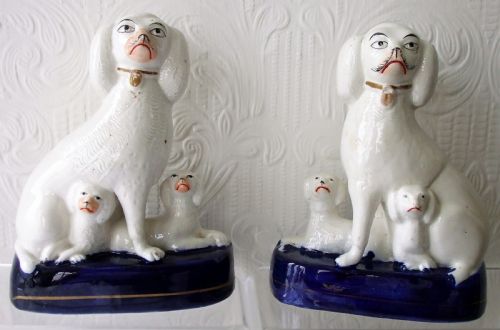
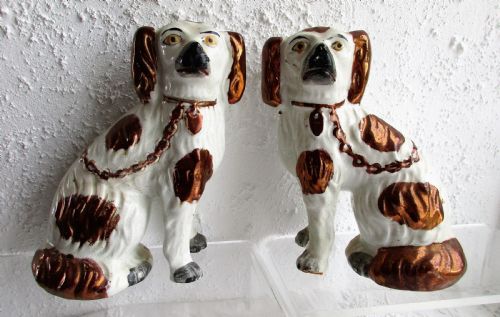
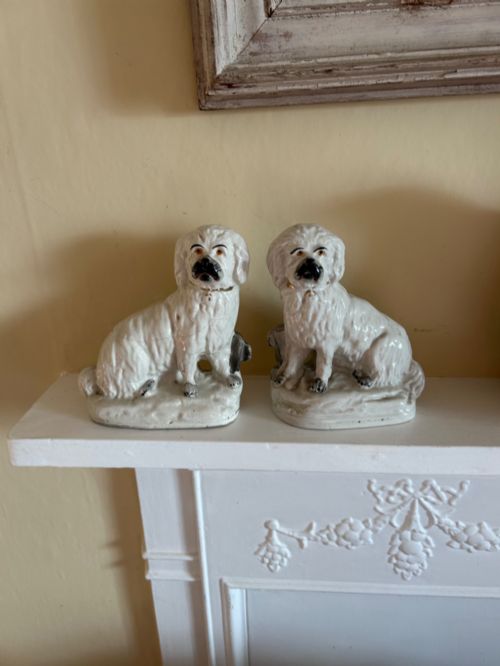
Victorian ceramic spaniels appear primarily as pairs of seated mantle figures mirroring one another across a fireplace. These earthenware pieces represent popular breeds of the nineteenth century, most notably the King Charles spaniel, modelled with attentive expressions and often finished with characteristic markings. Alongside standard figures, variations emerge as money boxes, clock groups, quill holders, and poodles with pups.
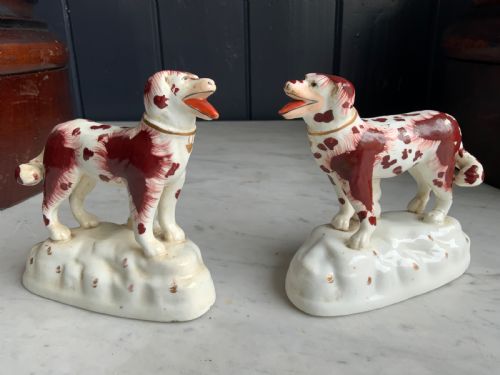
Most examples originate from the broader Victorian era, spanning dates from the early nineteenth century through to nineteen hundred, with many specific pieces attributed to the eighteen sixties and eighteen eighties. The listings show common formats including plain white glazes, white and gilt decorations, red and white patches, copper lustre accents, and black and white coats. Artisans also produced related canine subjects such as Maltese terriers and poodles.
Moulded earthenware forms the structural basis for these decorative objects, finished with painted enamel details or rich gold leaf gilding. Many spaniels sit upon modelled blue cushions or feature textured encrusting to simulate hair and surroundings. Buyers encounter single figures, paired mantle sets, and functional household items sharing the same distinctive ceramic styling.
Materials and production techniques
Potters utilised earthenware and stoneware as the primary body materials for shaping these ceramic figures. Workers pressed or slip-cast the clay into moulds to establish the basic form of the dog, joining halves together before firing in kilns.
Listings feature earthenware and stoneware bodies decorated with glaze, enamel, and gold leaf.
Distinctions in craftsmanship and finish
The complexity of the form also separates standard figures from superior pieces. Multi-piece compositions such as spaniels with puppies, clock groups, or figures posed on detailed blue cushions demand higher technical skill during moulding and firing.
Beswick
The Victorian Ceramic Spaniels Glossary
- Earthenware
- Porous pottery fired at lower temperatures, commonly used for nineteenth-century Staffordshire figures. It requires a glaze to become impermeable to liquids.
- Copper lustre
- A metallic glaze finish producing a reflective, coppery sheen across the ceramic surface. Potters applied this technique to create distinct ornamental dog coats.
- Gilt
- A thin layer of gold or gold-like material applied to the surface of ceramics for decoration. It frequently highlights collars, lockets, and base lines on spaniel figures.
- Quill holder
- A desk accessory featuring a modelled ceramic figure with integrated apertures designed to hold writing feathers. These functional pieces combine utility with decorative canine forms.
- Comforter spaniel
- A nineteenth-century term for Staffordshire mantelpiece dogs positioned symmetrically on either end of a fireplace. These ornaments traditionally symbolised domestic loyalty and hearthside protection.
Victorian Ceramic Spaniels: Frequently Asked Questions
Why are Victorian ceramic spaniels found in pairs?
Makers designed these mantelpiece ornaments to sit facing one another at opposite ends of a fireplace. This symmetrical arrangement suited Victorian interior decor conventions.
Pairs typically mirrored each other in posture, markings, and size to create a balanced display on the mantel shelf.
How can I date a Staffordshire dog?
Dating relies on stylistic clues, manufacturing methods, and glaze characteristics. Earlier nineteenth-century examples often feature simpler modelling and deep underglaze painting.
Later pieces from the late Victorian period incorporate brighter enamels, gilt highlights, and crisper press-moulded details.
Were these dogs used for anything besides decoration?
While primarily decorative mantel ornaments, certain Staffordshire figures served functional household purposes. Potters adapted the canine form into money boxes with coin slots.
Other variations included inkwells, clock cases, and quill holders designed to hold writing instruments on a desk.
What colours do Victorian spaniels come in?
The listings record several distinct colourways applied to nineteenth-century earthenware. Red and white patches and simple white and gilt finishes appear frequently.
Additional variants feature black and white coats, solid white glazes, and reflective copper lustre metallic finishes.