
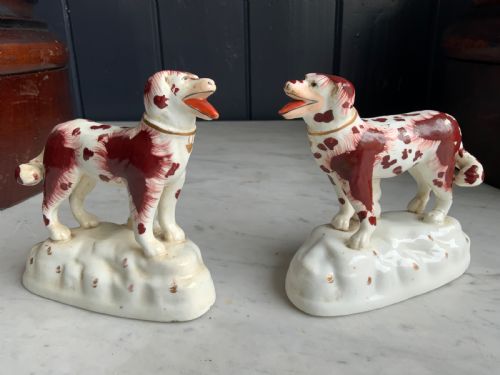


Antique Ceramic Mantle Dogs
Antique ceramic mantle dogs bring character to a fireplace, offering a traditional touch of nineteenth-century hearthside display.

Antique Ceramic Mantle Dogs
When searching for antique ceramic mantle dogs, you are looking at paired ornamental figures designed to sit on a fireplace mantelpiece. The pieces available here consist largely of nineteenth-century Staffordshire figures, including spaniels, greyhounds, pugs, and poodles.
Most examples appear as matched pairs, reflecting the traditional symmetry required for Victorian fireplace decoration. Forms range from seated spaniels on cushions to greyhounds and poodles accompanied by pups, capturing domestic animal subjects popular in past centuries.
Origins span British earthenware and porcelain traditions, alongside select imported porcelain items from China. Buyers encounter Victorian styles predominantly, with dates stretching from the Regency era through to the late nineteenth and early twentieth centuries.
Materials and construction
Makers finished certain pieces with textured elements such as encrusting to represent cushions or fur, whilst others incorporate glass eyes for a realistic expression. Kiln techniques varied from basic pottery bodies to refined porcelain formulations.
Materials recorded across the inventory include earthenware, porcelain, glaze, gilt, enamel, and gold paint.
Assessing quality and craftsmanship
The presence of original decorative elements, such as glass eyes, gilt highlights, and textured encrusting, separates standard production runs from superior cabinet pieces. Pairs that retain their matching balance and original glaze integrity command greater interest.
The Antique Ceramic Mantle Dogs Glossary
- Staffordshire
- A term denoting pottery and porcelain figures produced in the Staffordshire potteries of England. These works defined nineteenth-century domestic mantelpiece ornamentation.
- Earthenware
- A porous pottery body fired at lower temperatures, commonly used for nineteenth-century mantel figures before being glazed and painted. It forms the base of most Staffordshire dogs.
- Enamel
- Opaque glass-based paint applied over the glaze and fired again to fix the colour. Hand-painted enamel gives each dog its distinct facial expression and markings.
- Encrusting
- Applied clay or slip work used to simulate texture, such as fur or the surface of a cushion. This technique adds tactile depth to the figurine.
- Gilt
- A thin layer of gold paint or leaf applied to highlights like collars, lockets, and bases. It provided an opulent finish suited to Victorian drawing rooms.
Antique Ceramic Mantle Dogs: Frequently Asked Questions
What are antique mantle dogs made of?
These figures are primarily made from earthenware and porcelain bodies. Potters finished them with ceramic glaze and hand-painted enamel details.
Additional materials include gold paint, gilt highlights, and inserted glass eyes. Some pieces incorporate textured clay encrusting to represent cushions or fur.
How were mantle dogs displayed originally?
They were traditionally placed as symmetrical pairs on either end of a fireplace mantelpiece. This arrangement framed the hearth during the Victorian era.
Pairs often faced inward toward one another, guarding the fireplace in British households.
Which dog breeds appear most often?
Staffordshire spaniels represent the most common breed found in these listings. Other canine subjects include greyhounds, pugs, and poodles.
Some variants include puppies accompanying the adult dogs or animals resting upon moulded cushions.
How do you date nineteenth-century figures?
Dating relies on stylistic clues, manufacturing materials, and recorded production periods such as the Regency era or the late nineteenth century. Details like glass eyes and hand-painted enamel work offer further chronological markers.
Comparative analysis with documented Staffordshire pottery types helps narrow the decade of origin.
How do you care for ceramic dogs?
Keep them out of direct sunlight to protect the hand-painted enamel and gilt details from fading. Dust them gently with a soft dry brush.
Avoid using liquid cleaners or harsh chemicals, as these can damage the delicate antique glaze and painted surfaces.