


English Pottery Dog Ornaments
English pottery dog ornaments bring character to a room, offering the charm of Victorian and Georgian ceramic figures crafted to sit upon mantelpieces.

English Pottery Dog Ornaments
English pottery dog ornaments include spaniels, poodles, greyhounds, pugs, and dalmatians modelled as decorative figurines and desk accessories. These ceramic figures span the Georgian, Regency, and Victorian periods, reflecting the domestic tastes of the nineteenth century.
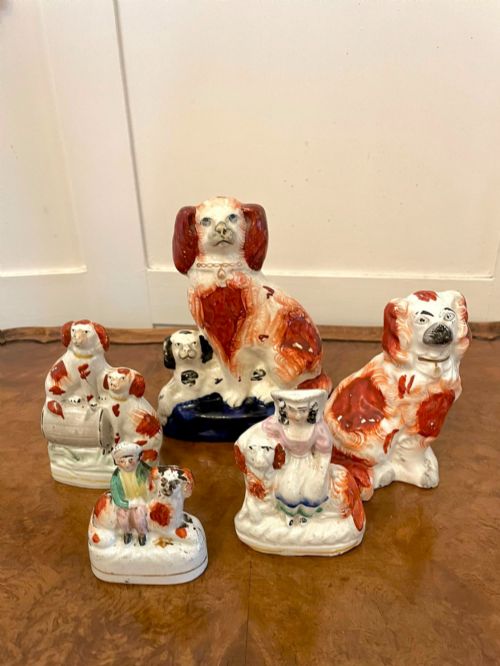
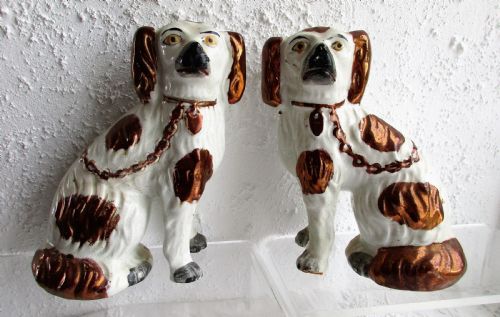
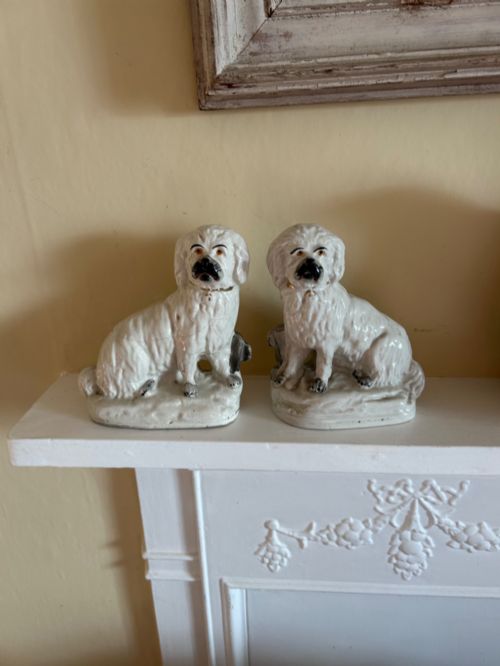
The version most commonly met on this page is the pair of Staffordshire pottery dogs, often referred to as comforter spaniels. These spaniels frequently appear facing left and right as a matched set intended to flank a fireplace or mantelpiece.
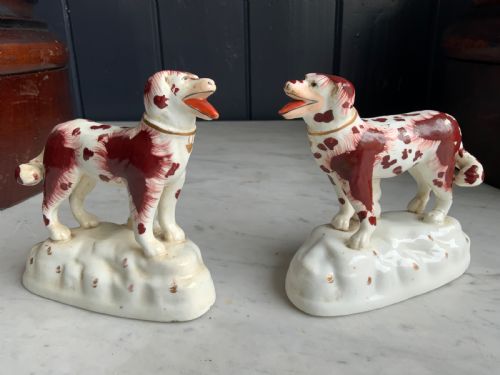
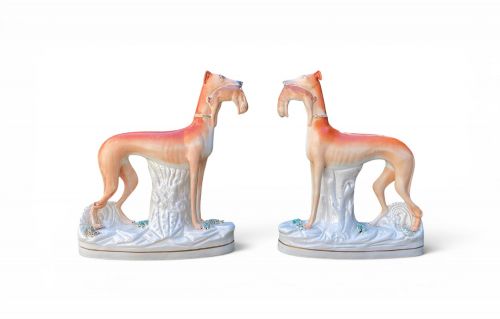
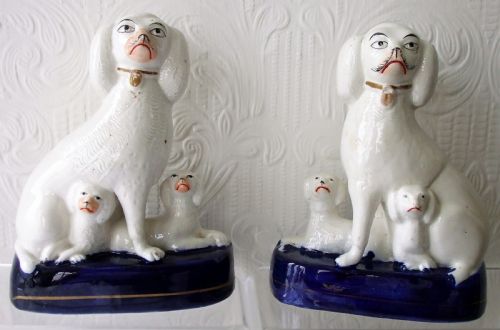
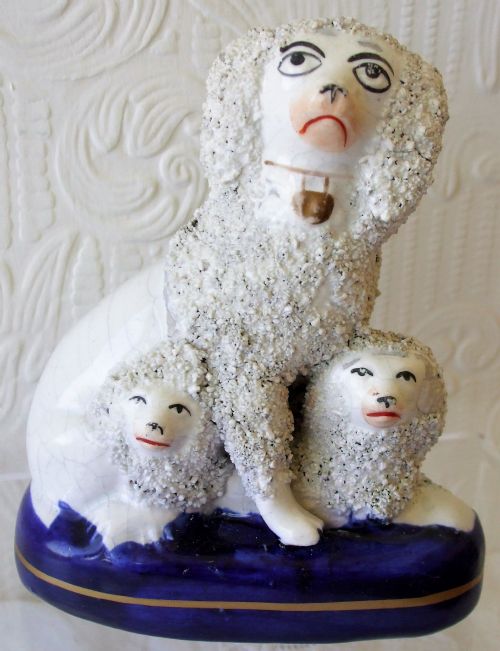
Beyond spaniels, the listings encompass hunting dogs, poodles with pups, greyhound quill holders, and figures involving children with setters. These variations demonstrate the range of animal subjects produced by potteries during the 1800s and 1860s.
Materials and production methods
These ornaments are formed from earthenware, ceramic, and stoneware bodies shaped into figurines and decorative objects. Potters utilised lead glaze to seal the clay and provide a smooth, reflective surface across the body of the animal.
Some spaniels stare out with actual glass eyes, giving the mantelpiece resident an uncanny, lifelike watchfulness.
Distinctions in standard
Scale and completeness also influence quality, as larger pairs or figures incorporating accessories such as quill holders or additional pups demand greater technical skill from the potter. Matched pairs showing balanced posture and intact gilding represent the higher tier of these productions.
The English Pottery Dog Ornaments Glossary
- Earthenware
- A porous pottery body fired at lower temperatures, commonly used for nineteenth-century figures before being glazed. It forms the structural base for the majority of these ceramic animals.
- Lead glaze
- A glassy coating containing lead oxide applied to pottery to create a glossy finish and waterproof the ceramic body. This glaze gives nineteenth-century figures their characteristic shine.
- Enamel
- Opaque coloured glass fused to the surface of fired pottery or applied as decorative paint. It provides the black, brown, and tan markings seen on spaniels and poodles.
- Quill holder
- A desk accessory featuring a modelled animal with an integrated trough or aperture designed to hold writing feathers. Greyhound figures sometimes take this functional form.
- Comforter spaniel
- A popular Victorian mantelpiece ornament depicting a seated spaniel, traditionally positioned in pairs. These figures derive their name from their role as domestic hearth companions.
English Pottery Dog Ornaments: Frequently Asked Questions
What are Staffordshire dogs?
Staffordshire dogs are ceramic figures produced in the Staffordshire potteries during the nineteenth century, most notably depicting seated spaniels.
These ornaments were designed primarily as decorative mantelpiece pairs to grace Victorian parlours and hearths.
How were pottery dogs used?
Victorian households placed pairs of pottery dogs on mantelpieces, often facing inward toward the centre of the fireplace.
Certain specialist forms, such as greyhound figures with integrated troughs, served as practical desk accessories for holding writing quills.
How do I date these ornaments?
Dating relies on stylistic clues, manufacturing materials, and the presence of specific decorative elements like glass eyes or gilt collars.
Pieces from the Georgian and Regency eras tend to show different modelling styles compared to mass-produced Victorian examples from the eighteen sixties and eighties.
Are these figures always sold as pairs?
Many listings comprise matched pairs intended to sit facing each other on either side of a domestic space.
However, collectors also encounter individual figures, figure groups involving puppies, or larger sets comprising four pieces.