


Victorian Mantel Dog Figurines
Victorian mantel dog figurines are earthenware pairs that once guarded nineteenth-century hearths and now bring domestic charm to modern shelves.
Victorian Mantel Dog Figurines
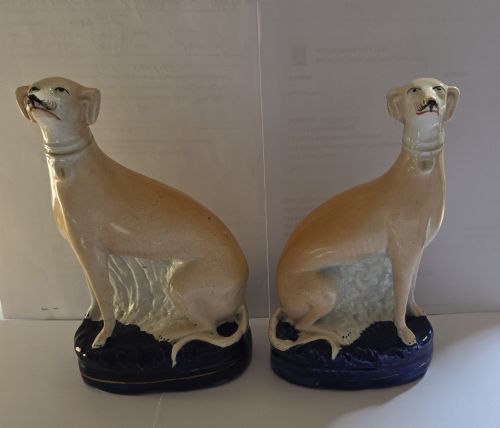
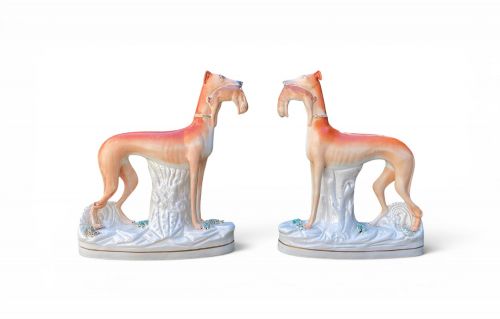
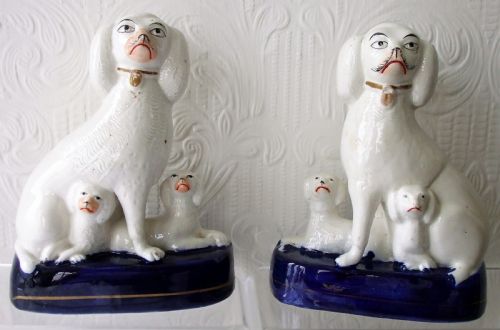
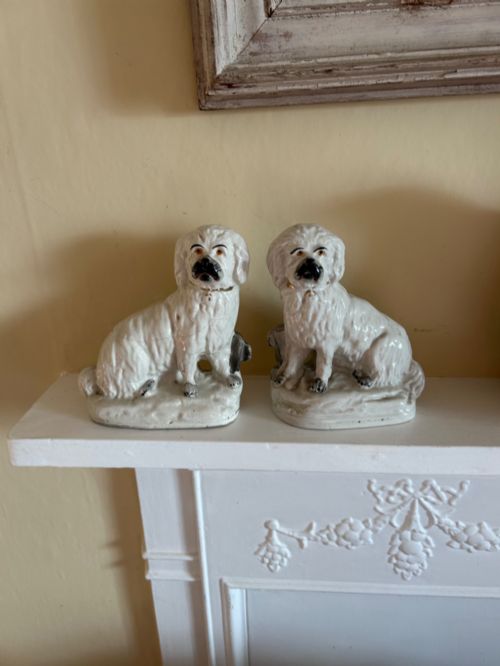
When you search for victorian mantel dog figurines, you encounter sturdy earthenware pairs modelled as spaniels, greyhounds, whippets, poodles and pugs. These ornaments span the nineteenth century, with many examples originating from Staffordshire potteries during the middle and late decades.
The version you are most likely to meet on this page is the classic matched pair of seated spaniels or hunting hounds designed to face one another across a fireplace. Alongside these traditional fireplace guardians, the selection includes miniature poodles, copper lustre finishes, white and gilt decorations, and occasional figure groups.
Originating predominantly from English traditional workshops, these ceramic figures capture the Victorian affection for domestic animals. They appear as decorative ornaments, clock groups and seated models intended for display on mantelpieces and side tables.
Materials and production methods
Potters shaped these figures from earthenware and glazed ceramic, applying lead glaze to achieve a glossy protective surface. Many pieces incorporate enamel painting and copper lustre finishes to add colour and metallic sheen to the coats.
Listings span the nineteenth century from eighteen-fifty to nineteen-hundred, utilising earthenware, glaze and gilt.
Distinctions in quality
Quality rests primarily in the crispness of the modelling and the expression captured in the painted faces. Finer examples display clean brushwork on the eyes and markings, whereas coarser pieces show rushed or heavy-handed application.
The presence of rich copper lustre, crisp gilding and well-matched pairs distinguishes superior studio output from standard commercial ware. Finer potting leaves cleaner lines and better defined forms in the clay.
Thomas Parr·Jules Moigniez·Beswick
The Victorian Mantel Dog Figurines Glossary
- Earthenware
- A porous type of pottery fired at lower temperatures, commonly used for nineteenth-century mantel figures. It forms the standard ceramic body beneath the lead glaze.
- Lead glaze
- A glossy coating applied to pottery before firing to waterproof the clay and enhance surface colours. It gives these figures their characteristic shine.
- Copper lustre
- A metallic glaze technique that produces a reflective, coppery sheen on the ceramic surface. This finish was particularly popular on mid-nineteenth-century Staffordshire pairs.
- Comforter spaniel
- A popular style of Staffordshire dog figurine modelled after the King Charles spaniel. These pairs were traditionally placed on mantelpieces facing inwards.
- Staffordshire pottery
- Earthenware produced in the pottery towns of Staffordshire, famous for animal figures and decorative mantel ornaments. Most dogs from this period originate from these Midlands workshops.
Victorian Mantel Dog Figurines: Frequently Asked Questions
How were these dogs displayed?
These ceramic dogs were traditionally arranged as matching pairs on either end of a mantelpiece, facing inward toward the centre of the fireplace. They served purely as decorative ornaments to bring warmth and symmetry to the Victorian parlour.
Today, they are collected and displayed on bookshelves, sideboards and mantelpieces in much the same manner, adding character to contemporary rooms.
What breeds are usually shown?
The selection is dominated by spaniels, particularly the King Charles variety often known as comforter spaniels. Greyhounds, whippets, poodles and pugs also appear frequently across the listings.
Less common variations include hunting dogs with game, terriers and continental porcelain figures, reflecting the diverse tastes of nineteenth-century households.
How can I date these figures?
Dating relies on stylistic clues, ceramic bodies, glazing techniques and evidence of Victorian manufacture. Many pieces date from the mid to late nineteenth century, around the eighteen-fifties to eighteen-eighties.
Makers' marks are rarely present, so dating is usually determined by comparing the modelling style and glaze characteristics with known period examples.
Are these figures always sold as pairs?
The majority of listings feature matched pairs designed to sit together as mirror images. This reflects their original manufacture as balanced ornaments for the fireplace.
Single figures and smaller groups do appear occasionally, but pairs remain the most sought-after format for collectors and interior decorators.