
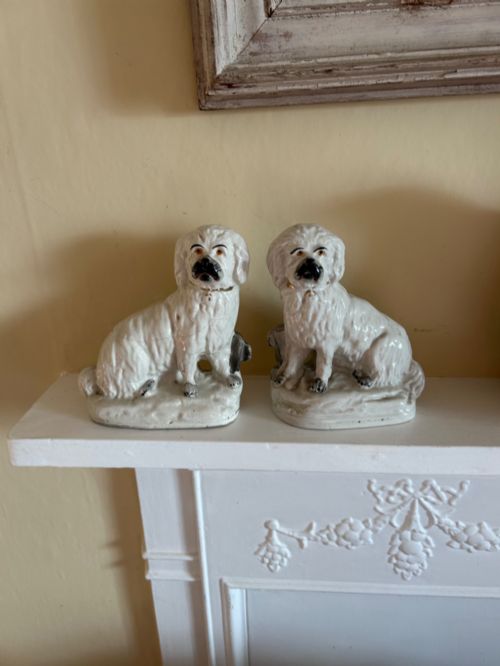


Antique English Ceramic Spaniels
These antique English ceramic spaniels are hearthside figures modelled in pairs to watch over the nineteenth-century mantelpiece with steadfast loyalty.
Antique English Ceramic Spaniels
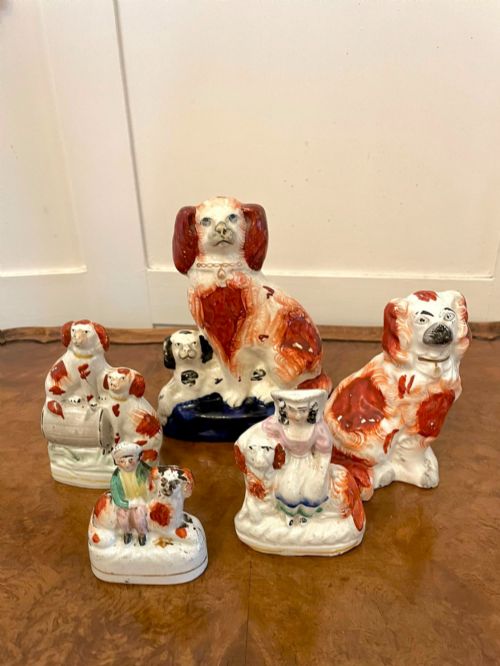
When you search for antique English ceramic spaniels, you encounter decorative figures created across the nineteenth century in Staffordshire potteries. The most common form on this page is the pair of seated comforter spaniels designed to sit either side of a fireplace.
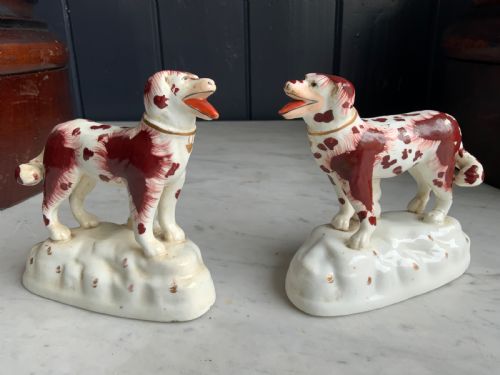
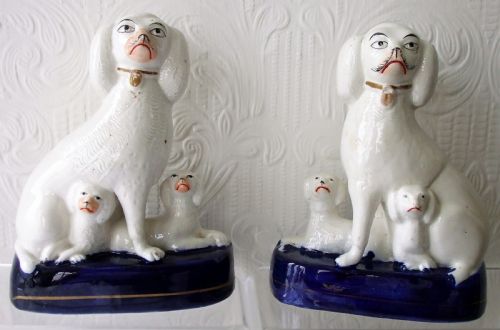
The selection includes poodles, Maltese terriers and King Charles spaniels alongside traditional spaniels, often modelled as pairs or accompanied by pups. These earthenware and stoneware objects date from the Regency era through to the late Victorian period.
How they were made
Potters shaped these figures using earthenware and stoneware clays, often formed in moulds and finished with hand-painted enamel details. The pieces received a clear or coloured glaze before firing in the kiln to seal the ceramic body.
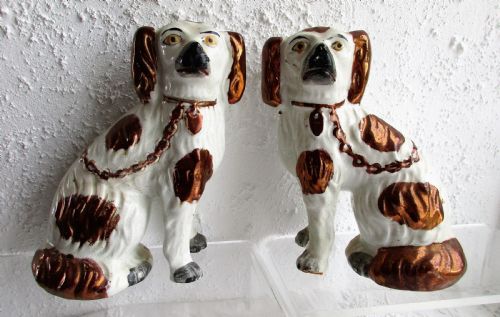
Painters applied enamel colours and copper lustre highlights by hand, occasionally adding gilt touches to collars, chains and lockets. Certain examples incorporated inserted glass eyes prior to the final finishing stages of production.
Materials recorded across the inventory include earthenware, stoneware, ceramic, glaze, enamel, copper lustre and gilt.
What varies in quality
Pairs matched in size, posture and facial expression command greater attention than mismatched assemblies put together later. The presence of original decorative elements, such as unblemished glass eyes or intact copper lustre, elevates the standing of individual figures.
The Antique English Ceramic Spaniels Glossary
- Comforter spaniels
- Staffordshire ceramic figures traditionally placed on mantelpieces to guard the hearth. These dogs represent the loyal pets popular in Victorian parlours.
- Earthenware
- Porous ceramic pottery fired at lower temperatures, commonly used for nineteenth-century Staffordshire figures. It requires a protective glaze to hold liquids and colours.
- Gilt
- A thin layer of gold or gold-coloured material applied to highlight details such as chains, lockets and collars on ceramic figures. It adds a decorative sheen to the fired surface.
- Stoneware
- A dense, durable ceramic material fired at higher temperatures than earthenware. It provides a sturdier body for nineteenth-century animal figures.
Antique English Ceramic Spaniels: Frequently Asked Questions
Why are they called comforter spaniels?
Victorian households placed these ceramic dogs on mantelpieces where they acted as comforting symbols of domestic loyalty and hearthside security.
They earned the name from their association with the small King Charles spaniels kept as lapdogs by royalty and society figures.
How do I date a Staffordshire dog?
Dating relies on stylistic clues, clay composition and the painting techniques used on the surface. Earlier Regency pieces often display simpler modelling compared to the elaborate Victorian examples.
Changes in glaze types and the addition of glass eyes help narrow the period of manufacture across the nineteenth century.
Are these figures always sold in pairs?
Many listings feature matching pairs designed to sit symmetrically at opposite ends of a fireplace mantelpiece. Single figures and larger collections of four or six pieces also appear in the selection.
Original pairs share identical modelling moulds and consistent hand-painted markings applied by the pottery workers.
What colours do these spaniels come in?
The most frequent colourways are black and white or rich red and white markings over a ceramic base. Plain white bodies with gilt highlights and copper lustre accents also feature across the Victorian inventory.
Some variations include poodles and terriers rendered in white or naturalistic tones with painted details.