
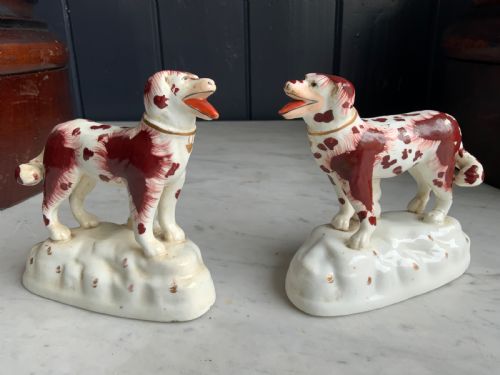
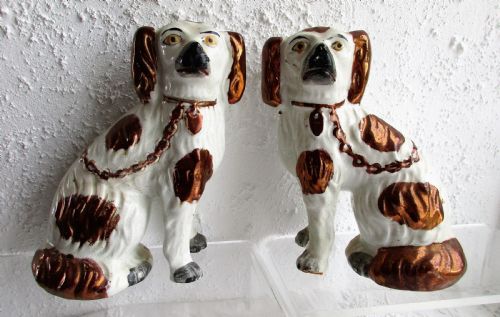


White Porcelain Spaniel Pair
White porcelain spaniel pair figures are classic mantelpiece ornaments modelled as seated dogs, offering instant historic charm to any room.
White Porcelain Spaniel Pair
A white porcelain spaniel pair brings traditional charm to a mantelpiece, depicting seated dogs modeled in pairs. These decorative figurines often feature glazed finishes and detailed modelling designed to capture the likeness of the breed.
Most examples encountered on this page date from the nineteenth century, including Victorian interpretations and Regency styles. Makers produced these pottery figures as ornamental fireplace companions, sometimes adding gilt highlights, blue cushions, or copper lustre details to enhance their visual appeal.
While many listings feature classic earthenware and ceramic figures, white porcelain spaniel pair items stand out for their bright finish. Buyers also find larger grand pairs alongside collections of four seated spaniels displaying hand-painted touches.
How they were made
Potters shaped these figures using ceramic and earthenware materials before applying a glaze to seal the surface. Many examples incorporate lead glaze or white porcelain bodies, providing a smooth base for subsequent decoration.
Makers added decorative elements by hand, utilising enamel paints, gilt highlights, and copper lustre finishes. Some models feature applied encrusting on cushions or detailed hand-painted markings that distinguish individual pieces.
Some spaniels wear bright gilt padlocks around their necks, guarding secrets only a Victorian mantelpiece could keep.
What varies in quality
The sophistication of secondary elements, such as moulded cushions and applied encrusting, distinguishes finer pairs from simpler production pieces. Consistency in the glaze and the overall balance of the matched pair further indicate superior craftsmanship.
Royal Dolton·Beswick
The White Porcelain Spaniel Pair Glossary
- Porcelain
- A fine ceramic material fired at high temperatures to produce a dense, white, and vitrified body. It forms the smooth base for many refined decorative figures.
- Earthenware
- A porous pottery body fired at lower temperatures, commonly used for traditional Staffordshire dog figures. It requires a glaze to achieve impermeability.
- Copper lustre
- A metallic glaze technique that imparts a reflective, coppery sheen to ceramics. Potters applied this finish to highlight collars, chains, and surface details.
- Lead glaze
- A shiny coating containing lead compounds that produces a glossy finish upon firing. This traditional treatment enhances the brightness of the underlying ceramic body.
White Porcelain Spaniel Pair: Frequently Asked Questions
Where were these spaniel figures displayed?
These figures traditionally sat upon mantelpieces on either side of a fireplace. Their matching posture created a symmetrical arrangement suited to Victorian parlours.
Over time, owners also placed them on side tables, chiffoniers, and bookshelves as decorative ornaments.
Why are they often found in pairs?
Makers produced these spaniel figures as matched pairs designed to sit facing one another on a mantelpiece. This symmetry reflected interior design preferences of the nineteenth century.
Matching left and right orientations ensured a balanced display in formal living spaces.
What materials did potters use for them?
Potters shaped these dogs using earthenware, ceramic, and porcelain bodies. They then applied glazes, including lead glaze, to create smooth, protective surfaces.
Decoration often included enamel paints, gilt accents, and copper lustre details applied over the fired glaze.
How do Victorian examples differ from earlier ones?
Victorian figures frequently incorporate bolder gilding, coloured bases, or textured details like blue cushions and encrusting. Earlier Regency interpretations tended toward simpler modelling and restrained decoration.
Manufacturing techniques also evolved through the nineteenth century, shifting from basic earthenware to more refined ceramic bodies.