


Staffordshire Dog Ornaments
Staffordshire dog ornaments are charming ceramic figures shaped as spaniels, poodles, and greyhounds, bringing historic character and mantelpiece charm to any room.
Staffordshire Dog Ornaments
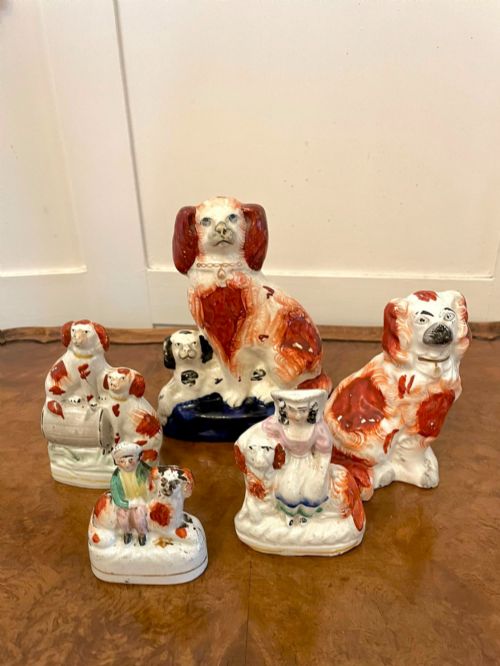
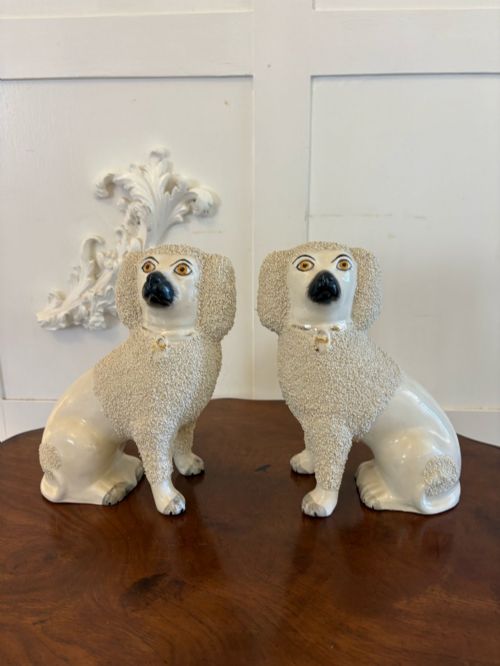
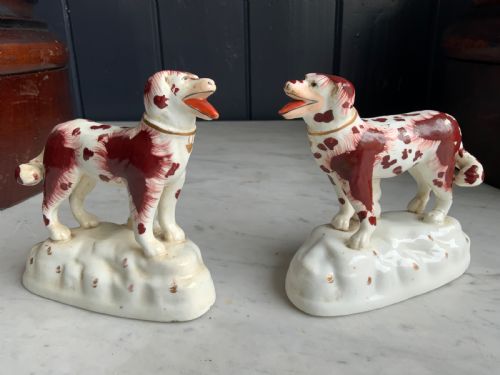
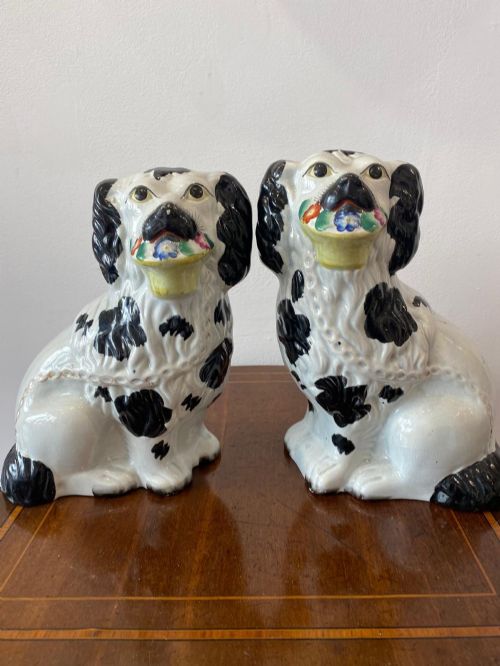
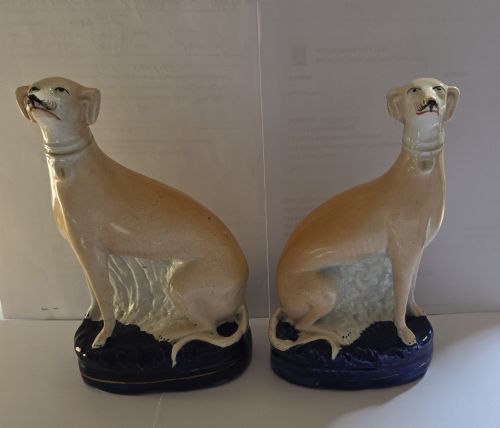
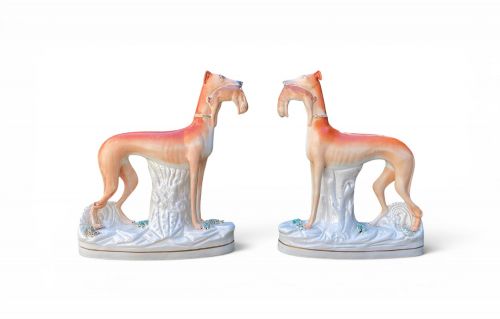
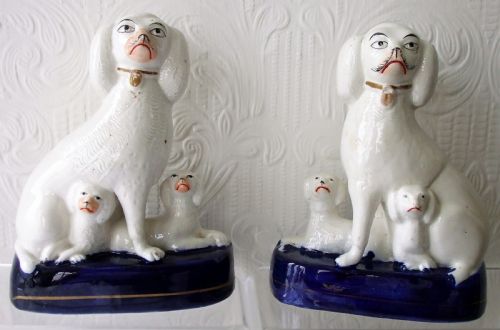
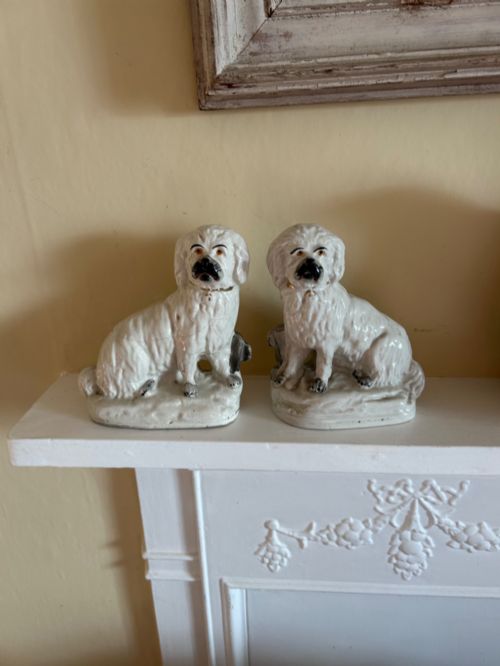
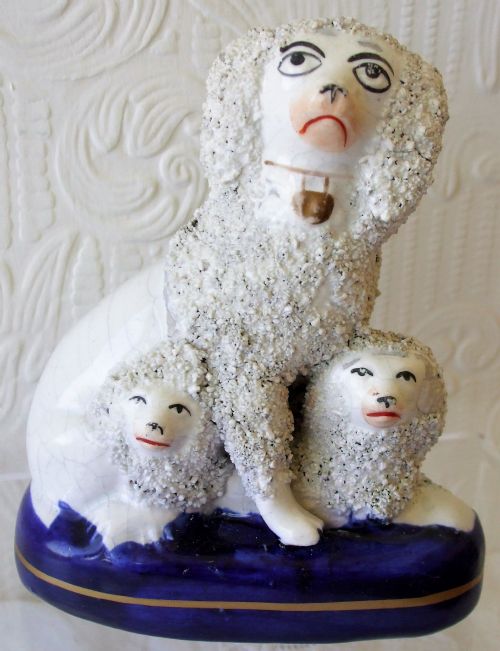
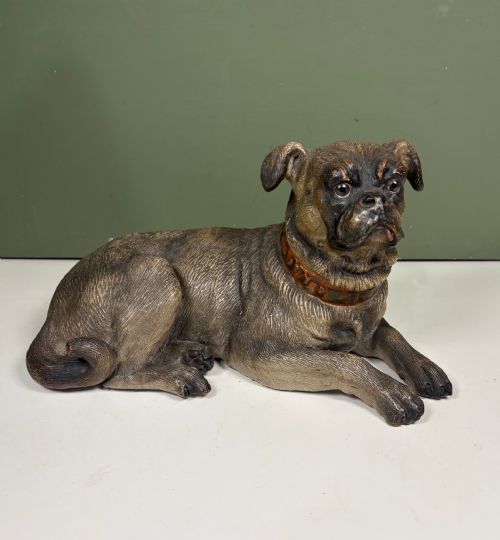
Staffordshire dog ornaments encompass a rich variety of ceramic figures, most frequently encountered as paired spaniels, poodles, greyhounds, pugs, whippets, and terriers. Buyers seeking these traditional mantelpiece decorations will find pairs modelled in seated poses, sometimes accompanied by pups, resting on bases, or fashioned into functional items like inkwells and quill holders.
The objects span multiple periods, stretching from the Georgian era through the Regency and Victorian epochs into the Edwardian years. The nineteenth century yields the highest volume of surviving figures, with earthenware pottery dominating the selection of domestic animals produced by regional makers.
What Varies in Quality
Completeness alters desirability, particularly regarding matched pairs rather than single figures. The presence of secondary elements, such as accompanying pups, inkwells, or quill holder fittings, elevates the complexity of the piece.
Listings feature Victorian earthenware pottery figures, incorporating lead glaze, enamel paint, and gold leaf.
Thomas Parr·Wooley
The Staffordshire Dog Ornaments Glossary
- Earthenware
- A porous pottery body fired at lower temperatures, commonly used for nineteenth-century Staffordshire animal figures. It requires a protective glaze to hold liquids and provide a smooth surface for enamel painting.
- Lead Glaze
- A glossy surface coating containing lead oxide, applied to pottery before firing to yield a shiny finish. This glaze enhances the underlying earthenware body and protects the painted enamel details.
- Enamel Paint
- Vitreous coloured pigments applied over the fired glaze and subjected to a lower second firing to fuse with the surface. These paints provide the distinct black, red, and copper colours on the dogs.
- Gilt
- A thin layer of gold or gold-coloured material applied to collars, lockets, and highlights on ceramic figures. It adds metallic decoration to the finished pottery.
- Quill Holder
- A specialised desk accessory featuring a moulded ceramic figure with integrated channels or slots to rest writing feathers. These functional pieces combine domestic animal subjects with practical workspace utility.
Staffordshire Dog Ornaments: Frequently Asked Questions
Why were Staffordshire dogs made?
Potteries produced these ceramic figures primarily as decorative ornaments for domestic mantelpieces and side tables. Many working-class and middle-class households displayed them to emulate wealthy portrait sitters who owned prized pets.
Over time, specific breeds like spaniels became known as comforter dogs, traditionally placed on windowsills to signal sailors' wives that their husbands were safely at sea.
How do I identify Victorian Staffordshire dogs?
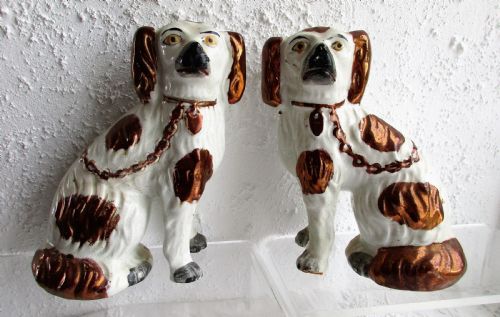
Victorian examples typically feature earthenware bodies covered in a shiny lead glaze, often decorated with hand-painted enamel patches in black, red, or copper lustre. They frequently appear as symmetrical left-and-right facing pairs designed to sit at opposite ends of a fireplace.
Examining the underside often reveals ventilation holes and crazed glaze patterns consistent with nineteenth-century manufacturing methods.
Are all Staffordshire dogs spaniels?
While King Charles spaniels represent a large portion of surviving examples, potters modelled a wide variety of dog breeds. The selection includes poodles, greyhounds, whippets, pugs, dalmatians, and Maltese terriers.
Some breeds served functional purposes beyond simple decoration, functioning as inkwells, quill holders, or featuring modelled pups alongside the adult dog.
How should I display my figures?
Displaying these ornaments as matched pairs works best when they face inward toward each other on a mantelpiece, shelf, or sideboard. Placing them on stable, level surfaces away from heavy foot traffic protects the brittle earthenware bodies from accidental knocks.
Keeping them out of direct sunlight preserves the hand-painted enamel colours and gilt highlights from fading over time.