


Victorian Mantel Dogs
These Victorian mantel dogs are ceramic and bronze figures designed to sit on a fireplace, bringing traditional animal forms into the home.

Victorian Mantel Dogs
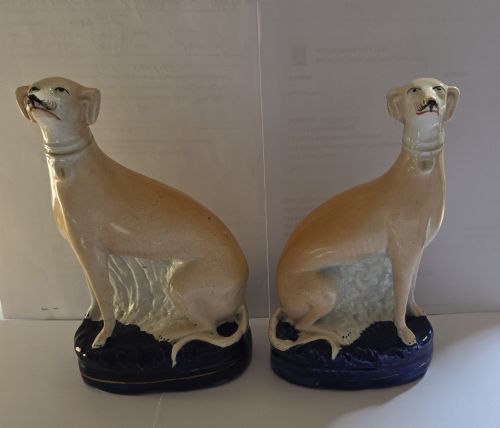
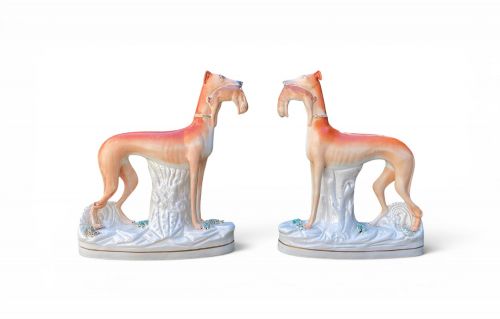
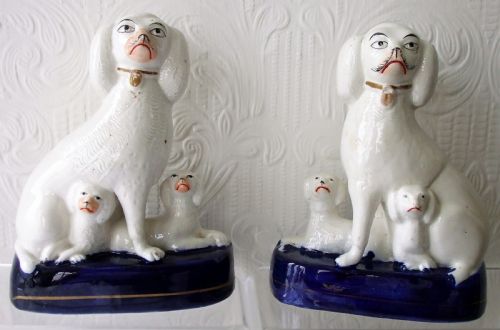
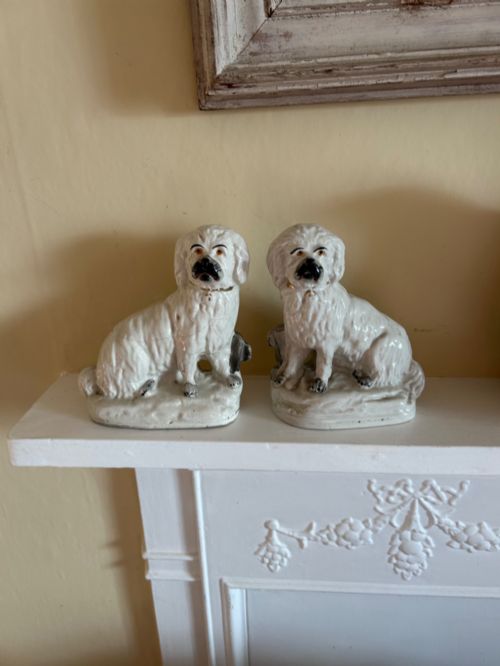
When you search for victorian mantel dogs, you encounter a selection of ceramic figures and bronze sculptures shaped as spaniels, greyhounds, poodles, whippets, pugs, and terriers. These pieces originate across the nineteenth century, with pottery examples dominating the selection alongside occasional metal animalier groups and clock elements.
The most common version met on this page is the pair of Staffordshire pottery spaniels, often modelled as seated comforter dogs facing each other. Alongside these spaniels, greyhounds and poodles appear frequently, sometimes shown with pups or game.
Makers and origins stretch from English regional pottery works to continental porcelain and bronze foundries. The forms range from simple mantel ornaments to functional spill vases and clock groups.
Materials and Methods
Bronze and ormolu figures utilise metal casting techniques, sometimes enhanced with cold painted finishes. These metal pieces typically depict hunting hounds with pheasants or form parts of mantel clocks created by French and English metalworkers.
Listings feature Victorian earthenware, ironstone china, and bronze from the mid to late nineteenth century.
Assessing Quality
The sophistication of the modelling separates standard decorative ornaments from superior sculptural pieces. Animalier bronze sculptures and finely detailed porcelain figures demonstrate more complex anatomy and surface texture than basic earthenware pairings.
Thomas Parr·Mason·Jules Moigniez·P.H. Mourey·Beswick
The Victorian Mantel Dogs Glossary
- Staffordshire
- Pottery figures produced in the Staffordshire potteries of England during the nineteenth century. These ceramic dogs were popular fireside ornaments.
- Comforter spaniels
- Staffordshire spaniel figures placed on mantelpieces to guard the hearth. They typically appear in seated pairs facing inward.
- Spill vase
- A hollow pottery vessel designed to hold wooden spills for lighting fires or pipes. These often incorporate a dog figure standing beside the holder.
- Animalier
- A nineteenth-century artistic style focusing on realistic depictions of animals. Sculptors in France and England produced these bronze and metal works.
- Copper lustre
- A metallic glaze finish creating a reflective, copper-coloured sheen on pottery surfaces. This technique appeared widely on nineteenth-century Staffordshire figures.
- Ormolu
- Gilt bronze mounted or decorated on ornamental objects and clocks. It provides a bright golden finish to nineteenth-century metalwork.
Victorian Mantel Dogs: Frequently Asked Questions
What are Staffordshire mantel dogs?
Staffordshire mantel dogs are ceramic figures made in the nineteenth century to decorate fireplace mantels. They mostly depict popular dog breeds such as spaniels, greyhounds, and poodles.
Potters moulded these figures in pairs so they could sit at either end of a mantelpiece, facing towards the centre of the hearth.
How were mantel dogs used?
These figures served primarily as decorative ornaments for the Victorian parlour fireplace. Some variants included built-in holders known as spill vases.
Spill vases allowed households to store wooden matches or tapers close to the fire for lighting candles and pipes.
How do I tell different dog breeds apart?
Victorian modellers distinguished breeds through characteristic shapes and painted details. Spaniels feature floppy ears and seated postures, while greyhounds and whippets appear leaner and taller.
Poodles often display moulded curls or textured coats, and terriers feature distinct facial structures and smaller proportions.
What materials are these figures made from?
The majority of these mantel figures consist of earthenware or ironstone ceramics. Artisans applied glazes, enamel colours, and sometimes copper lustre or gilt highlights to finish the pieces.
Alternative materials include bronze, ormolu, and porcelain, representing both English and continental European manufacturing traditions.
Are these dogs always found in pairs?
Many nineteenth-century mantel figures were produced as matched pairs designed to frame a fireplace or mirror. Facing left and right respectively, they created a symmetrical arrangement on the mantelpiece.
Individual figures and multi-piece groups including puppies or game also appear within the selection.