
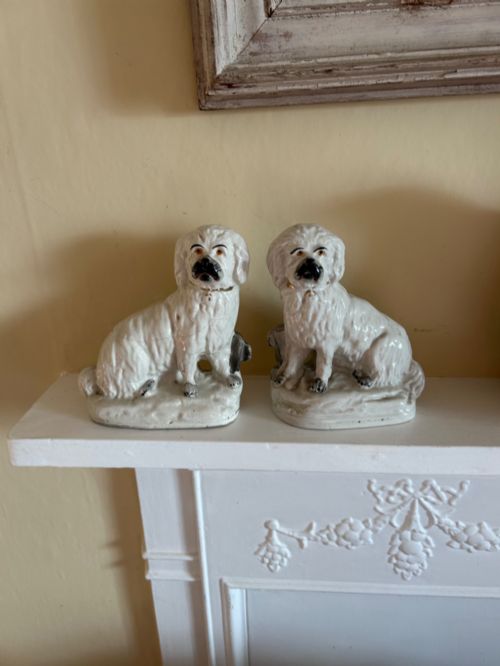


White Ceramic Spaniel Pair
White ceramic spaniel pair pieces are traditional hearthside figures that bring a touch of Victorian domestic comfort to a mantelpiece.
White Ceramic Spaniel Pair
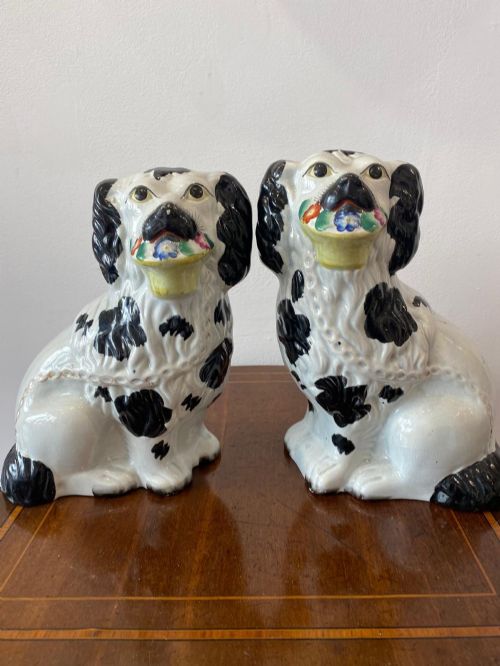
When you search for a white ceramic spaniel pair, you find nineteenth-century decorative figurines designed to sit symmetrically on either side of a fireplace. The most common examples on this page are Victorian Staffordshire earthenware dogs, often accented with gilt highlights or coloured enamel details.
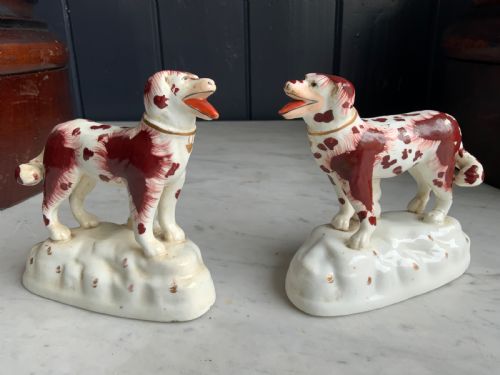
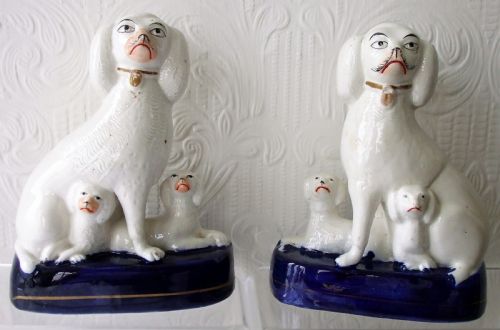
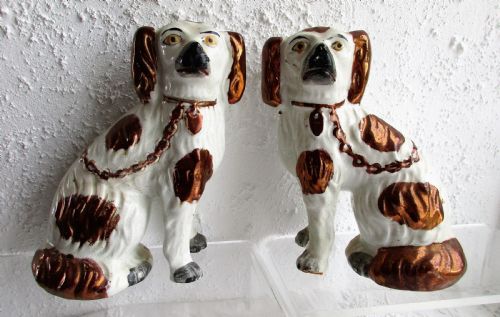
These ceramic figures include seated spaniels, comforter spaniels, and related canine depictions such as poodles with pups, Maltese terriers, and quill holders. Makers also produced figures with blue cushions or copper lustre finishes.
Dating primarily from the nineteenth century, particularly around eighteen-sixty and eighteen-eighty, these pairs reflect the Victorian taste for mantelpiece ornament. Later twentieth-century examples also appear from periods like nineteen-hundred and nineteen-forty.
Earthenware, glaze and enamel decoration
The body of a white ceramic spaniel pair is typically shaped from earthenware or porcelain using traditional pottery techniques. Potters formed these decorative objects in moulds before firing the clay to create sturdy figures.
Surface finish relies heavily on glaze, lead glaze, and enamel to build up the white ground and any added colour. Artisans applied gilt touches and hand-painted details over the fired glaze before a final low-temperature fix.
Some nineteenth-century spaniels doubled as quill holders, keeping the master of the house's writing feathers neatly in check.
Model definition and hand-painted detail
The application of glaze and enamel also dictates the standard of the figure. Better examples display an even, glossy finish without pooling or excessive bubbling across the ceramic surface.
Royal Doulton·Beswick
The White Ceramic Spaniel Pair Glossary
- Comforter spaniel
- A Victorian ceramic dog figure modelled after the King Charles spaniel, traditionally placed on mantelpieces to guard the hearth. These decorative objects often face each other as a matched pair.
- Earthenware
- A porous pottery body fired at lower temperatures, commonly used for nineteenth-century Staffordshire figures. It requires a protective glaze to hold liquids and achieve a smooth surface.
- Lead glaze
- A glossy coating containing lead oxide that melts during firing to produce a shiny finish on pottery. It gives many Victorian figures their characteristic reflective sheen.
- Copper lustre
- A metallic glaze technique that imparts a reflective, coppery sheen to the ceramic surface. Potters used this effect to add decorative borders or highlights to dog figurines.
- Quill holder
- A hollow ceramic figure featuring an inkwell or a slot designed to hold writing feathers. These functional desk accessories often took the form of seated animals.
White Ceramic Spaniel Pair: Frequently Asked Questions
Where did these spaniel pairs sit?
Victorian households traditionally placed a white ceramic spaniel pair on the mantelpiece above the fireplace. They stood at either end of the shelf, facing inward toward the centre.
This symmetrical arrangement was a standard feature of nineteenth-century parlour decoration, intended to create a sense of order and domestic comfort.
What is a comforter spaniel?
Comforter spaniels are nineteenth-century ceramic figures modelled on the small toy spaniels kept by Victorian royalty and nobility. They gained the name because owners found comfort in their companionship.
Potters in Staffordshire reproduced these dogs in large numbers as mantelpiece ornaments for homes across Britain.
How do I date a Staffordshire dog?
Dating relies on stylistic clues such as the modelling of the face, the style of the gilt collar, and the type of glaze used. Figures from eighteen-sixty often feature different facial expressions and enamel markings compared to later nineteenth-century examples.
Examining the base and the weight of the earthenware also helps determine whether a piece originates from the Victorian era or a twentieth-century revival.
Were these dogs always white?
While many examples feature a white glazed body, potters also produced variants with copper lustre, red and white patches, or black markings. Gilt highlights were frequently added to the chain and padlock motifs.
The use of different enamels allowed makers to offer variety within the standard spaniel form.