


Antique Pottery Spaniel Figures
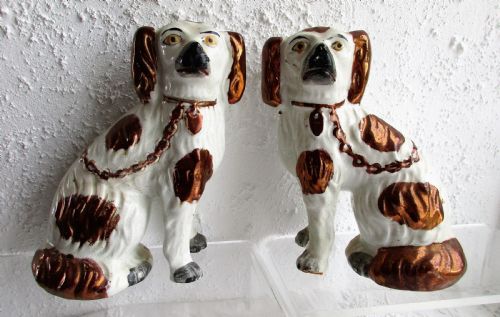
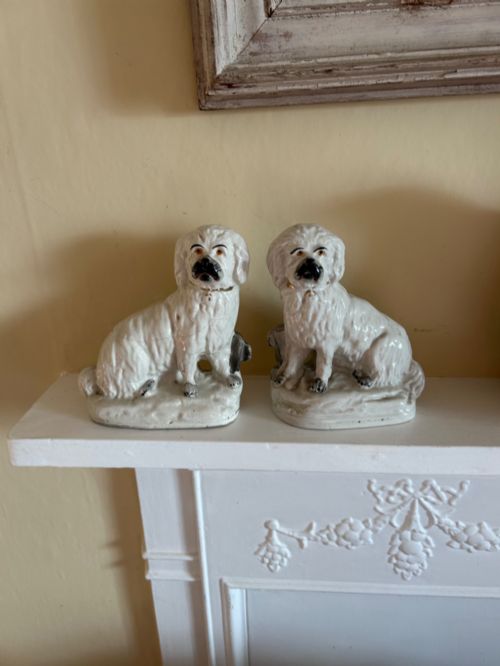
These antique pottery spaniel figures are classic Victorian mantelpiece ornaments, prized for their symmetrical pairing and charming glass or painted eyes.
Antique Pottery Spaniel Figures
When you search for antique pottery spaniel figures, you are looking at nineteenth-century earthenware and ceramic mantel ornaments. The pieces on this page appear most frequently as seated pairs, modelled as King Charles spaniels or comforter dogs designed to sit on either side of a fireplace.
The evidence shows these decorative objects taking various functional and figural forms beyond simple pairs. Listings include money boxes, Toby jugs, quill holders, clock groups, spill vases, and even groupings with children or puppies.
Originating predominantly in the Victorian era, specifically around the middle and later decades of the nineteenth century, these ceramic figures capture domestic Victorian sentiment. They range from small single figures to grand pairs finished with gilt highlights, copper lustre, or hand-painted enamel details.
How they were made
Colour was introduced through enamel decoration, often hand-painted over the glaze to render the characteristic red and white patches of the breed. Some nineteenth-century versions incorporate applied glass eyes for a more lifelike expression.
The listings show materials spanning earthenware, ceramic, copper lustre, gilt, and enamel across nineteenth-century Victorian production.
What varies in quality
The presence of specialised forms, such as clock groups, spill vases, or money boxes, alongside matched pairs in larger scales, distinguishes more ambitious parlour ornaments from standard mantel pieces.
Beswick
The Antique Pottery Spaniel Figures Glossary
- Comforter spaniel
- A Victorian ceramic dog figure traditionally displayed on mantelpieces in mirrored pairs. These mantle ornaments derive their name from the toy spaniels kept by nobility.
- Copper lustre
- A metallic glaze technique producing a warm, coppery sheen. Potters applied this finish to accent collars, lockets, and bodies on nineteenth-century ceramic figures.
- Spill vase
- A hollow cylindrical holder attached to a ceramic figure, designed to hold taper splints for lighting fires and candles. They appear frequently on nineteenth-century animal groups.
- Earthenware
- A porous, fired clay body used widely for nineteenth-century Staffordshire pottery. It requires a vitreous glaze to achieve an impermeable, smooth surface.
Antique Pottery Spaniel Figures: Frequently Asked Questions
Why are Staffordshire dogs found in pairs?
These ceramic spaniels were moulded and decorated as symmetrical pairs to sit at either end of a Victorian fireplace mantelpiece. Placing them facing inward towards each other was standard domestic practice in nineteenth-century parlours.
This paired arrangement created a balanced decorative scheme that framed the hearth. Surviving matched pairs remain central to what collectors look for today.
What were spill vases used for?
Spill vases incorporated into dog figures held thin wood splints called spills, which were used to transfer flames from the hearth fire to candles or lamps. They served a practical daily purpose before the widespread availability of safety matches.
In these pieces, the vase tube stands beside or behind the ceramic spaniel, combining utility with decorative mantel sculpture.
Are all these figures made of the same ceramic?
The listings consist primarily of earthenware and ceramic bodies finished with various glazes and enamels. Some pieces utilise stoneware or incorporate metallic finishes like copper lustre and gold paint.
Manufacturing methods evolved through the nineteenth century, leading to variations in weight, clay density, and surface decoration across different workshops.