



Victorian Mantelpiece Spaniels
Victorian mantelpiece spaniels are ceramic figures made to sit on hearths, bringing traditional English pottery into domestic rooms.
Victorian Mantelpiece Spaniels
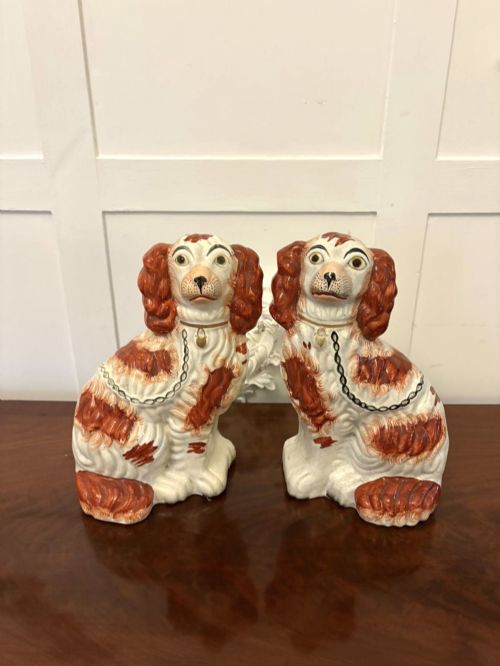
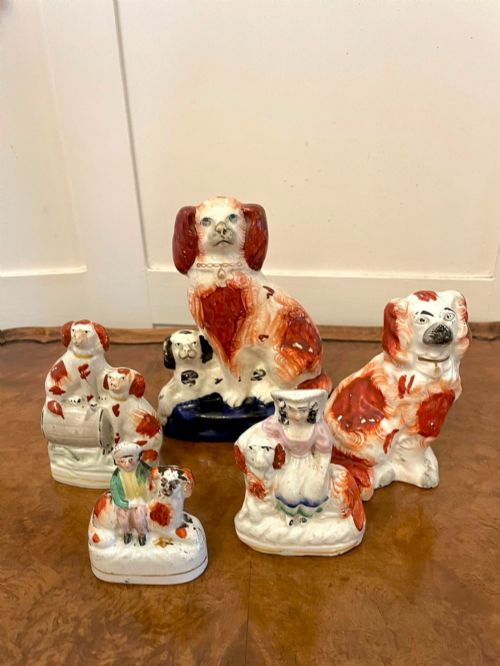
Victorian mantelpiece spaniels comprise ceramic figurines and pottery figures originating across the nineteenth century, including pieces dated to eighteen hundred, eighteen forty-five, eighteen sixty, eighteen eighty, eighteen ninety, and nineteen hundred. Buyers searching for victorian mantelpiece spaniels encounter Staffordshire dogs, King Charles spaniels, and pairs featuring musicians alongside dogs.
Most examples appear as pairs of black and white Staffordshire dogs, white Staffordshire dogs, or copper lustre Staffordshire dogs. These decorative objects take the form of individual ceramic figures or collections numbering four, five, or six pieces.
How they were made
Makers utilised ceramic materials to produce hollow figures suited for display on fireplaces and shelves. The application of glaze and paint varied across workshops, determining the glossy or matte appearance of each spaniel.
Victorian Mantelpiece Spaniels Retail Price Guide 2026
Typical asking prices for victorian mantelpiece spaniels among the pieces listed under this phrase on Sellingantiques today, from the lower quarter to the upper quarter. They describe what is for sale here now, not the wider market.
Listings span the nineteenth century, utilising earthenware, stoneware, lead glaze, and enamel paint across decorative figurine forms.
What varies in quality
Quality rests upon the crispness of the mould and the precision of the hand painting. Finer examples display carefully rendered facial expressions and clean enamel work rather than hurried brushstrokes.
The presence of matching pairs and consistent glaze coverage distinguishes superior sets from mismatched groupings. Richer copper lustre applications and well-preserved painted details elevate certain figures above standard production pieces.
Beswick
The Victorian Mantelpiece Spaniels Glossary
- Earthenware
- Porous pottery fired at lower temperatures, commonly used for nineteenth-century decorative figures before being glazed. It forms the structural body of nearly all these spaniels.
- Lead glaze
- A shiny coating applied to pottery before a second firing to create a waterproof and glossy surface. This treatment gives many Victorian figures their characteristic sheen.
- Copper lustre
- A metallic glaze technique that produces a reflective, copper-coloured sheen on the ceramic surface. Potters applied this finish to create ornate decorative effects on select spaniels.
- Staffordshire
- A geographic region in England famous for its potteries producing earthenware figures throughout the nineteenth century. Most mantelpiece dogs originate from this district.
Victorian Mantelpiece Spaniels: Frequently Asked Questions
Where did these spaniels sit?
These ceramic figures stood upon fireplace mantels and hearths in nineteenth-century homes, serving as domestic ornaments.
Pairs typically faced inward toward each other from opposite ends of the mantelpiece.
Were they sold in pairs?
Potters frequently manufactured these dogs in matching left and right facing pairs for balanced mantelpiece display.
Collections of four, five, or six pieces also appear in nineteenth-century groupings.
What colours do they come in?
Common variations include black and white markings, plain white bodies, and copper lustre finishes.
Hand-painted details added golden chains, red muzzles, and dark eyes to the glazed ceramic bodies.
How do I clean these ceramics?
Dust the glazed and painted surfaces gently with a soft, dry cloth to remove accumulated particles.
Avoid using liquids or abrasive cleaners that might damage the historic enamel paint and lead glaze.