
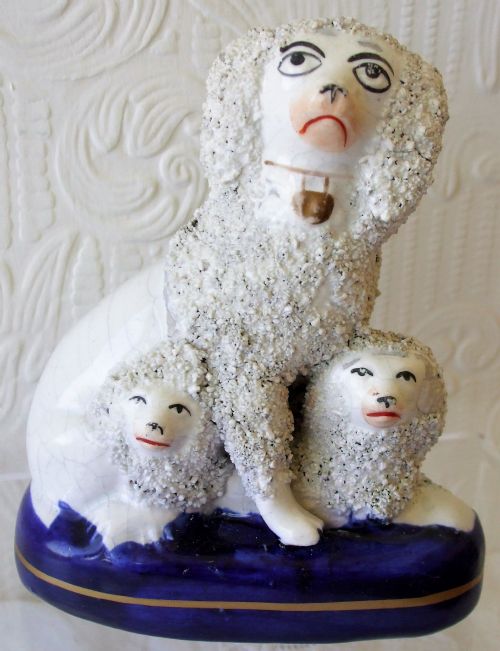


Porcelain Dog Figurine
A porcelain dog figurine brings character and history to a room, ranging from Staffordshire spaniels to Meissen and Chinese figures.
Porcelain Dog Figurine
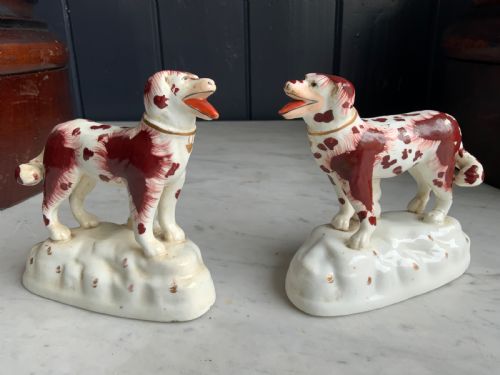
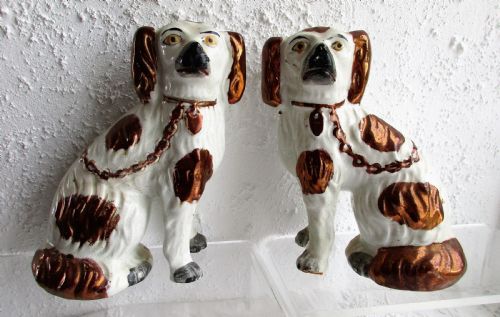
A porcelain dog figurine encompasses everything from Victorian Staffordshire spaniels and poodles to German porcelain hounds and Chinese Qing dynasty foo dogs. Buyers searching for a porcelain dog figurine encounter pairs meant for mantelpieces, quill holders, and detailed figure groups modelled with hunting dogs or puppies.
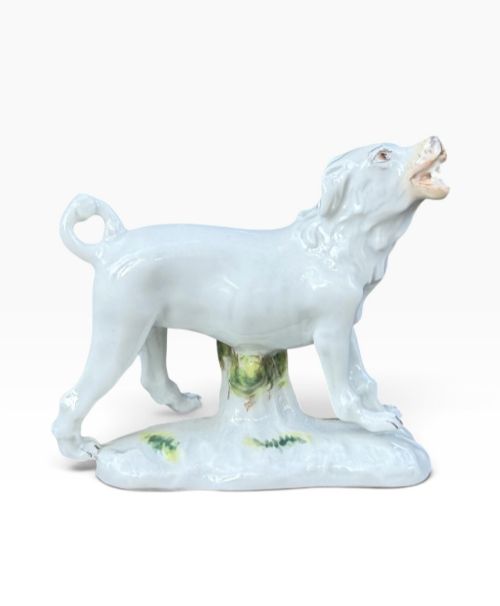
The selections span centuries, featuring Georgian pieces from Derby, nineteenth-century English pottery, and continental works from Meissen, Dresden, and Royal Dux. Staffordshire pairs in white, gilt, and painted glazes dominate the offerings, alongside Japanese Hirado and Kutani guardian lions.
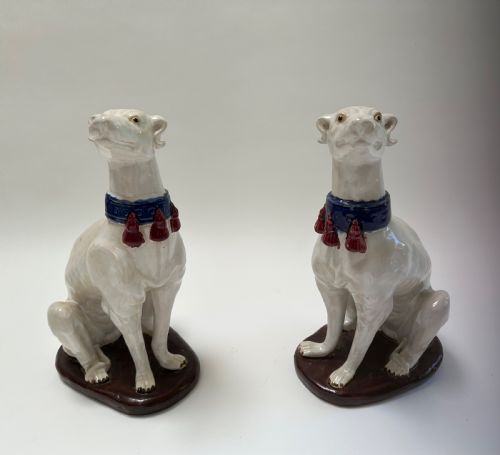
Beyond domestic pets like spaniels and greyhounds, the category extends to mythological and guardian animals such as karashishi and foo dogs. Collectors find both single cabinet pieces and matched pairs intended to sit facing each other on either side of a fireplace.
Materials and production methods
Factories such as Meissen, Derby, and Minton employed skilled modellers to sculpt complex figure groups and individual animals with realistic textures. Surface treatments range from crisp blanc de chine finishes to rich overglaze enamel painting and gilt highlights applied during secondary firings.
The selection includes functional objects such as quill holders and trinket boxes alongside pure decorative sculptures.
Markers of distinction
Quality rests in the crispness of the modelling and the precision of the hand-painting on the face, coat, and eyes. Early and factory-made continental pieces often show finer anatomical detail and more complex glazing than mass-produced domestic pottery.
The preservation of original gilt accents, gold leaf, and enamel colours without excessive rubbing determines the desirability of a piece. Matched pairs with uniform glaze and minimal kiln flaws command greater attention from collectors than mismatched or heavily restored examples.
Meissen·Thomas Parr·Minton·Rosenthal·Wedgwood and Co·Royal Dux·Ernst Wahliss
The Porcelain Dog Figurine Glossary
- Staffordshire pottery
- Earthenware figures and groups produced in the Staffordshire potteries of England, particularly popular during the Victorian era. These often depict spaniels, greyhounds, and poodles intended for display on mantelpieces.
- Blanc de chine
- A French term for white porcelain originating from China, featuring a glossy transparent glaze that fuses with the white body. It highlights the smooth, unpainted sculptural qualities of figures like gundogs and puppies.
- Quill holder
- A functional ceramic object incorporating a hollow or receptacle designed to hold writing feathers. Dog figures were frequently adapted with baskets or bases to serve this dual purpose on a desk.
- Parian ware
- A fine-grained unglazed biscuit porcelain resembling marble, developed in the nineteenth century. It was widely used for sculptural figure groups and portrait busts of dogs and humans.
- Foo dog
- A traditional Chinese guardian lion, often rendered in porcelain and enamel. These mythical beasts serve as protective statues flanking doorways or interior spaces.
Porcelain Dog Figurine: Frequently Asked Questions
How do I date a Staffordshire dog?
Dating relies on examining the weight of the clay, the depth of the glazing, and the style of the painting on the eyes and muzzle. Earlier nineteenth-century examples often display simpler block colouring and distinct crazing within the earthenware body.
Changes in collar design and the presence of ventilation holes underneath also provide clues to the decade of manufacture. Comparing the modelling to documented factory pieces helps narrow down the production period.
What is the difference between porcelain and earthenware?
Porcelain is fired at much higher temperatures, resulting in a vitrified, non-porous body that often rings when struck and can appear translucent under strong light. Earthenware is a softer, coarser pottery body that requires a glaze to become waterproof and opaque.
Many popular nineteenth-century dog figures use earthenware covered in a thick white glaze, while fine continental and Chinese pieces utilise true porcelain.
How should I clean antique porcelain figures?
Dusting with a soft, dry artist's brush removes surface dirt without risking delicate enamel painted details or gold leaf highlights. Avoid soaking pieces with porous earthenware bodies or old repairs in water.
Harsh chemical cleaners strip away fragile overglaze decorations, so gentle wiping with a barely damp cloth suffices for stubborn grime.