
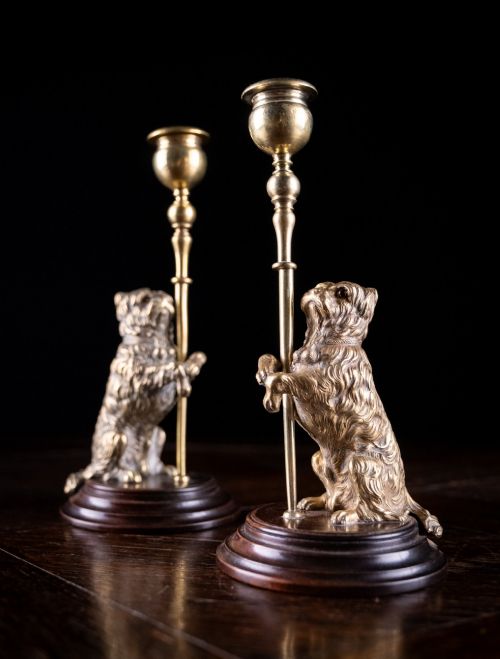
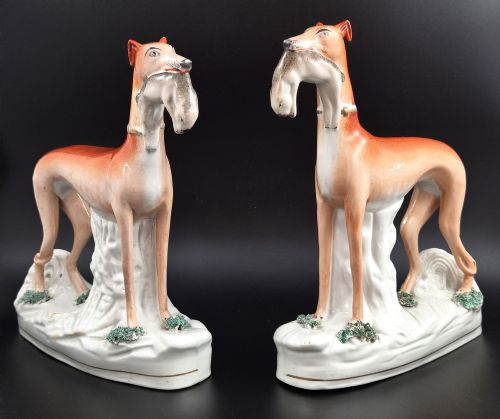
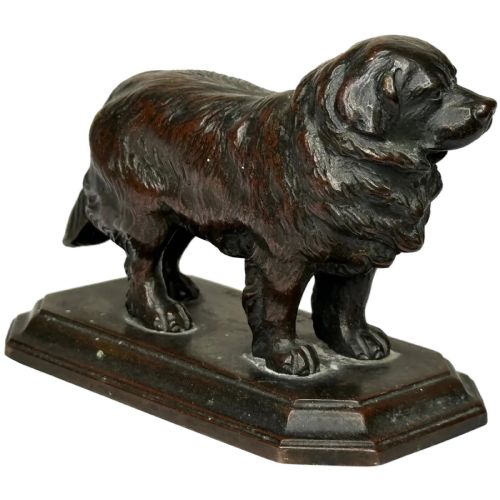
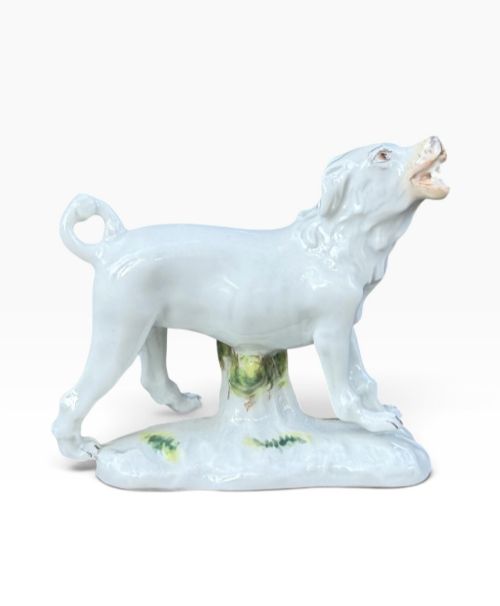
Antique Dog Statue
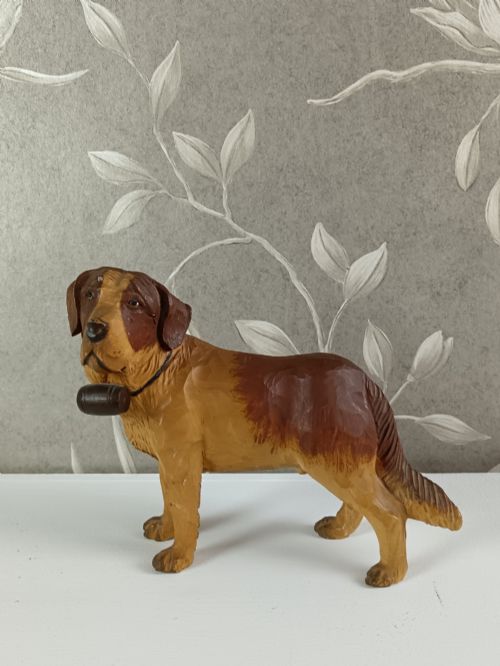
An antique dog statue captures the fidelity and character of hounds, lapdogs and working breeds in bronze, ceramic and wood.
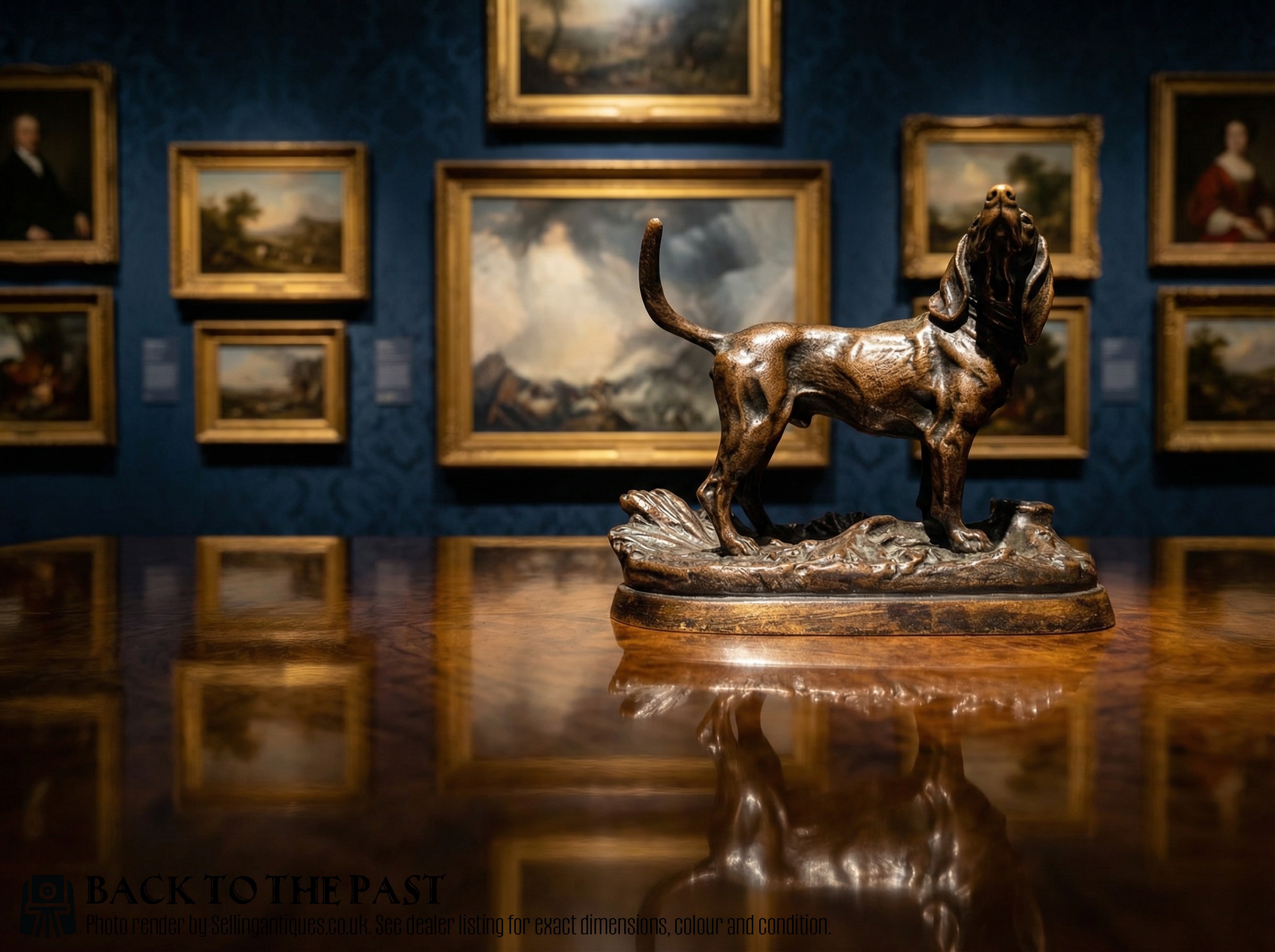
Antique Dog Statue
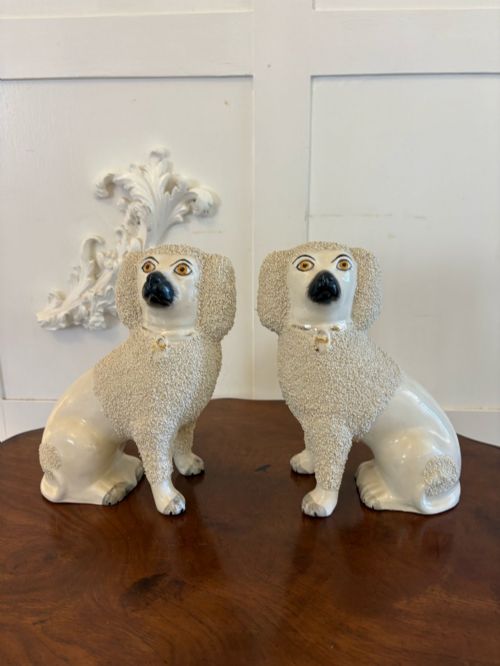
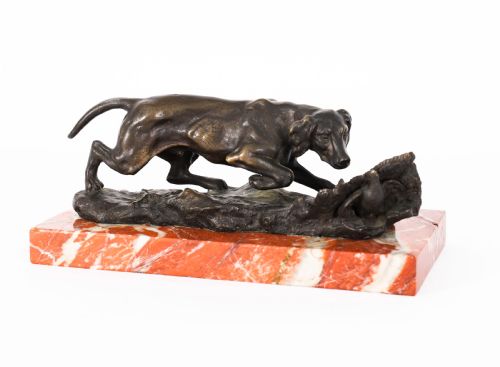
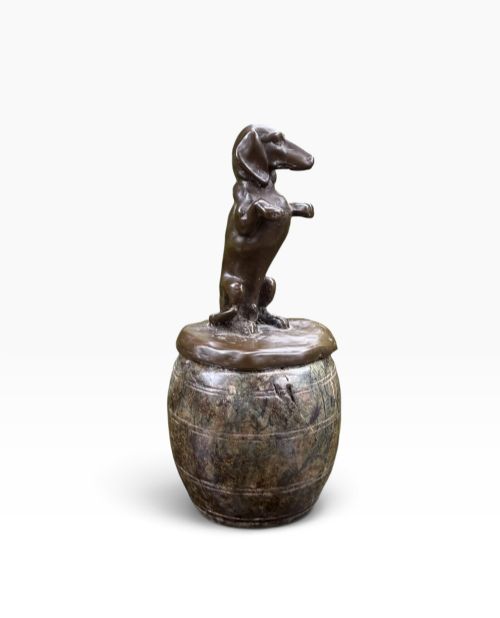
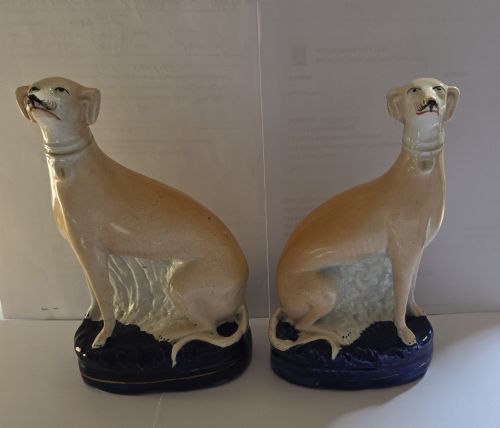
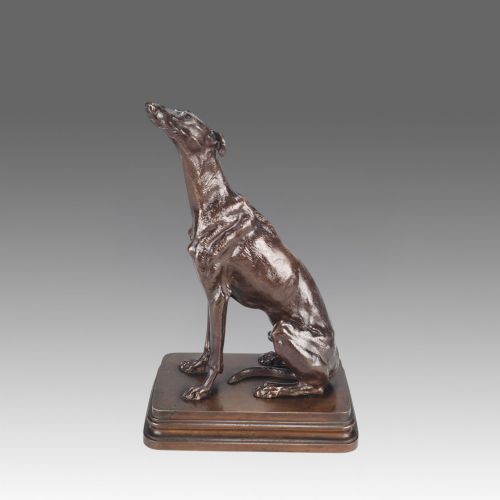
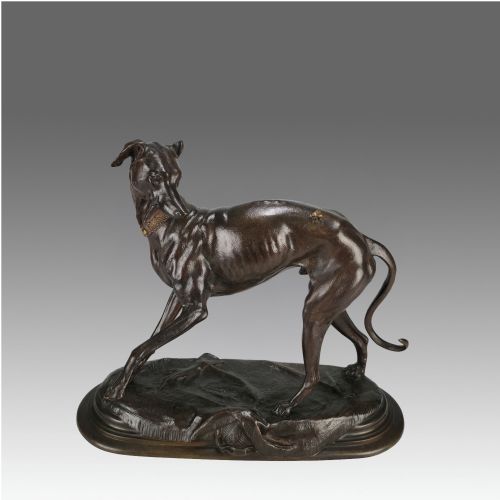
An antique dog statue encompasses sculptural depictions of hounds, terriers, spaniels and working breeds fashioned across the nineteenth and early twentieth centuries. These figures range from domestic Staffordshire pottery poodles and greyhounds to naturalistic French and Viennese bronze studies.
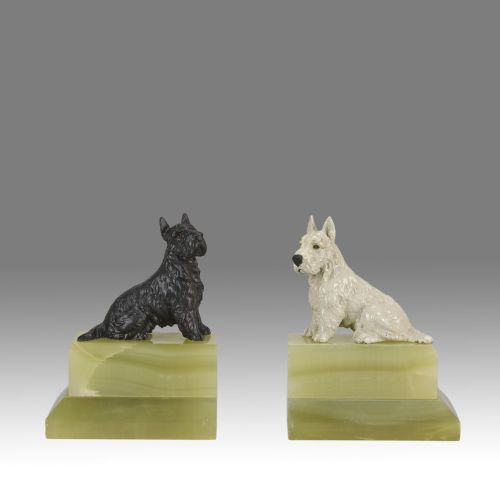
Collectors frequently encounter Staffordshire pairs intended for mantelpieces alongside European animalier bronzes and carved wooden Asian temple figures. The selection spans utilitarian bookends and candlesticks to life-sized terracotta and lead garden hounds.
The material vocabulary of these sculptures extends from glazed earthenware and cold-painted bronze to carved alabaster and lacquer. Each piece reflects the aesthetic priorities of its period, shifting from British domestic ceramics to continental realism and Meiji period metalwork.
How they were made
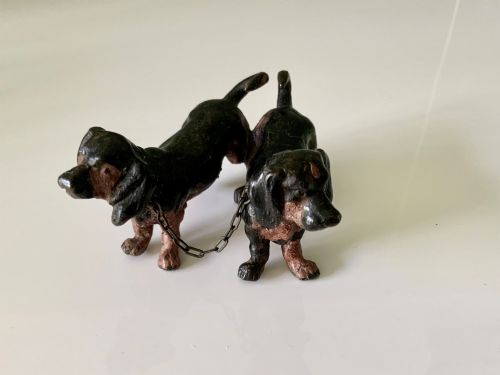
Metal sculptures rely on the lost-wax casting technique for bronzes, allowing makers to capture musculature and fur detail before applying cold-painted polychrome or natural patination. Brass and cast lead pieces utilise traditional foundry methods suited to heavier domestic and garden ornaments.
Ceramic figures combine moulded earthenware or porcelain bodies with hand-painted enamel decoration and transparent glazes, often finished with metallic lustre or gilt highlights. Carved works utilise timber, Derbyshire alabaster and marble, shaped through chiselling and hand-polishing.
Antique Dog Statue Retail Price Guide 2026
Typical asking prices for dog statue among the pieces listed under this phrase on Sellingantiques today, from the lower quarter to the upper quarter. They describe what is for sale here now, not the wider market.
Listings feature Victorian earthenware, Meiji period bronzes, and Edwardian cold-painted metalwork.
What varies in quality
The distinction between standard commercial output and exceptional work lies in anatomical precision and surface finishing. Master bronze sculptors achieved lifelike tension and delicate chiselling in the rendering of coats and expressions, whereas lesser items rely on simplified casting.
In ceramics and terracotta, quality shows in the crispness of the moulded details, the evenness of the glaze, and the subtlety of the underglaze or enamel painting. Hand-carved wooden and alabaster examples reveal craftsmanship through the depth of relief and the sensitivity of the carving.
Carl Kauba·Tsunemitsu·Shosai·Alfred Dubucand·Alfred Barye·Franz Bergman·Dora Heber·P J Mêne·Masaaki·Pierre Jules Mene·Prosper Lecourtier·Jules Moigniez·Bright And Sons·Delabrierre
The Antique Dog Statue Glossary
- Animalier
- A nineteenth-century artistic movement focused on the realistic portrayal of animals. Sculptors in this tradition studied anatomy closely, often working in bronze.
- Cold-painted bronze
- A Viennese technique where bronze figures receive non-fired oil paint applications over a metallic base. Collectors look for the retention of this delicate surface decoration.
- Staffordshire pottery
- Earthenware figures produced in the English county of Staffordshire, commonly featuring pairs of spaniels, greyhounds or poodles intended for display.
- Okimono
- A Japanese decorative carving intended for display on a shelf or tabletop. These pieces frequently depict animals and subjects from daily life.
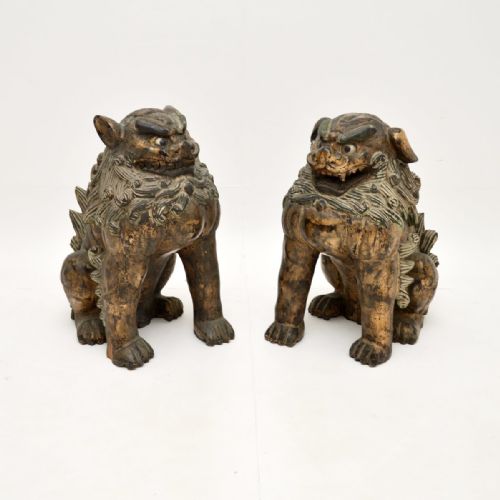
- Foo dog
- A traditional Chinese guardian lion depicted as a stylized canine protector. Pairs of these figures traditionally stood at temple and courtyard entrances.
Antique Dog Statue: Frequently Asked Questions
What materials were used?
Maker workshops utilised bronze, brass, terracotta, porcelain, earthenware, marble, wood and lead.
Material choice frequently aligns with the geographic origin and period of the sculpture.
What is an animalier bronze?
This term describes nineteenth-century European sculptures dedicated to realistic animal subjects.
Prominent founders captured movement and anatomical accuracy with great technical skill.
Where were these statues placed?
Domestic figures occupied mantelpieces, side tables and bookshelves as decorative ornaments or functional bookends.
Larger lead and terracotta hounds stood in gardens, hallways and entrance porches.