
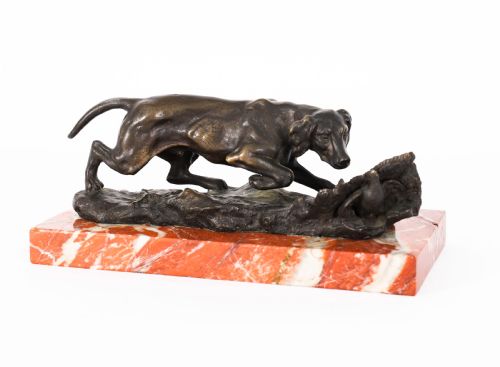
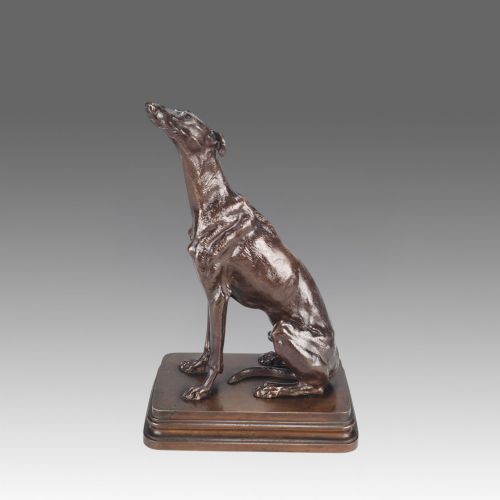
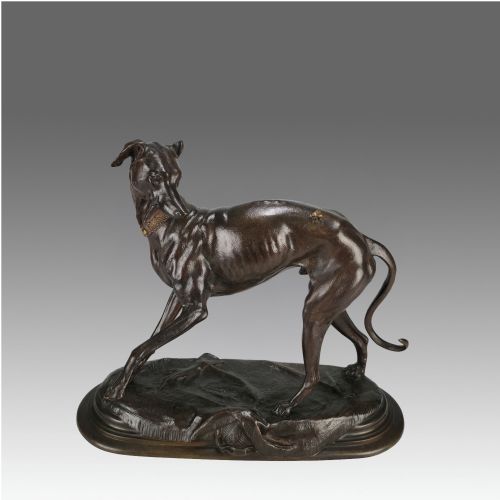


Bronze Hound Figurine
A bronze hound figurine captures the muscular tension and alert grace of the canine form, making it a enduring desktop or mantel centrepiece.
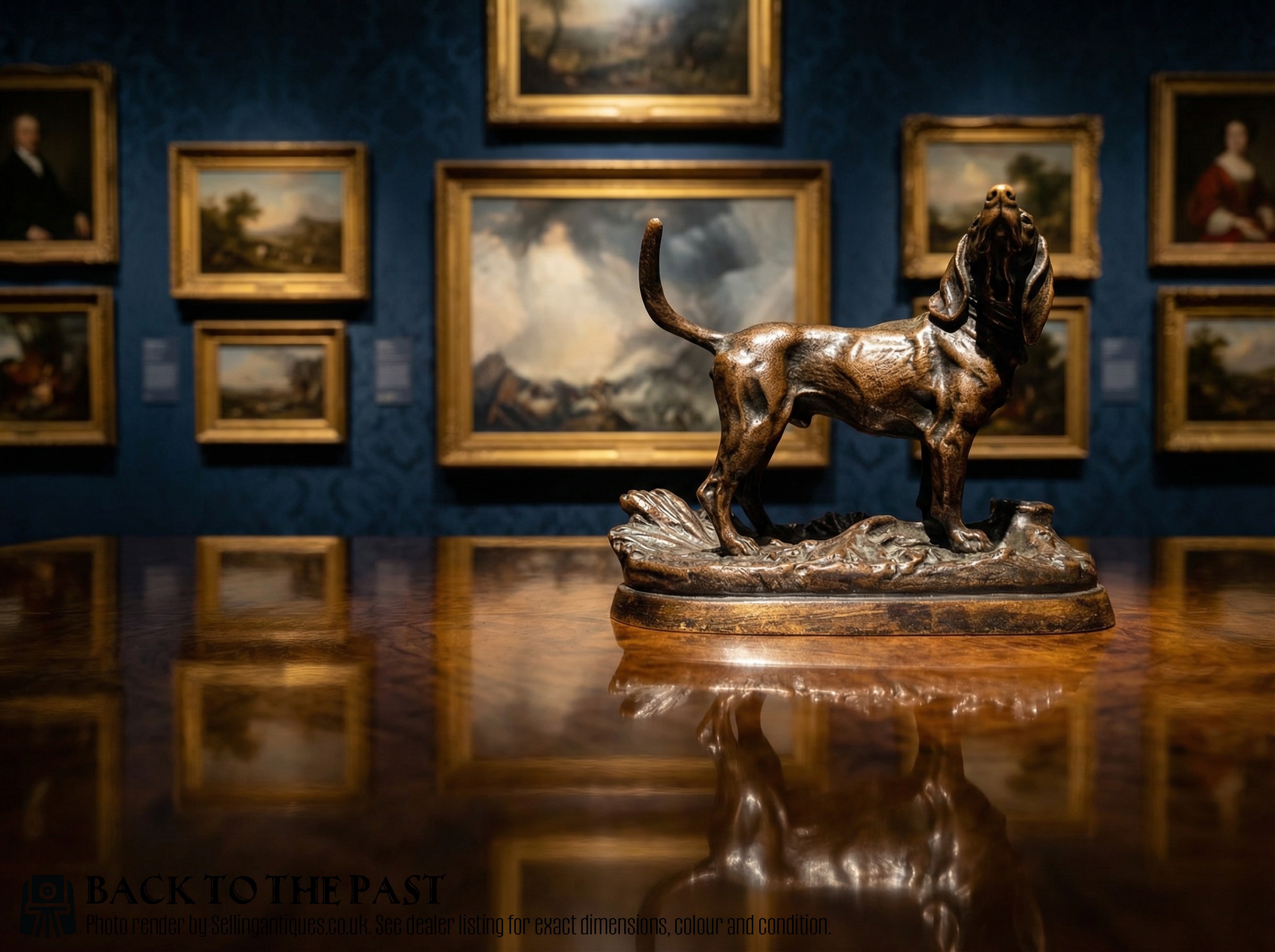
Bronze Hound Figurine
A bronze hound figurine represents the work of nineteenth-century and early twentieth-century sculptors who studied animal anatomy in motion and repose. When you search for bronze hound figurine, you encounter greyhounds, bassets, setters, and hunting dogs rendered with lifelike precision.
The objects take the form of small sculptures, table lamps, night lights, and fireside statues. Most examples stem from the French Animalier school, alongside Victorian English works and Art Deco interpretations.
How they were made
Foundries produced these pieces using the lost-wax casting method or sand casting in bronze, patinated metal, and spelter. Artists achieved varied surface tones through chemical patination, creating dark brown, green, or bright metallic finishes.
Many sculptures incorporate heavy bases of marble, onyx, or cast iron to anchor the dynamic postures of the hounds and hunting groups.
Several hounds share their metal stage with unexpected companions, including balls, birds, and even fleeing flies.
What varies in quality
The fidelity of the musculature and the crispness of the chasing separate standard castings from masterworks. Finer pieces retain sharp details in the fur, collars, and ground elements without soft edges from worn moulds.
The quality of the foundry work and the richness of the applied patination dictate the visual depth of the metal. Heavier stone bases fitted securely to the sculpture also signal superior construction.
Carl Kauba·Alfred Dubucand·Alfred Barye·Auguste Nicholas Cain·Arthur Waagen·Geo Maxim·Antoine Louis Barye·Joseph Francois Victor Chemin·Christophe Fratin·John Willis Good·P J Mene·Nikolai Lieberich·Barbedienne·L Bureau
The Bronze Hound Figurine Glossary
- Animalier
- A nineteenth-century artistic movement focused on the realistic portrayal of animals. Practitioners specialised in capturing wild and domestic beasts in dynamic or resting poses.
- Patinated Bronze
- Bronze treated with chemical solutions to produce a specific surface colour and tone. This finish protects the metal and defines the sculptural contours.
- Spelter
- A zinc alloy frequently used as a cost-effective alternative to bronze during the Art Deco period. It accepts metallic and painted finishes readily.
- Lost-wax casting
- A traditional metal casting technique where a model is used to create a mould, allowing for intricate detail and undercut forms in the final metal sculpture.
Bronze Hound Figurine: Frequently Asked Questions
What is an animalier bronze?
An animalier bronze is a small nineteenth-century sculpture depicting animals in realistic anatomical detail. These works focus on the natural behaviour and physical power of hounds and wildlife.
Artists observed creatures in motion to create lifelike poses that remain popular with collectors today.
How do I clean a bronze hound?
Dust the surface gently with a soft, dry brush to remove particles without disturbing the underlying patination. Avoid harsh chemical cleaners or abrasive cloths that strip the metal finish.
Applying a very light coat of microcrystalline wax periodically helps protect the bronze from atmospheric moisture.
Are spelter and bronze different?
Spelter is a softer zinc alloy utilised as an affordable alternative to bronze, particularly in Art Deco figures. Bronze is a much heavier, durable copper alloy that withstands wear far better than spelter.
You can often distinguish them by weight and by examining the underside for the greyish tone of zinc beneath the paint.
Where should I display a sculpture?
Place your figure on a stable mantelpiece, desk, or table away from direct sunlight and damp conditions. Heavy marble and onyx bases provide natural stability for display on flat surfaces.
Position the piece where adequate lighting highlights the contours of the hound and the richness of the patina.