
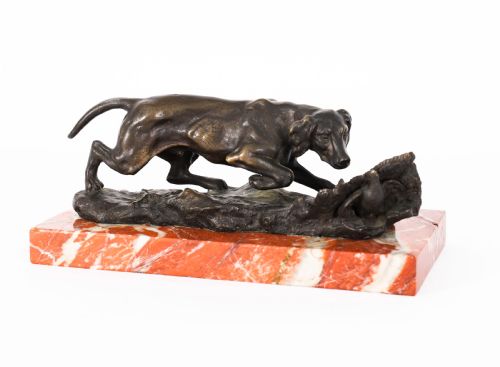
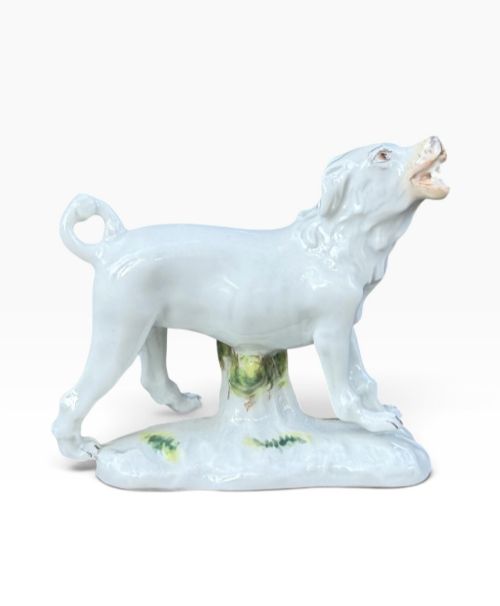
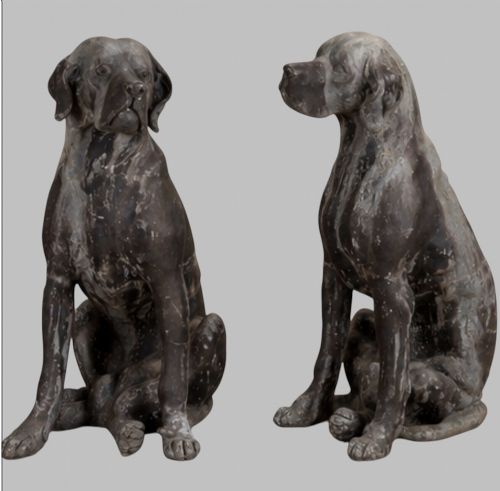


Vintage Hunting Dog Statue
A vintage hunting dog statue brings muscular grace and historical character into a room, capturing hounds and sporting dogs in bronze, marble and porcelain.
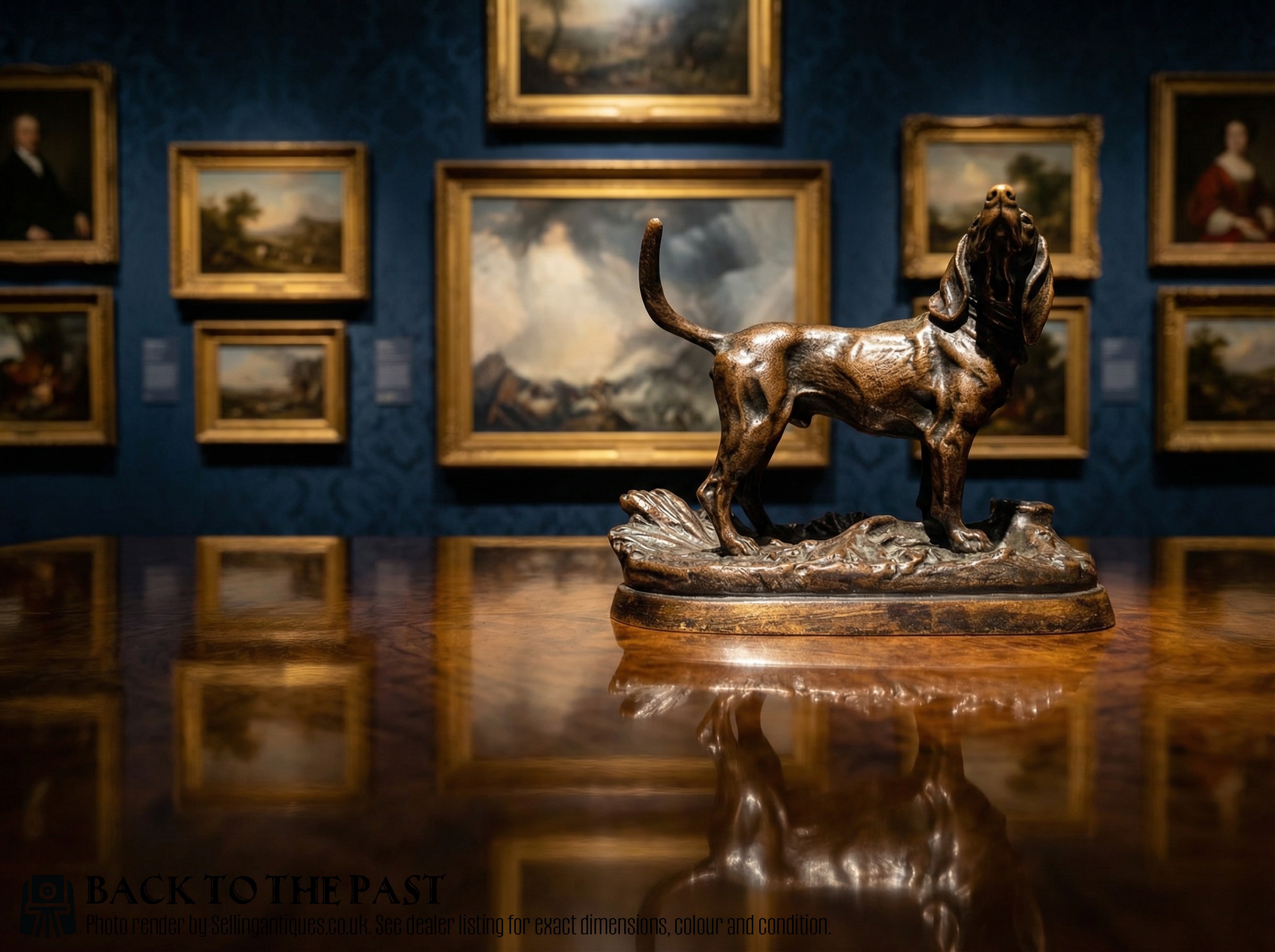
Vintage Hunting Dog Statue
When you search for a vintage hunting dog statue, you are looking at solid metal castings, carved stone bases and glazed ceramic figures depicting hounds, setters and spaniels. These works range from small tabletop ornaments to heavy garden statues designed to anchor a room or hallway.
The pieces on this page lean heavily towards nineteenth-century French animalier bronzes mounted on marble plinths, alongside early twentieth-century porcelain figurines and spelter works. You will encounter resting hounds, sporting dogs with game, and monumental lead figures reflecting distinct periods of domestic and garden display.
How they were made
Foundry workers cast the bronze and spelter sculptures using traditional methods, often finishing the metal with rich patinas to highlight muscle and fur. These figures were then bolted firmly onto heavy bases of carved marble or onyx.
Ceramic and porcelain versions relied on skilled moulding and hand-painting at factories such as Meissen, Royal Dux and Capodimonte. Lead and iron variants used heavy sand casting to create robust garden and fireside figures.
Several hounds are accompanied by hunted game, reminding viewers of their working origins.
What varies in quality
The distinction between standard works and exceptional pieces lies in the crispness of the modelling and the depth of the casting detail. Superior metal sculptures show fine definition in the coat and musculature without losing organic movement.
Quality also rests in the integration of the materials, such as a well-fitted marble plinth or a rich, unblemished patina that has aged naturally over time. Factory-made ceramics depend on the precision of the glaze and the delicacy of the hand-painted detailing.
Carl Kauba·Jules Moigniez·Antoine Louis Barye·Christophe Fratin·Dubucand
The Vintage Hunting Dog Statue Glossary
- Animalier
- A nineteenth-century artistic movement focused on the realistic depiction of animals, particularly in bronze. Sculptors in this tradition studied anatomy closely to capture creatures in motion or repose.
- Spelter
- A zinc alloy frequently used as a less expensive alternative to bronze during the late nineteenth and early twentieth centuries. It was often painted to simulate the appearance of aged bronze.
- Patinas
- The surface coloration and chemical sheen acquired by metal over time or applied intentionally through heat and acids. A good patina enhances the visual depth of a bronze casting.
- Parian
- A fine-grained white porcelain developed in the nineteenth century to imitate carved marble. It is typically left unglazed to give a biscuit-like matte texture.
- Plinth
- The heavy base or block upon which a sculpture is mounted. In these pieces, it is frequently fashioned from contrasting coloured marble or onyx.
Vintage Hunting Dog Statue: Frequently Asked Questions
How do I clean a bronze hound statue?
Dust the bronze gently with a soft dry cloth to remove surface particles.
Avoid chemical polishes that strip away the historical patina and ruin the surface finish.
Where should I place a heavy marble base sculpture?
Position the piece on a sturdy console table or sideboard where the heavy stone base is fully supported.
Keep the sculpture away from direct heat sources and strong sunlight to protect the marble and metal.
How can I tell spelter from bronze?
Spelter is lighter in weight and softer than bronze, often showing a greyish metal underneath worn paint.
Bronze is heavier, denser, and develops a genuine oxidation layer rather than flaking.
Are porcelain dog figures fragile?
Porcelain and ceramic figures require careful placement in low-traffic areas to avoid accidental knocks.
Handle them by the base rather than protruding tails or ears when moving them.