





Art Deco Mantelpiece Sculpture
An art deco mantelpiece sculpture brings geometric flair and period charm to a room, ranging from female figures to stylised animals.
Art Deco Mantelpiece Sculpture
When you search for art deco mantelpiece sculpture, you encounter figures and groups designed for display on a shelf or fireplace. The pieces span the 1920s and 1930s, capturing the aesthetic of the interwar period.
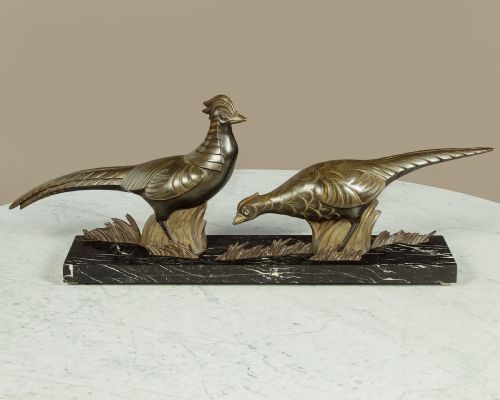
The selection on this page includes female figures, dancing women, and various animals such as deer, stags, dogs, and golden pheasants. Alongside purely decorative sculptures, you find figural groups and sculptural clocks.
Materials vary widely across these objects, incorporating bronze, spelter, marble, onyx, chrome plate, painted metal, and ceramic. Many figures are mounted on contrasting stone bases to elevate their presence.
How they were made
Makers utilised cast and patinated metals, alongside bronze and spelter, to shape dynamic human and animal forms. Chrome plating and painted finishes added colour and lustre to metal figures.
Natural stones like marble and onyx provided heavy, stable plinths for the metal and ceramic sculptures to rest upon. Ceramic pieces incorporated hand-painted highlights, such as gilding applied to red clay bodies.
Deer appear frequently as subjects, wandering from metal groups to maroon-red ceramic forms with gilded highlights.
What varies in quality
The distinction between tiers rests upon the choice of medium, moving from cast spelter with painted surfaces up to solid bronze and cold-painted metalwork. Bases composed of finely polished marble and onyx also elevate the finished work.
Artistic execution dictates distinction, seen in the stylisation of drapery, musculature, and posture in figures like the female dancer or the seated nude. Named artists and recognisable studio styles provide a clear indicator of distinction.
Sibylle May·Hagenauer·C Masson·H. Bal
The Art Deco Mantelpiece Sculpture Glossary
- Spelter
- A zinc alloy commonly used as a cost-effective substitute for bronze in decorative figures. It accepts patination and paint readily.
- Onyx
- A banded variety of chalcedony quartz utilised frequently for sculptural bases and clock surrounds during the period. It offers a smooth, polished surface with natural tonal variation.
- Patinated metal
- Metal treated with chemicals or heat to produce a specific surface colour or aged finish. This technique highlights the contours of a sculpture.
- Stylised
- Representing objects or figures in a decorative, non-realistic manner that emphasises geometric lines and symmetry. It defines the visual language of the era.
Art Deco Mantelpiece Sculpture: Frequently Asked Questions
What materials are these sculptures made from?
The pieces utilise a range of materials including bronze, spelter, chrome plate, and painted metal. Many sculptures incorporate ceramic elements or rest upon heavy marble and onyx bases.
Combinations of metal and stone are typical for the period, providing both structural stability and visual contrast.
Are these sculptures French in origin?
Many examples from this period originate from France, reflecting the European centres of design and metal casting. French works often feature signature foundry marks or artist inscriptions.
Continental production dominated the market for decorative mantelpiece figures during the interwar decades.
How do I date an art deco sculpture?
Dating relies on the stylistic markers of the 1920s and 1930s, alongside materials like chrome and early plastics. Inscriptions, signatures, and construction methods help narrow the period of manufacture.
Comparing the base materials and patination techniques to known examples provides further chronological context.
How should I display a mantelpiece sculpture?
These sculptures suit placement on flat surfaces where their geometric lines and materials can be appreciated. Ensuring the support is stable enough to bear the weight of stone bases is essential.
Keep them away from direct heat sources and moisture to preserve the metal patination and polished stone.