
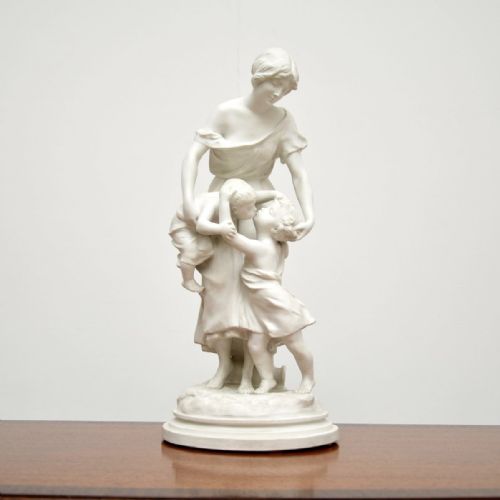
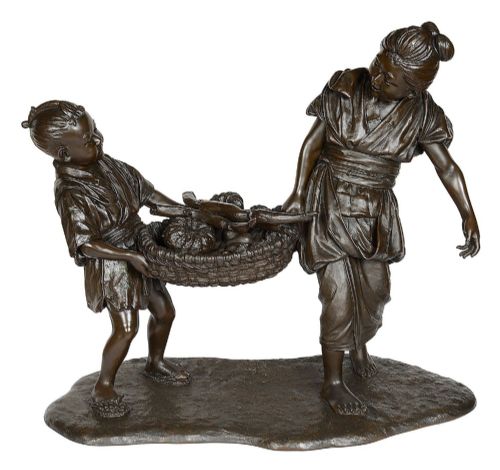
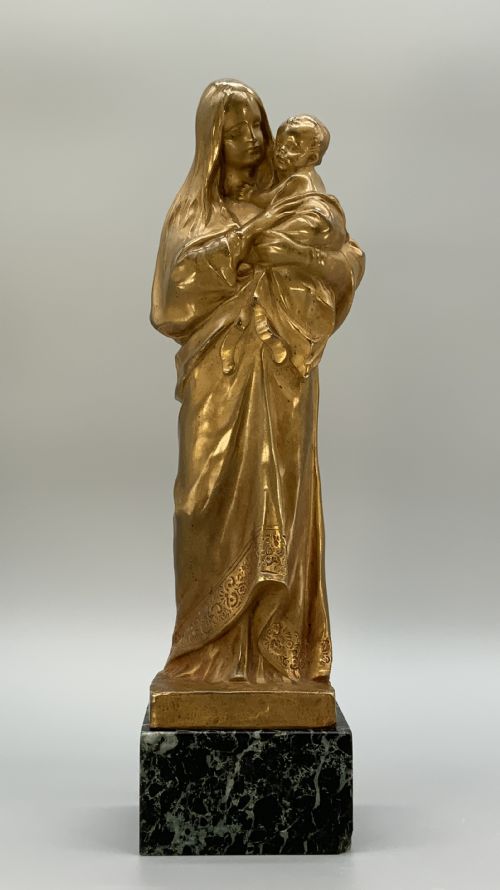
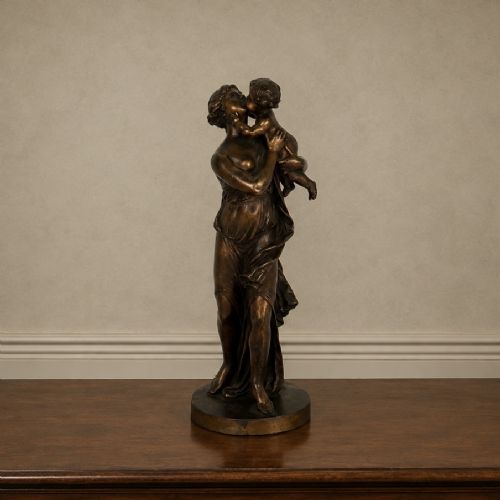


Mother and Child Statue
These mother and child statue pieces capture maternal tenderness through enduring materials, offering collectors a touch of historical warmth.
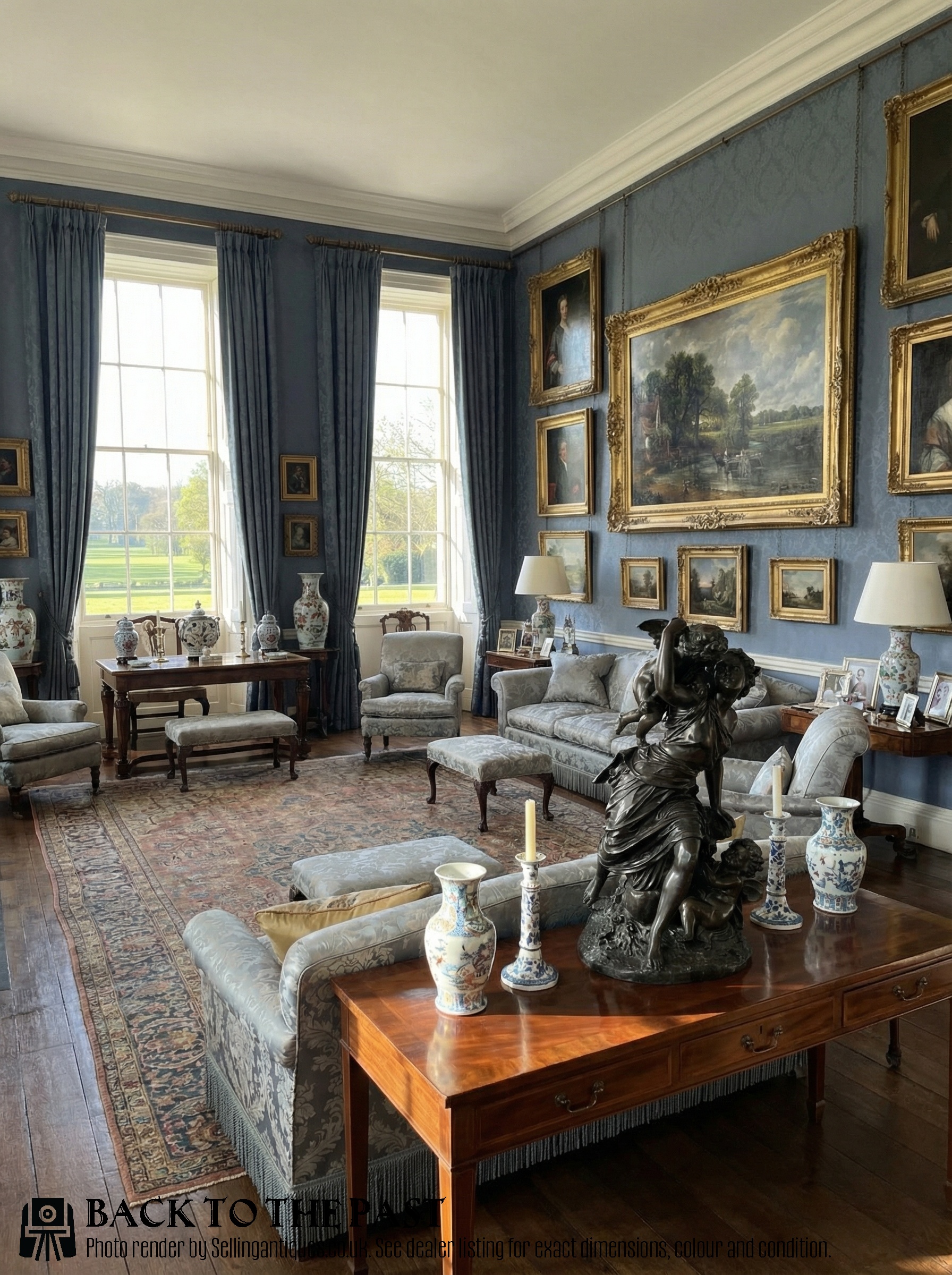
Mother and Child Statue
A mother and child statue depicts figures in intimate familial scenes, most frequently taking the form of bronze and marble sculptures from the nineteenth century onwards. You will encounter various interpretations ranging from classical Grecian groupings to modernist Art Deco statuettes.
Many examples originate from French workshops of the nineteenth century, alongside Japanese bronze works and Austrian gilt pieces. These sculptures span domestic figurines to large gallery groups depicting maternity.
Makers utilised distinct regional styles, moving from Neoclassical and Gothic revivals through to Art Nouveau and Outsider Art brut productions. The common thread is the depiction of the maternal bond across diverse artistic movements.
Materials and methods
Foundries cast these figures primarily in bronze, sometimes applying a dark patina, silvering, or gilt finishes to highlight the sculptural details. Artisans also worked in marble, carved wood, terracotta, and bisque porcelain.
European ateliers employed skilled metal casting and fine carving techniques, evidenced by signed works from named sculptors. Other pieces utilise spelter or represent tribal casting methods seen in African Benin maternity statues.
Mother and Child Statue Retail Price Guide 2026
Typical asking prices for mother and child statue among the pieces listed under this phrase on Sellingantiques today, from the lower quarter to the upper quarter. They describe what is for sale here now, not the wider market.
Even horses deserve a family moment, as demonstrated by the nineteenth-century bronze grouping of a drinking horse accompanied by mother and child.
Factors of distinction
The reputation of the foundry or the individual artist elevates certain pieces significantly above anonymous workshop output. Signed works by documented makers demonstrate superior artistic execution and finishing.
Hans Müller·Antonio Merente·Luca Madrassi·P. Sega·Auguste Moreau·Lucien Madrassi·Xavier Raphanel·B. Rezl
The Mother and Child Statue Glossary
- Patina
- The surface coloration and sheen developed naturally over time or applied chemically by the foundry. It enhances the depth of bronze and metal sculptures.
- Spelter
- A zinc alloy commonly utilised as a substitute for bronze, particularly in decorative Art Deco figures. It requires careful handling due to its softer composition.
- Bisque porcelain
- Unglazed ceramic porcelain that yields a matte, white finish resembling marble. It became popular for delicate figurine production in the nineteenth century.
- Grand Tour
- Cultural travel undertaken by nineteenth-century Europeans collecting classical art and smaller bronze replicas. These souvenirs often replicated ancient sculptural motifs.
- Art Deco
- A design style of the early twentieth century characterised by streamlined geometric forms and stylized figures. It strongly influenced statuettes from the interwar period.
Mother and Child Statue: Frequently Asked Questions
How do I identify bronze from spelter?
Bronze exhibits greater weight and a resonant ring when tapped gently, whereas spelter feels lighter and softer to the touch. Examination of the base often reveals the underlying grey metal of spelter beneath worn finishes.
Foundry marks and chiselled surface details also point toward genuine bronze casting rather than moulded zinc alloys.
What periods are most common?
The selection spans from nineteenth-century classical and Victorian works through to the nineteen-thirties. You will find substantial representation from the late Victorian era and the Art Deco period.
Earlier nineteenth-century pieces lean towards academic realism and classical revivals, while later twentieth-century examples embrace modernist stylisation.
How should I display these sculptures?
Place heavier bronze and marble pieces on stable, level surfaces that adequately support their weight. Protect delicate bisque porcelain and carved wood from direct sunlight and high humidity.
Allow sufficient clearance around larger floor or table groupings to appreciate the figures from multiple viewing angles.
Are these pieces signed?
Many sculptures feature artist signatures, foundry stamps, or incised monograms near the base. These inscriptions help attribute works to documented European sculptors.
Unsigned pieces remain common, particularly among anonymous foundry casts and regional folk or outsider art pieces.
What styles are represented?
The available inventory encompasses Neoclassical Revival, Art Nouveau, Art Deco, and Realist movements. Each style reflects the aesthetic priorities of its respective decade.
Tribal and outsider art traditions also appear, offering alternative sculptural interpretations of maternity.