






Art Deco Spelter Sculpture
Art deco spelter sculpture captures the dynamism and sleek geometric elegance of the interwar period through expressive human and animal figures.
Art Deco Spelter Sculpture
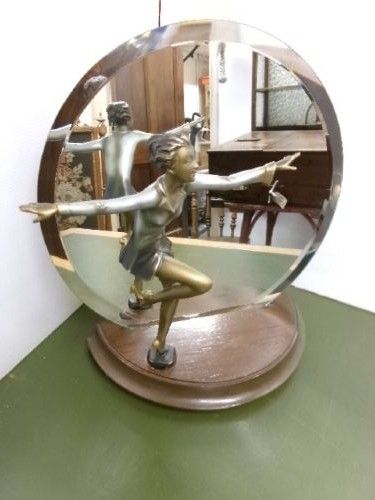
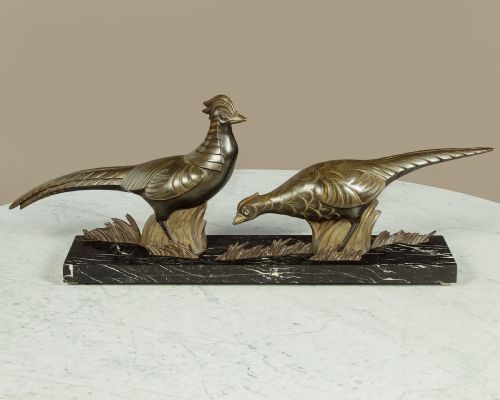
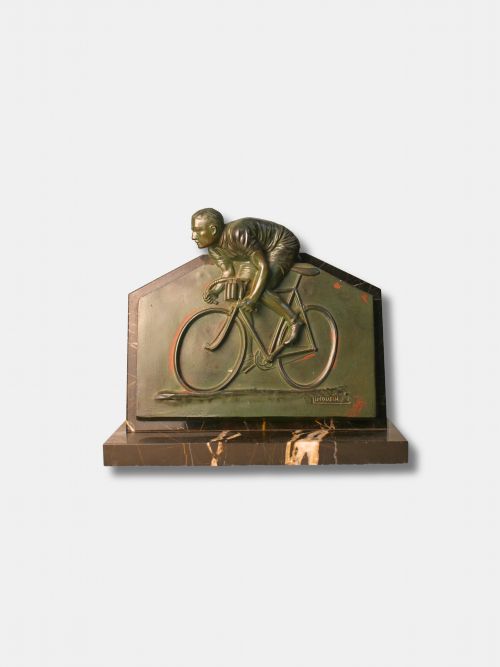
An art deco spelter sculpture represents the characteristic taste of the interwar decades, taking the form of dancers, athletes, animals, and figural lamps. You will frequently encounter French origin pieces depicting streamlined panthers, leaping stags, and graceful female figures.
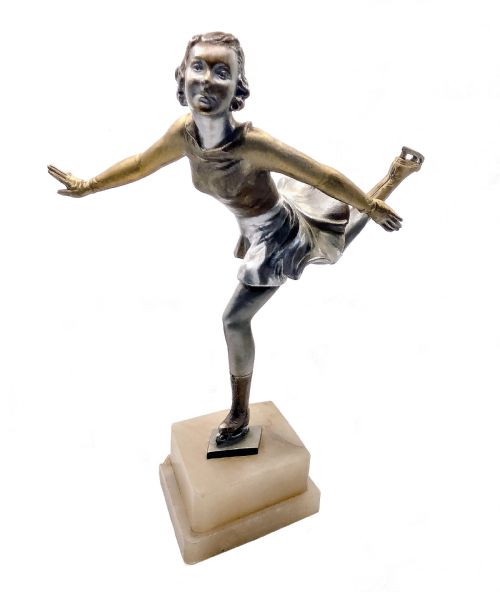
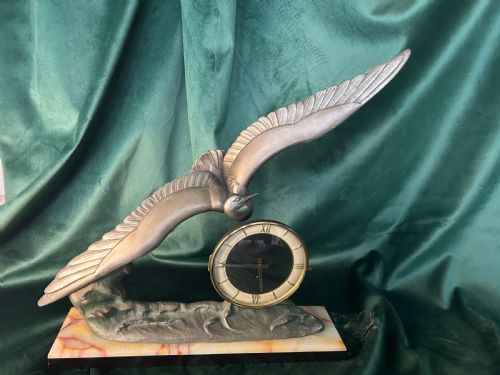
These pieces function variously as standalone sculptures, bookends, mantel clocks, and table lighters. The human figures often adopt athletic poses like tennis, ice skating, or running alongside greyhounds, reflecting the era's fascination with speed and movement.
Most examples date from the 1920s and 1930s, capturing the peak of the decorative arts movement. They bridge the gap between traditional bronze casting and accessible domestic ornament.
How They Were Made
Spelter, an alloy primarily composed of zinc, served as the principal casting metal because it accepted intricate detail and fluid lines readily. Foundries finished these metal castings with patinas, cold paint, or gilding to simulate more expensive materials like bronze.
Sculptors frequently combined spelter figures with heavy stone bases made of marble, onyx, or alabaster to provide stability and visual contrast. Some complex compositions also incorporated ivorine faces and hands to introduce tonal variety.
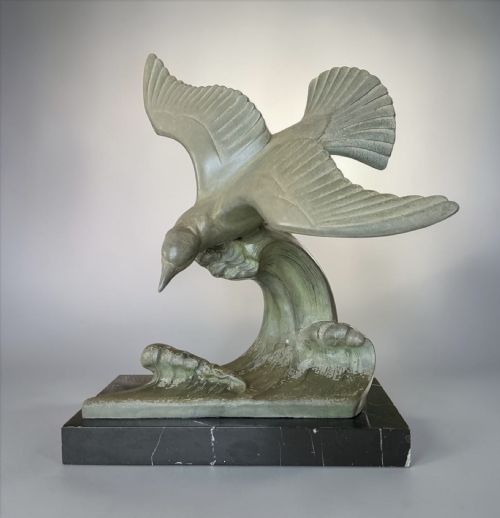
Listings feature numerous depictions of panthers, stags, and birds in flight alongside human dancers and athletes.
What Varies in Quality
The precision of the casting and the crispness of the chiselling separate standard production pieces from masterworks. Superior examples retain fine surface details in drapery, feathers, and facial expressions without blurring.
The choice of base materials and the application of the patina heavily influence the overall success of the piece. Multi-toned patinas and heavy, beautifully figured marble or onyx plinths elevate the visual impact significantly.
Josef Lorenzl·P. Sega·Geo Maxim·D.H. Chiparus·L. Carvin
The Art Deco Spelter Sculpture Glossary
- Spelter
- A zinc-based alloy used extensively in the manufacture of decorative figures and lamps during the early twentieth century. It is softer and lighter than bronze.
- Patinated Metal
- Metal treated with chemical solutions to produce a specific surface colour or aged finish. This technique highlights the sculpted contours.
- Ivorine
- A synthetic material manufactured to imitate ivory, frequently utilised for the exposed flesh of figures in combination with metal garments. It provides a warm contrast to dark patinas.
- Onyx
- A banded variety of chalcedony stone frequently cut into thick plinths for sculptural bases. Its natural veining complements the geometric lines of the period.
- Cold Paint
- Paint applied to a metal sculpture after casting without subsequent firing. It allows for multi-coloured surface decoration on spelter.
Art Deco Spelter Sculpture: Frequently Asked Questions
How do I clean spelter?
Dust gently with a soft, dry cloth to protect the delicate surface finish. Avoid water, harsh solvents, or abrasive polishes that can strip away the original patina.
Keep the sculpture away from direct sunlight and damp environments to preserve both the metal and the stone plinth.
Are these pieces solid bronze?
No, these sculptures are cast from spelter, which is a zinc alloy. Spelter was chosen by makers as a more economical alternative to bronze while still allowing for intricate moulding.
You can often distinguish spelter by its lighter weight and the specific texture of the underlying metal where the finish has worn.
Why are they mounted on marble?
Stone bases made of marble, onyx, or alabaster provided necessary weight to anchor the relatively soft and lightweight spelter figures. They also introduced a contrasting geometric element characteristic of the design ethos.
These plinths frequently echo the clean lines and colour contrasts prized by designers of the period.
How do I spot a signature?
Signatures are typically cast directly into the metal base or incised near the feet of the figure. Sculptors often inscribed their names alongside the foundry marks before the final patination was applied.
Examining the lettering under good light helps verify whether the signature is an integrated part of the original casting process.