





Silvered Spelter Sculpture
Silvered spelter sculpture brings metal figures and table lamps from the late nineteenth century and the art deco period into focus.
Silvered Spelter Sculpture
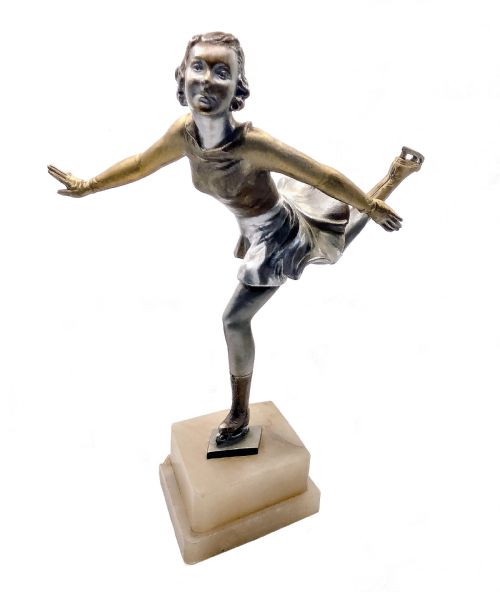
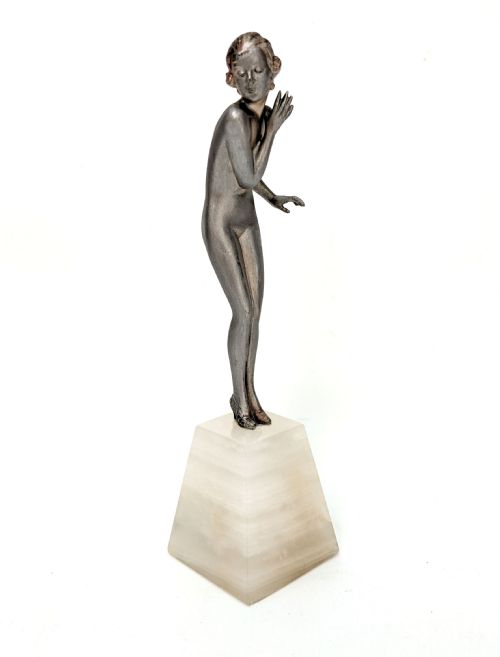
When you search for silvered spelter sculpture, you find figural pieces and table lamps shaped as dancing ladies, ice skaters, young girls running with greyhounds, and mother and child groups. These objects take the form of sculptures, figurines, and figural groups mounted on marble or onyx bases.
The majority of what you meet on this page belongs to the art deco style, dating predominantly to the nineteen-thirties and nineteen-twenties, alongside pieces from the eighteen-nineties. French origin is common among these works, capturing human and animal forms in motion or repose.
Makers and sculptors represented include Auguste Moreau, Geo Maxim, and Josef Lorenzl, whose works define the sculptural output of these decades. The figures combine metal casting with applied finishes, mounted upon stone plinths of marble or onyx to create substantial decorative objects.
How they were made
Spelter, an alloy of zinc and lead or copper, served as the primary casting metal for these figures, offering a cheaper alternative to bronze while accepting detailed moulding. Artisans applied a silvered surface finish to this base metal to imitate higher-grade silver or patinated bronze.
Many of these sculptures incorporate secondary materials such as cold paint, glass, and wood to add colour and contrast to the figures. Heavy stones like marble and onyx provided stable bases for the dynamic stances of dancers and runners, while occasionally incorporating electrical components for table lamps.
Ice skaters and running greyhounds share the metal stage with elegant dancing ladies.
What varies in quality
The sophistication of the modelling separates standard decorative casts from the work of recognised sculptors like Josef Lorenzl, Geo Maxim, and Auguste Moreau. Finer pieces capture the fluidity of clothing, hair, and musculature with precise chiselling and detailed finishing before the silvering is applied.
The quality of the mount significantly affects the overall piece, with dense, multi-coloured marble or onyx bases providing greater visual weight than simpler wooden or single-stone plinths. The preservation of the original silvered surface finish and any cold paint details also dictates the integrity of the piece.
Auguste Moreau·Geo Maxim·Josef Lorenzl
The Silvered Spelter Sculpture Glossary
- Spelter
- A zinc-based alloy commonly used in the nineteenth and twentieth centuries for decorative metalwork and sculptures. It is softer and lighter than bronze.
- Art Deco
- A design style popular in the nineteen-twenties and nineteen-thirties characterised by streamlined forms, geometric shapes, and stylised representations of human figures.
- Cold Paint
- Paint applied to a metal or stone surface without subsequent firing or heat treatment. It is delicate and prone to rubbing off over time.
- Patinated Bronze
- A metal composition often imitated by spelter, featuring a chemically induced surface coloration that develops with age and exposure.
Silvered Spelter Sculpture: Frequently Asked Questions
What is spelter metal?
Spelter is a zinc-based alloy that was widely utilised for decorative figures and lamps during the late nineteenth and early twentieth centuries.
It provided a cost-effective alternative to bronze, allowing manufacturers to produce detailed art deco and art nouveau sculptures for domestic interiors.
How do I care for silvered spelter?
These pieces require gentle dusting with a dry microfibre cloth and should be kept away from direct moisture and harsh cleaning chemicals.
The silvered surface and any cold painted details can wear away easily if scrubbed or polished with abrasive compounds.
Are these pieces French?
Many of the figural sculptures and lamps recorded in these listings originate from France, particularly those dating to the nineteen-thirties.
French ateliers and major sculptors produced a large volume of these metal figures mounted on marble and onyx bases.
What periods do these sculptures date from?
The pieces span the eighteen-nineties, nineteen-twenties, and nineteen-thirties, reflecting late Victorian, art nouveau, and art deco aesthetics.
The majority of the items lean heavily into the nineteen-thirties art deco style.