
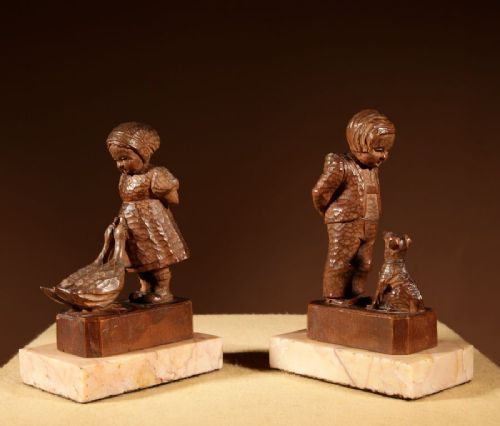


Vintage Marble Base Figural Statue
These vintage marble base figural statue pieces combine sculptural figures with solid bases, offering a decorative centrepiece for the room.
Vintage Marble Base Figural Statue
A vintage marble base figural statue brings together sculptural figures and stone mounts, forming distinct decorative objects for interiors. Buyers seeking a vintage marble base figural statue typically find works originating from the nineteenth and early twentieth centuries, spanning the Art Deco, Art Nouveau, and Neoclassical styles.
Materials and construction methods
Statues are produced from bronze, spelter, terracotta, patinated metal, and carved wood, paired with bases formed from marble or onyx. Artisans cast metals using traditional foundry methods or carved wood and terracotta before mounting the figures securely to heavy stone plinths.
Surface finishes include patinated metal, gilding, and hand-painted details. Clocks and lamps integrate functional mechanisms directly into the sculptural compositions alongside the stone foundations.
Listings span periods from eighteen-eighty through to nineteen-thirty, uniting nineteenth-century bronze work with Art Deco figures.
Assessing quality in figural works
Quality rests upon the definition in the casting or carving, where finer examples display crisper facial expressions, detailed drapery, and well-finished extremities. The choice of metal also distinguishes pieces, with bronze generally offering greater durability and sharper detail than spelter.
The mounting and selection of the stone base contribute to the overall stability and visual balance of the piece. Integrated elements such as clock movements or lamp fittings reflect the standard of the secondary components used by the maker.
P. Sega·C Neuhaus
The Vintage Marble Base Figural Statue Glossary
- Spelter
- A zinc alloy commonly utilised as a cost-effective alternative to bronze for figural sculptures. It often carries a patinated finish to simulate heavier metals.
- Patina
- The surface sheen or colour acquired by metal through age or chemical treatment. It highlights the contours and textures of the sculptural work.
- Art Deco
- A design style prominent around the nineteen-thirties characterised by geometric lines and stylised forms. It frequently appears in figures of dancers and animals.
- Art Nouveau
- An artistic movement from the early twentieth century featuring fluid, organic lines inspired by natural forms. This style appears in standing female figures and lamp bases.
- Neoclassical
- A revival style drawing on classical Greek and Roman antiquity. Pieces in this category often depict mythological subjects and putti.
Vintage Marble Base Figural Statue: Frequently Asked Questions
What materials are used in these statues?
The pieces combine metal, terracotta, or wood figures with heavy stone bases made of marble or onyx.
Foundries utilised bronze and spelter alongside patinated metal for the sculptural elements.
How do I identify an Art Deco piece?
Art Deco works from the nineteen-thirties display stylised geometric forms, often representing dancers or animals on streamlined bases.
These contrast with the organic, flowing lines found in earlier Art Nouveau examples.
Where were these statues manufactured?
Many examples originate from French workshops and foundries active during the nineteenth and early twentieth centuries.
Other regional styles, such as Black Forest wood carvings, also appear within the selection.
How should I clean a marble base?
Use a soft, dry cloth to remove dust from both the stone plinth and the metal figure above it.
Avoid harsh chemical cleaners that might damage the surface patina or the polished stone.
What functional objects are included?
Certain figural sculptures double as table lamps with integrated electrical fittings or holding lamp arms.
Others incorporate clock movements into the composition to form decorative mantel clocks.