




Marble Base Mantel Sculpture
A marble base mantel sculpture anchors a room with solid weight and polished stone.
Marble Base Mantel Sculpture
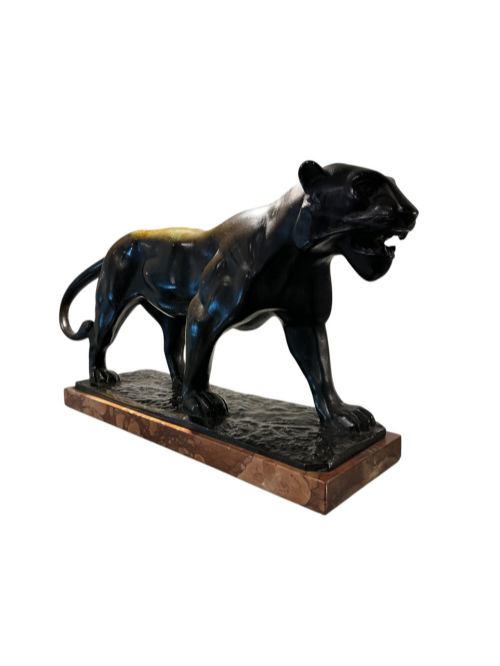
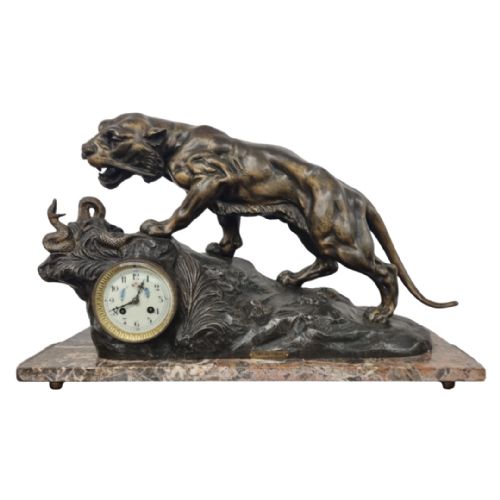
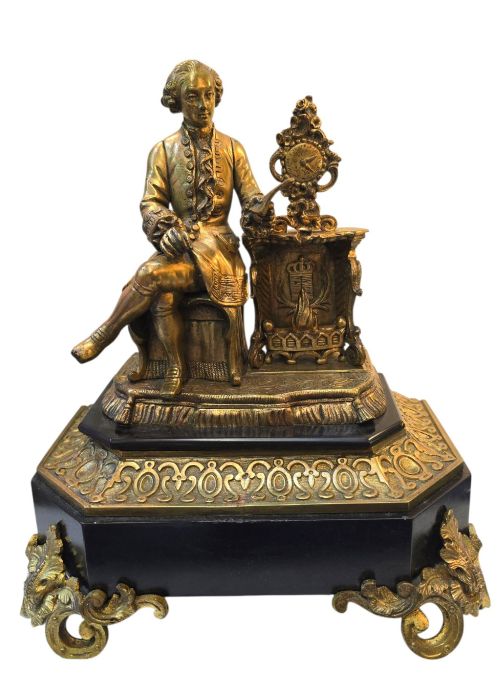
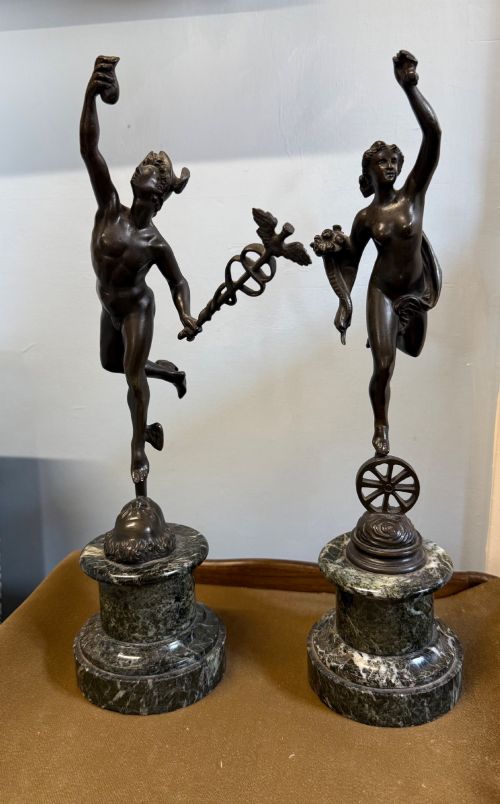
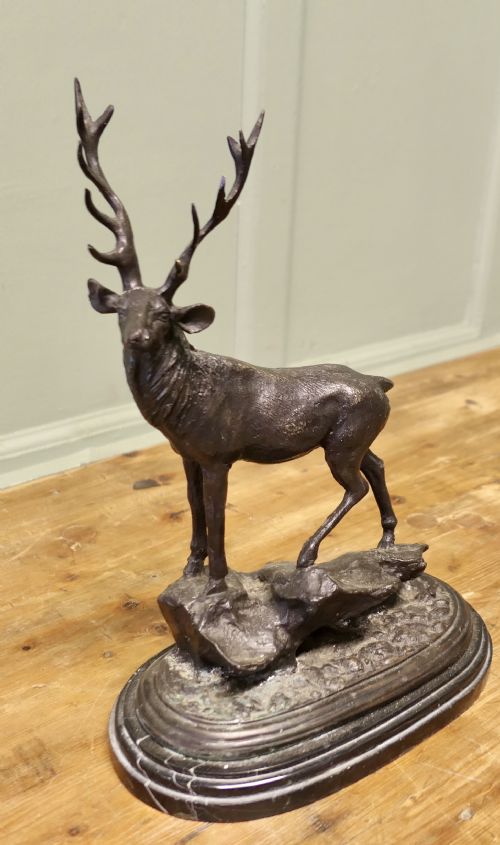
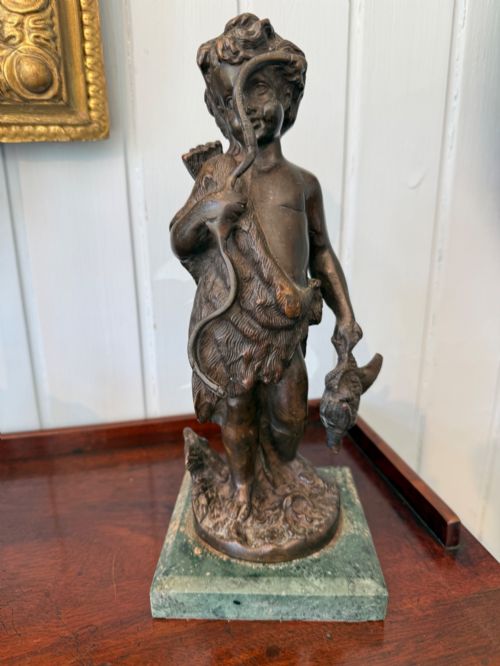
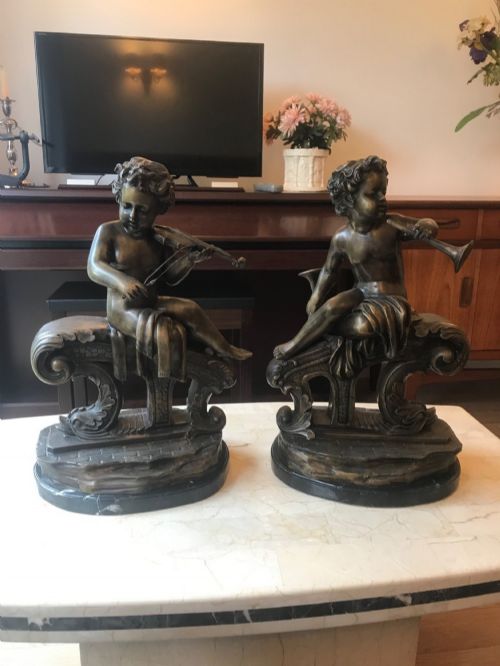
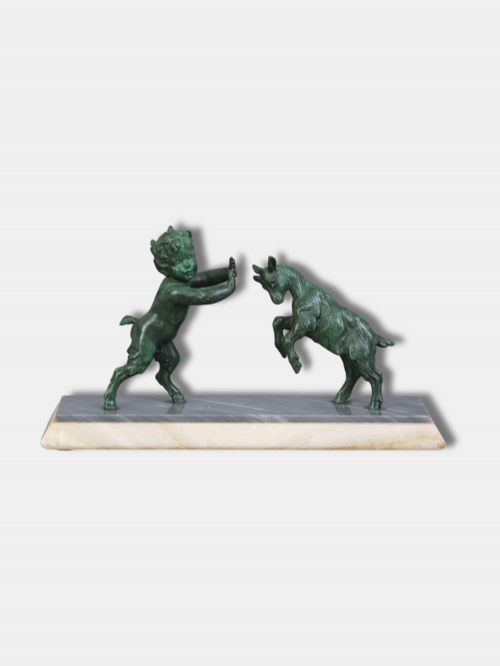
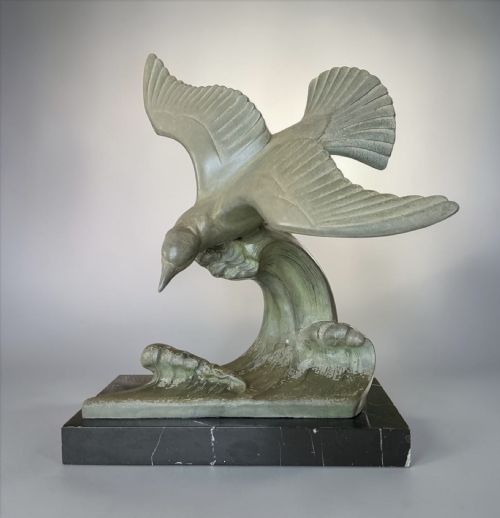
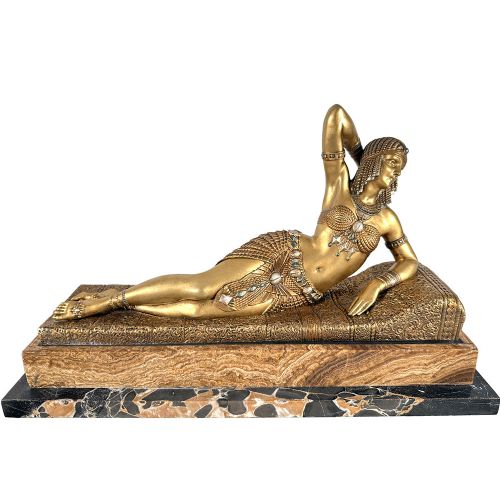
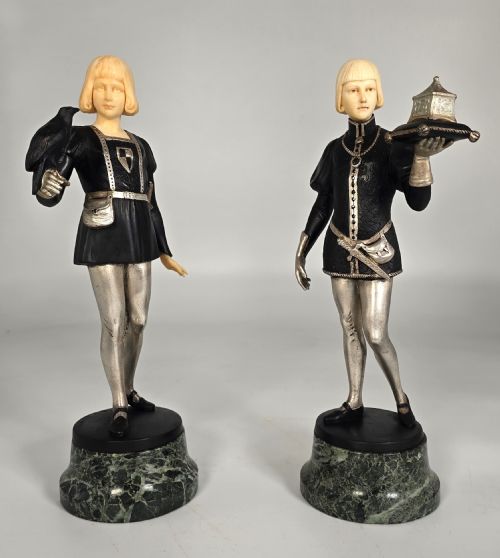
A marble base mantel sculpture combines metal figures with heavy stone plinths designed for display on a mantelpiece or shelf. When you search for this phrase, you encounter works ranging from nineteenth-century animalier bronzes to twentieth-century dancers.
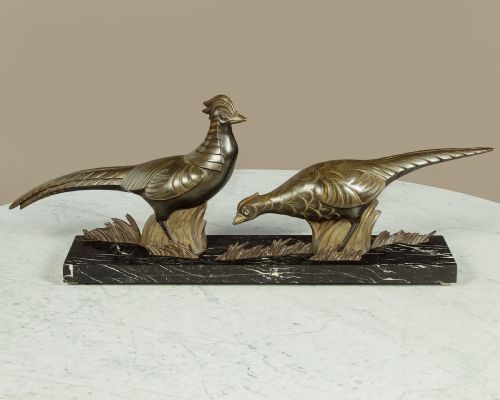
The selections span distinct eras including Victorian pieces, nineteenth-century French foundry work, and streamlined Art Deco creations from the nineteen-twenties and nineteen-thirties. Forms include animals, human figures, clocks, and decorative objects mounted firmly on stone.
Makers integrated various metals with polished marble or onyx plinths to create balanced display pieces. The physical presence relies on the contrast between cold cast metal and the veined density of the base.
How they were made
Foundries cast figures in bronze, brass, spelter, or patinated metal before mounting them securely onto shaped marble or onyx plinths. Cold painting and gilding added surface colour to details on figures like dancers or animals.
Sculptors carved stone bases into rectangular blocks, stepped plinths, or organic rock formations to support the weight of the metal subject. Ormolu mounts and ivory additions appear on specific nineteenth-century and early twentieth-century works.
Listings feature marble base mantel sculpture examples from the nineteenth century through the nineteen-forties, spanning Victorian, Art Nouveau, and Art Deco styles.
What varies in quality
The selection and polish of the marble base contribute significantly to the overall presence of the object. Solid, richly veined stone that complements the colour and subject of the mounted figure elevates the piece above plain or patched plinths.
R Varnier·Pierre-Augustin Caron de Beaumarchais·Emile Carlier·Demetre Chiparus·Gotthilf Jaeger·P. Sega·Paul-Édouard Delabrièrre·Clovis Masson·Dumond·Desire Grisard·Josef Lorenzl·Paul Joris·Michel Decoux·I. Rochard·Eutrope Bouret·Geo Maxim·Francois Moreau
The Marble Base Mantel Sculpture Glossary
- Animalier
- A nineteenth-century artistic focus on the realistic portrayal of animals, particularly predators and prey in motion. Sculptors captured bears, panthers, and stags with careful attention to anatomy.
- Spelter
- A zinc alloy commonly utilised as a less costly alternative to bronze for figures and clock cases. It took patination well and dominated twentieth-century decorative casting.
- Ormolu
- Gilded bronze produced by applying a mercury and gold amalgam to the metal surface and heating it. This technique yielded a bright golden finish on nineteenth-century mounts and clock elements.
- Patinated metal
- Metal treated with chemical solutions to produce a specific surface colour or aged tone. This finish protected the material while defining highlights on garments and muscles.
- Plinth
- The solid block of marble or stone supporting the sculptural group. It provides physical stability and visual grounding for the mantel display.
Marble Base Mantel Sculpture: Frequently Asked Questions
How do I clean a marble base?
Dust the stone gently with a dry microfibre cloth to remove surface particles without scratching the polished finish.
Avoid using abrasive household cleaners or acidic liquids that can etch the surface of the marble or damage the metal figure attached to it.
Were these always meant for mantelpieces?
Many of these sculptures and clocks were specifically proportioned for display on nineteenth-century and twentieth-century mantelpieces above fireplaces.
Collectors also placed them on sideboards, pedestals, and library tables where the heavy stone base provided secure placement.
How can I tell bronze from spelter?
Bronze feels heavier, rings with a clearer tone when tapped gently, and shows a warm reddish or brown metal beneath worn patina.
Spelter is softer, lighter, and often reveals a dull grey metal beneath the surface paint if scratched.
How do I date an Art Deco piece?
Art Deco pieces typically feature streamlined geometry, stylized human figures such as dancers or athletes, and materials like cold-painted spelter or bronze mounted on stepped multi-coloured marble bases.
These characteristics point to production during the nineteen-twenties and nineteen-thirties, distinguishing them from earlier nineteenth-century revival styles.