





Art Deco Animalier Sculpture
Art deco animalier sculpture captures the sleek power of wildlife through stylised modernist forms that anchor a room.
Art Deco Animalier Sculpture
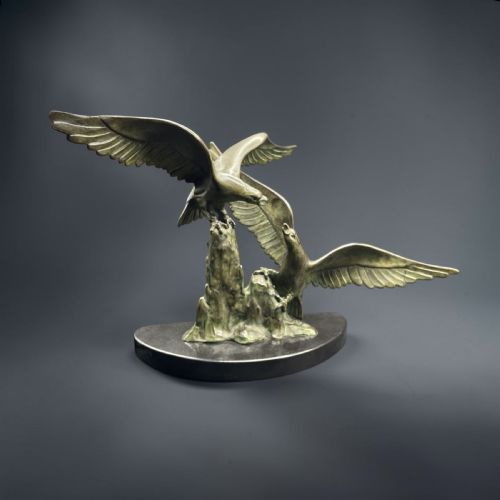
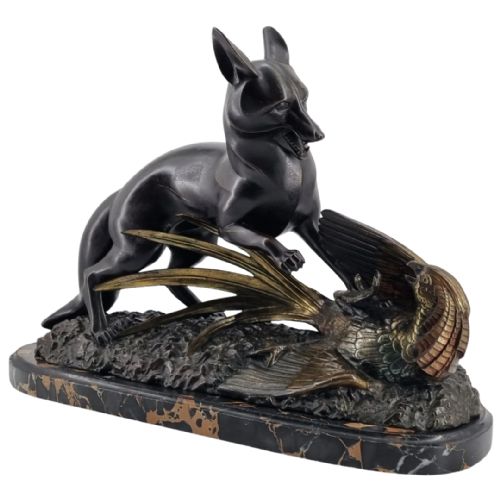
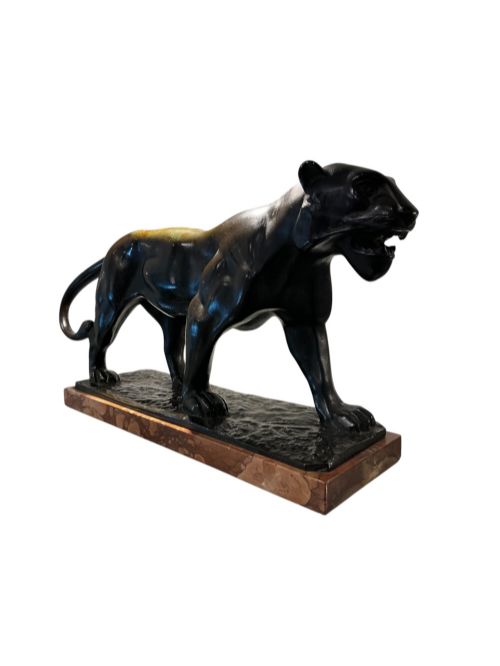
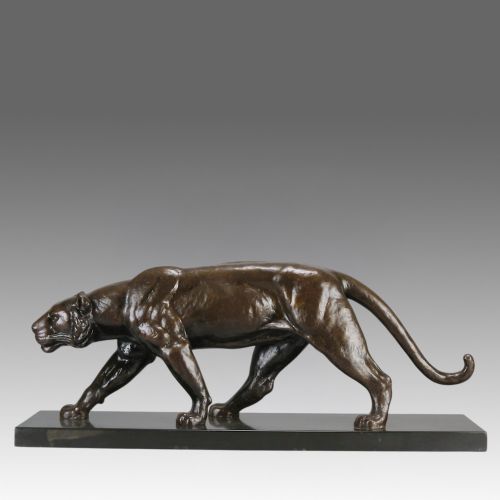
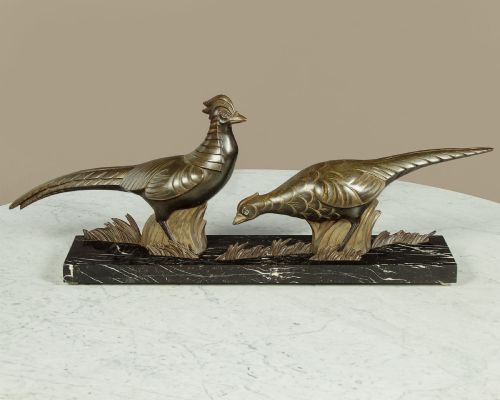
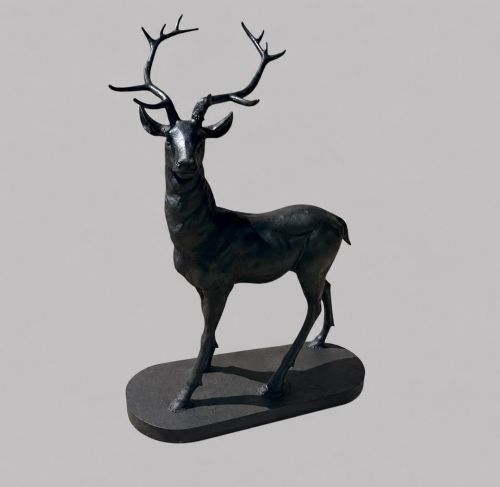
An art deco animalier sculpture represents the vital energy of the natural world filtered through the geometric lens of the interwar decades. These pieces focus heavily on predatory cats, hunting dogs, and elegant birds captured in motion or repose.
Most examples encountered here date from the 1920s and 1930s, though certain pieces stretch back to the nineteenth century. Buyers typically find these figures mounted on contrasting plinths designed to elevate the composition.
Materials and construction methods
Foundries cast these figures in bronze, nickel bronze, silvered bronze, and spelter, often applying rich patinated finishes to enhance muscle and feather detail. Metal figures frequently rest on heavy bases made from marble, onyx, alabaster, or wood.
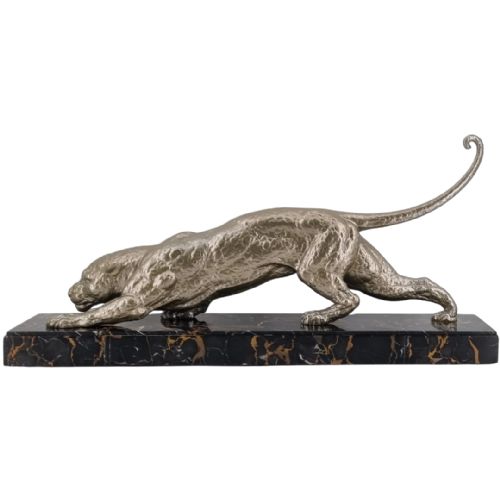
Sculptors utilised carving techniques for wooden and alabaster animal studies, pairing organic grain with smooth stone plinths. Metal casting allowed for dynamic tension, particularly in representations of prowling panthers and racing greyhounds.
Art Deco Animalier Sculpture Retail Price Guide 2026
Typical asking prices for art deco animalier sculpture among the pieces listed under this phrase on Sellingantiques today, from the lower quarter to the upper quarter. They describe what is for sale here now, not the wider market.
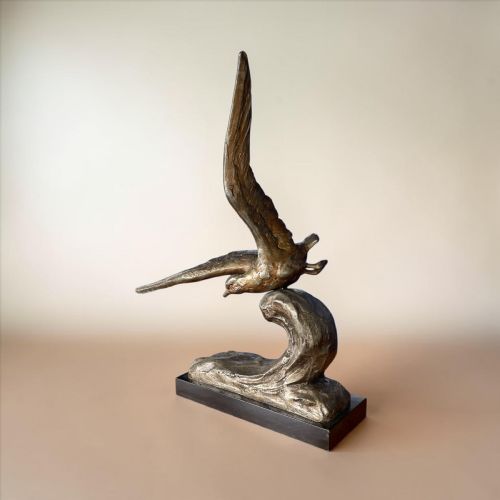
Watch for watchful borzois, resting lovebirds, and albatrosses joining the usual parade of fierce panthers.
Distinctions in quality and finish
Quality rests upon the crispness of the casting and the depth of the metal patina or the grain of the carved wood. Superior pieces exhibit anatomical precision combined with bold modernist abstraction, whereas lesser works rely on repetitive casting without sharp surface definition.
The choice and execution of the base material further separates standard items from exceptional examples. Heavy veined marble, multi-coloured onyx, and custom-fitted wooden mounts demonstrate greater workshop ambition than plain utilitarian slabs.
Frederique Cederlund Ozanne·Alexandre Ouline·C Omin·Eugene Emile Borga·C Masson·Karl Hagenaur·Guido Cacciapuoti·Chiparus·Michel Decoux·P Marec·I Rochard·Louis Albert Carvin
The Art Deco Animalier Sculpture Glossary
- Animalier
- A nineteenth and twentieth century artistic tradition focusing on the realistic or stylised portrayal of animals. This genre spans both bronze casting and stone carving.
- Spelter
- A zinc alloy commonly utilised as a less costly alternative to bronze during the interwar period. It accepts patination well to simulate heavier metals.
- Patina
- The surface coloration and sheen developed through chemical treatment or natural ageing on metal sculptures. It accentuates the contours of the animal form.
- Plinth
- The solid base or block upon which the sculptural figure rests. These mounts frequently utilise contrasting materials such as black marble or onyx.
- Stylisation
- The simplification or geometric interpretation of natural forms characteristic of modernist design. This approach defines the visual language of the period.
Art Deco Animalier Sculpture: Frequently Asked Questions
How do I identify a spelter casting from bronze?
Spelter is lighter in weight than bronze and often reveals a greyish metal underneath worn areas of patination. It was widely used for decorative figures during the interwar years.
Bronze exhibits greater density and durability, maintaining a warm tone where the surface experiences handling over decades.
Where should I place these heavy marble bases?
These sculptures require sturdy furniture surfaces like sideboards, mantelpieces, or dedicated display pedestals due to the weight of the stone bases. Ensure the support level is even to prevent tipping.
Keep pieces away from direct heat sources to protect natural stone veneers and wooden mounting components from drying out.
Why are big cats so common in these designs?
Panthers, lions, and hunting dogs embodied the speed, power, and sleek lines prized by interwar designers. Their muscular forms lent themselves naturally to geometric abstraction.
Sculptors captured these predators in prowling or resting poses that mirrored the dynamic pace of modern transport and architecture.
How should I clean patinated metal sculptures?
Dust the surface gently with a soft, dry cloth to prevent particulate accumulation within the recesses of the casting. Avoid liquid cleaners that can strip chemical patinas.
Natural wax applications should be handled sparingly and only when recommended for specific metal finishes to preserve the original surface integrity.