

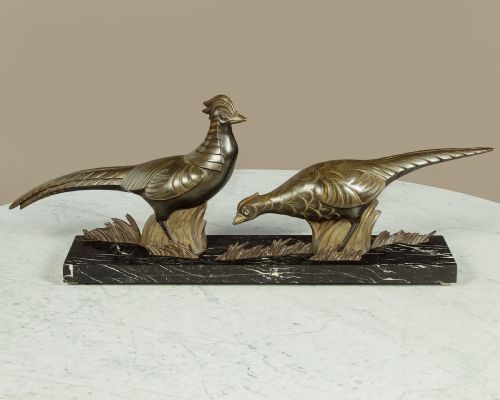






Art Deco Mantel Ornament
An art deco mantel ornament brings striking 1920s and 1930s character to a room, capturing modernist elegance in bronze, spelter, and stone.
Art Deco Mantel Ornament
An art deco mantel ornament comprises sculptural figures and animal studies designed to sit upon a fireplace mantel or shelf. The pieces belong to the 1920 and 1930 periods, showing the characteristic sleek lines and dynamic poses of the era.
Most examples take the form of female dancers, nudes, or wildlife such as panthers, pheasants, stags, and seagulls. Figures often stand upon substantial bases of marble, onyx, or alabaster.
Originating largely from French and English studios, these ornaments reflect the modernist sculptural taste of the early 20th century. A buyer encounters both signed foundry works and unsigned decorative figures on this page.
How they were made
Foundries cast figures in bronze, silvered bronze, or spelter, applying patinated metal finishes to create depth and shadow. Chryselephantine pieces combine metal casting with carved ivory for faces and hands.
Bases are shaped from heavy natural stones including marble and onyx, providing a stable foundation for the metal sculptures. Artisans mounted the figures securely to these stone plinths using threaded bolts or pins.
Art Deco Mantel Ornament Retail Price Guide 2026
Typical asking prices for art deco mantel ornament among the pieces listed under this phrase on Sellingantiques today, from the lower quarter to the upper quarter. They describe what is for sale here now, not the wider market.
Watch out for prowling panthers and golden pheasants holding down the fireplace.
What varies in quality
The choice and preparation of the base material also mark the distinction, with selected multi-coloured marble and onyx plinths outclassing plain or damaged stone. Original patination intact upon the bronze or spelter preserves the artistic integrity of the work.
Josef Lorenzl·P. Sega·Paul Philippe·Demetre Chiparus·Claire Colinet·Michel Decoux·I. Rochard·B. Rezl·Geo Maxim
The Art Deco Mantel Ornament Glossary
- Spelter
- A zinc alloy commonly used as a cost-effective substitute for bronze in decorative figures. It accepts patination well to simulate heavier metals.
- Chryselephantine
- A term describing statuary made from a combination of bronze and ivory. This technique highlights the decorative contrasts of the 1920s.
- Patinated metal
- Metal treated with chemicals to produce a specific surface colour or aged finish. This process enhances the sculptural contours.
- Alabaster
- A soft, fine-grained stone used for sculptural bases. Its translucent quality gives a distinctive glow under light.
Art Deco Mantel Ornament: Frequently Asked Questions
Where should I place an art deco mantel ornament?
These pieces suit mantelpieces, sideboards, and bookshelves where their proportions can be appreciated against a wall. The heavy stone bases provide stability on flat horizontal surfaces.
Ensure the location protects chryselephantine pieces from direct sunlight and moisture to preserve the delicate ivory elements.
How do I clean a bronze and marble ornament?
Dust the metal gently with a soft, dry cloth to prevent the accumulation of grime in the crevices. Avoid chemical polishes that can strip the original patinated finish.
Wipe the marble base with a damp cloth and dry it immediately, avoiding abrasive cleaners that scratch the stone.
Are these ornaments French or English?
The evidence shows origins from both France and England, with many notable foundry pieces originating in French studios. Stylistic cues often reflect the international modernist movement of the interwar years.
Signatures from known sculptors frequently point to European foundry production from the 1920 and 1930 periods.
How can I tell spelter from bronze?
Spelter is lighter in weight and softer than bronze, sometimes revealing a greyish metal beneath worn areas of patination. Bronze maintains a heavier feel and greater tensile strength.
Foundry marks and crisper casting detail typically accompany genuine bronze works rather than spelter alternatives.