
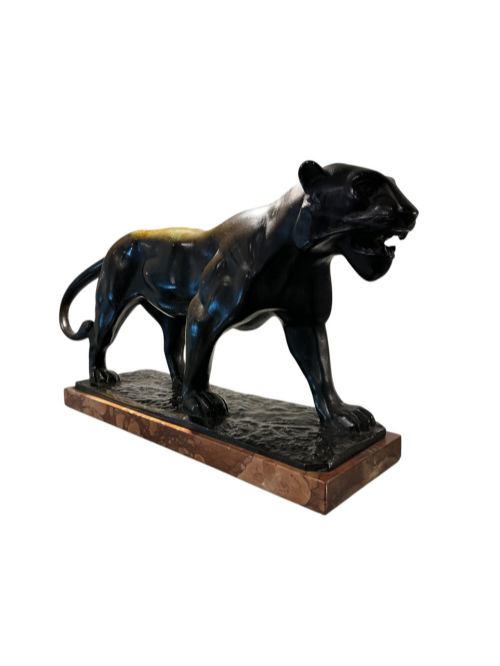
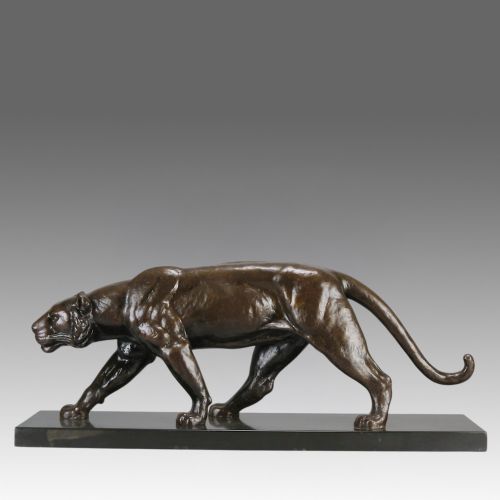


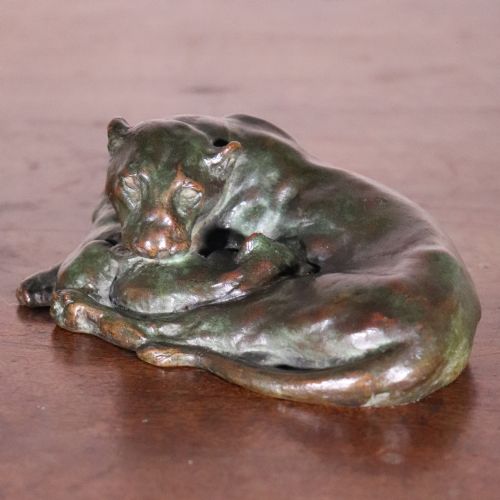


Bronze Panther Sculpture
A bronze panther sculpture captures the sleek power of the great cat, bringing dynamic modernist energy and French animalier style into a room.

Bronze Panther Sculpture
A bronze panther sculpture embodies the fierce grace of big cats, heavily represented here by Art Deco and animalier works from French workshops. When you search for a bronze panther sculpture, you encounter powerful depictions ranging from prowling predators to drinking big cats mounted on stone bases.
The selections span the nineteenth century through the twentieth century, with strong concentrations in nineteen-twenty and nineteen-thirty Art Deco pieces. Sculptures often pair the metallic figure with contrasting plinths, combining naturalistic animal forms with architectural mounts.
Makers from the animalier and modernist traditions dominate the offerings, translating predatory movement into cast metal. These pieces reflect shifting tastes across European sculpture, moving from nineteenth-century academic realism to streamlined twentieth-century modernism.
Distinctions in craftsmanship
The quality of the mounting base matters significantly, with dense veined marble or onyx correctly proportioned to support the heavy metal sculpture. Signed pieces by recognised sculptors and major foundries carry greater weight in terms of artistic execution and provenance.
Bronze Panther Sculpture Retail Price Guide 2026
Typical asking prices for bronze panther sculpture among the pieces listed under this phrase on Sellingantiques today, from the lower quarter to the upper quarter. They describe what is for sale here now, not the wider market.
Materials recorded across these listings include bronze, patinated bronze, silvered bronze, spelter, marble, and onyx.
Alexandre Ouline·Anna Vaughn Hyatt Huntington·Chiparus·Clovis Masson·Michel Decoux·Georges Gardet·Barbedienne·Irénée Rochard·Luc Lucien Alliot
The Bronze Panther Sculpture Glossary
- Animalier
- A nineteenth-century artistic movement dedicated to the realistic portrayal of animals, particularly predators in motion. Practitioners studied live specimens in menageries to achieve anatomical accuracy.
- Patina
- The surface coloration achieved through chemical treatment or natural ageing on metal. This finish enhances the definition of musculature on cast sculptures.
- Spelter
- A zinc-based alloy commonly used as a cost-effective substitute for bronze in decorative figures. It is often finished with metallic paint to simulate genuine bronze.
- Hot cast bronze
- A traditional method where molten bronze is poured into a mould, capturing fine detail. This technique produces durable sculptures that accept patination well.
- Plinth
- The solid base block, often made of marble or onyx, upon which the sculpture rests. It provides both physical stability and a formal visual boundary.
Bronze Panther Sculpture: Frequently Asked Questions
How do I care for my sculpture?
Dust the bronze gently with a soft dry cloth to prevent particulate buildup on the patinated surface. Avoid chemical cleaners or polishing agents that can strip the original finish.
Keep the piece away from direct sunlight and excessive moisture to protect both the metal and the underlying marble or onyx base.
How do I distinguish bronze from spelter?
Bronze is heavier, denser, and colder to the touch than spelter, with a resonant ring when lightly tapped. Spelter is softer and may show silvery grey metal beneath the surface where wear occurs.
Look closely at the underside or mounting points for clues to the metal composition. Foundry marks and artist signatures are typically sharper on genuine bronze casts.
Where should I display my sculpture?
Place the piece on a stable surface such as a heavy sideboard or desk where its weight and proportions can be appreciated safely. Ensure the display area allows viewing from multiple angles to capture the dynamic lines of the feline.
Consider the lighting in the room to highlight the patinated surface and the contrast between the metal and the stone base.
What is the animalier style?
The animalier movement arose in nineteenth-century France, focusing intensely on the natural behaviour and anatomy of animals. Sculptors sought to portray beasts with raw energy rather than static formality.
This tradition carried forward into the twentieth century, merging with Art Deco aesthetics to create stylized predatory figures.