




Antique Panther Sculpture
An antique panther sculpture brings muscular grace to a room, capturing the prowling power and sleek lines of the great cat.
Antique Panther Sculpture
When you search for an antique panther sculpture, you encounter a striking array of predatory cats captured in bronze, spelter, marble, and porcelain. These pieces range from classical mythological groupings to the sharp, streamlined geometries of the twentieth century.
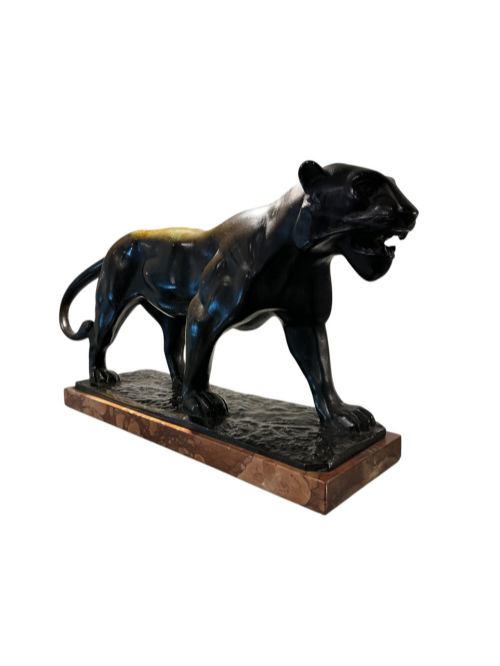
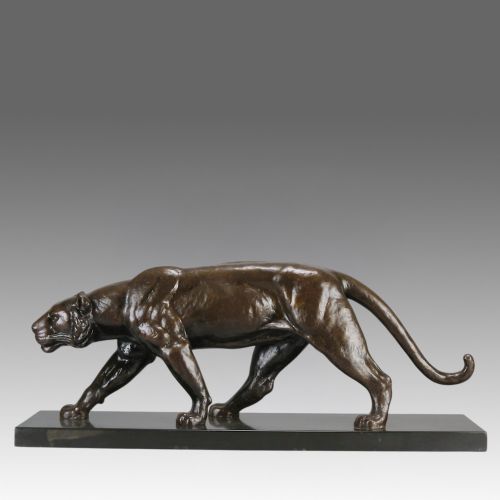
The version you are most likely to meet on this page is the Art Deco bronze or spelter model set upon a marble base, typically originating from France during the decades around the nineteen-twenties and thirties. Such works emphasise dynamic movement, low profiles, and dark patination.
Earlier nineteenth-century examples often lean towards the French Animalier tradition or neoclassical subjects, depicting dramatic encounters like Ariadne with her panther. These nineteenth-century pieces place greater emphasis on academic naturalism and narrative detail.
Materials and casting methods
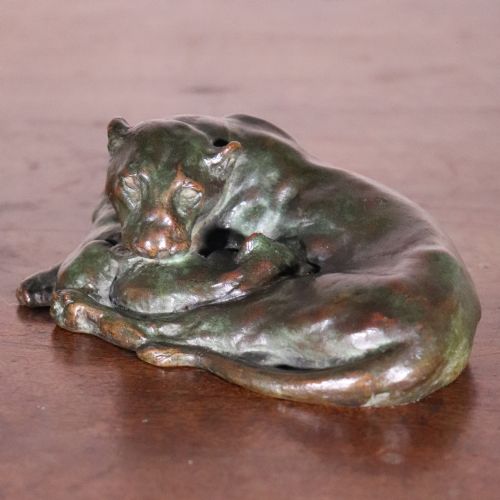
Foundry cast bronze forms the backbone of these pieces, utilising the lost-wax method to capture fine muscle tension and fur texture. Artisans applied chemical patination to achieve deep browns, blacks, and greens before mounting the metal figures onto veined marble bases.
Spelter served as a more accessible metallic alternative during the Art Deco period, offering similar sculptural weight when finished with dark metallic paint. Alongside metal, makers employed carved wood, parian porcelain, and bisque porcelain to render these predatory forms.
Listings feature periods spanning the nineteenth century through to the nineteen-forties, utilising materials from cast bronze and spelter to carved wood and parian porcelain.
Distinctions in execution
The integration between the feline figure and its stone base marks another tier of excellence. Better sculptures fit seamlessly into substantial marble plinths, whereas lesser works show gaps or crude fixings.
Alexandre Ouline·Anna Vaughn Hyatt Huntington·Clovis Masson·Michel Decoux·Georges Gardet·Barbedienne
The Antique Panther Sculpture Glossary
- Animalier
- A nineteenth-century artistic movement focused on the realistic depiction of animals in sculpture. Artists in this tradition studied anatomy closely at menageries.
- Spelter
- An alloy of zinc and lead used as a cheaper substitute for bronze. It takes patination well but is softer and more brittle than bronze.
- Patina
- The surface coloration and sheen developed naturally with age or applied chemically by the foundry. It enhances the depth and texture of metal sculpture.
- Parian porcelain
- A fine-grained ceramic material developed in Britain to imitate carved marble. It possesses a smooth, unglazed finish suited to classical studies.
- Lost-wax casting
- A traditional method of metal casting where a wax model is melted out and replaced with molten bronze. This technique allows for intricate undercuts and fine surface detail.
Antique Panther Sculpture: Frequently Asked Questions
How do I clean a bronze panther?
Dust the surface regularly with a soft, dry cloth to prevent the accumulation of grit in the crevices. Avoid using water, soap, or chemical polishes, as these can strip the original patination.
Apply a very thin coat of microcrystalline wax periodically if the metal appears dry, buffing it gently with a clean cloth. This protects the bronze from atmospheric moisture without altering its finish.
Are spelter sculptures fragile?
Spelter is a softer and more brittle alloy than bronze, meaning it can snap under sharp impacts or excessive weight. Care must be taken when moving these pieces, particularly around slender legs and tails.
Due to this vulnerability, spelter figures should be placed on stable surfaces away from high-traffic areas where they might be knocked over.
What is the Animalier school?
The Animalier school refers to a nineteenth-century French movement dedicated to realistic animal sculpture. Sculptors observed captive animals in Paris menageries to understand their anatomy and movement.
These artists rejected neoclassical stiffness in favour of dynamic tension, portraying predators in moments of rest, stalking, or combat.
Why are marble bases used?
Marble bases provide structural stability to heavy metal sculptures, anchoring the low-slung profile of a prowling or resting panther. The weight of the stone prevents the piece from tipping.
Aesthetically, the polished stone contrasts with the dark patination of bronze or spelter, framing the animal's silhouette cleanly against the surface.