




Bronze Panther Figurine
A bronze panther figurine captures the fierce elegance of the great cat, bringing dramatic presence to any interior.
Bronze Panther Figurine
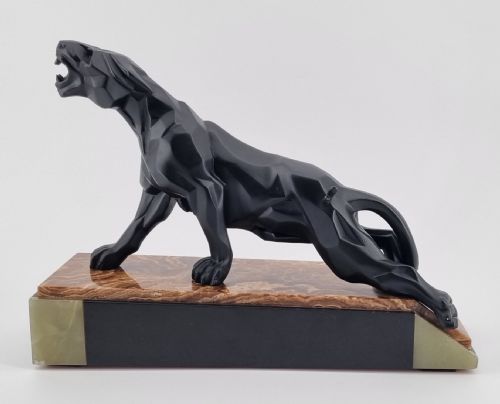
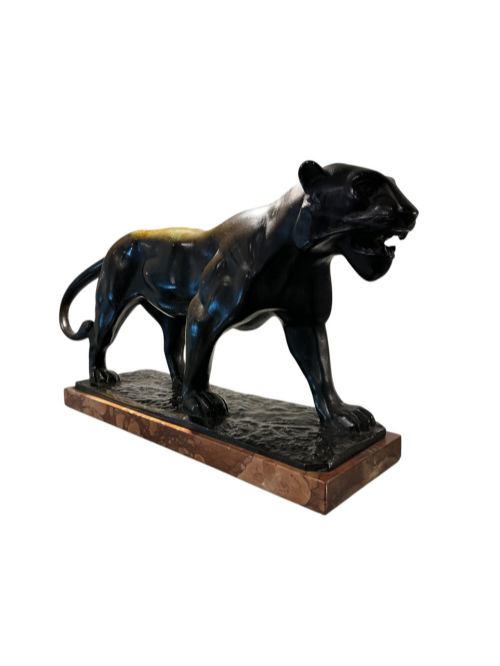
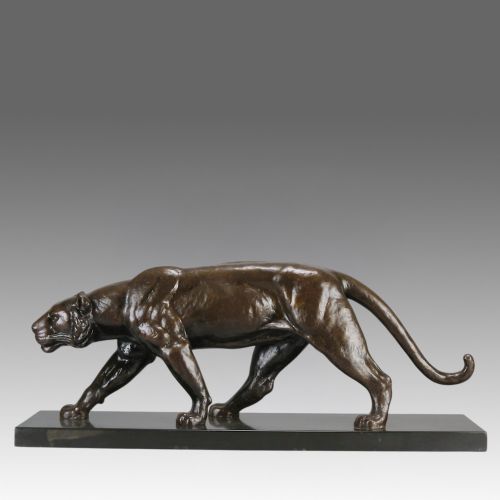
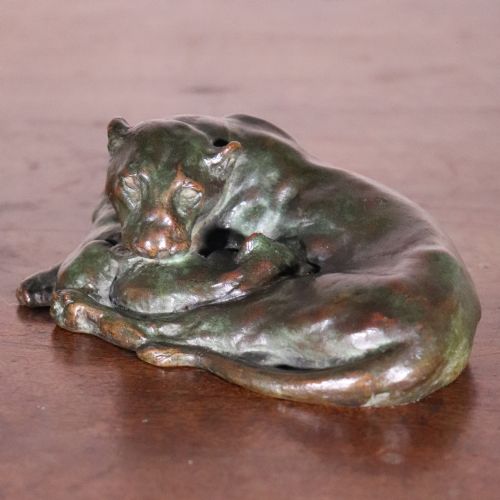
A bronze panther figurine represents the sleek power of the predator, rendered in metal during periods such as the nineteenth century and the Art Deco era of the nineteen twenties and nineteen thirties. These sculptures frequently depict the animal in motion, stalking, crouching, or drinking.
The versions most commonly found here sit upon heavy stone bases made of marble or onyx, grounding the metallic weight of the sculpture. Sculptures and smaller figurines dominate the selection, often reflecting French animalier traditions originating from dedicated Parisian foundries.
Makers focused intensely on musculature and posture, capturing the tension in the animal's limbs. Whether cast in solid bronze or alternative metals like spelter, these figures remain iconic examples of twentieth century design.
How they were made
Foundries utilised the traditional lost-wax casting technique to reproduce the intricate musculature and smooth hides of the felines. This method allowed artisans to capture subtle textures in the metal before applying chemical patinas to achieve deep brown, black, or silvered finishes.
Many works incorporate carved bases of black or multi-coloured marble and onyx. The figures were then secured to these stone plinths using threaded pins, combining heavy geological materials with metalwork.
Listings span from the late nineteenth century through to the Art Deco movements of the nineteen twenties and thirties, utilising bronze, spelter, marble, and onyx.
What varies in quality
The quality of the mounting and the density of the stone base also distinguish finer examples. Heavy, well-polished marble or onyx plinths complement the metallic sculpture securely, whereas inferior pieces rely on lighter alloys and poorly finished bases.
Alexandre Ouline·Anna Vaughn Hyatt Huntington·Chiparus·Clovis Masson·Michel Decoux·Georges Gardet·Siot Foundry·Barye·Barbedienne
The Bronze Panther Figurine Glossary
- Animalier
- A nineteenth century artistic movement focused on the realistic depiction of animals, particularly predators in motion. Sculptors in this tradition studied live specimens closely to ensure anatomical accuracy.
- Spelter
- A zinc alloy commonly utilised as an economical alternative to bronze during the Art Deco period. It accepts patination well but is softer and lighter than copper-based alloys.
- Patinated bronze
- Metal treated with chemical solutions to produce a specific surface colour or aged finish. This process protects the bronze while enhancing visual depth.
- Lost-wax casting
- A historic method where a wax model is melted out of a ceramic mould and replaced with molten metal. It permits intricate detail impossible in two-piece sand moulds.
Bronze Panther Figurine: Frequently Asked Questions
What is an animalier bronze?
An animalier bronze is a sculpture focusing on realistic animal forms, particularly wild beasts captured in dynamic poses. These pieces became especially popular in France during the nineteenth and early twentieth centuries.
Artists observed animals in menageries to understand their muscle structures and movements. This dedication resulted in vivid portrayals that remain highly collectible today.
How do I care for a bronze figure?
Maintenance requires only occasional dusting with a soft, dry cloth to prevent the accumulation of grit in the crevices of the metal. Avoid using liquid cleaners, polishes, or abrasive cloths that can strip the original patina.
Keeping the piece away from direct sunlight and excessive moisture preserves the chemical finish on the bronze and protects any attached stone base.
Are these sculptures solid metal?
Many smaller figurines and older casts are solid bronze, possessing a heavy, substantial weight for their size. Larger sculptures are frequently hollowed internally during the casting process to conserve metal and reduce total weight.
Alternative materials like spelter are also lighter than bronze and require careful handling to avoid bending or surface damage.
Why are marble bases used?
Marble and onyx bases provide a stable, heavy foundation that balances the dense metal sculpture above it. The smooth, dark stone also offers a striking visual contrast to patinated bronze or silvered surfaces.
During the Art Deco period, contrasting geometric bases became a defining feature of sculpture design, anchoring the dynamic movement of the animal.