


Art Deco Panther Statue
An art deco panther statue captures the predatory grace of the period, bringing dynamic movement and dark metallic or wooden presence to any mantelpiece.
Art Deco Panther Statue
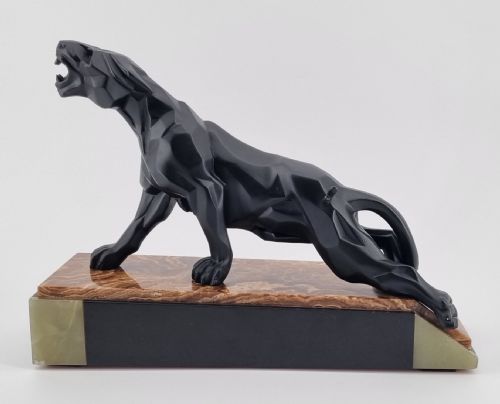
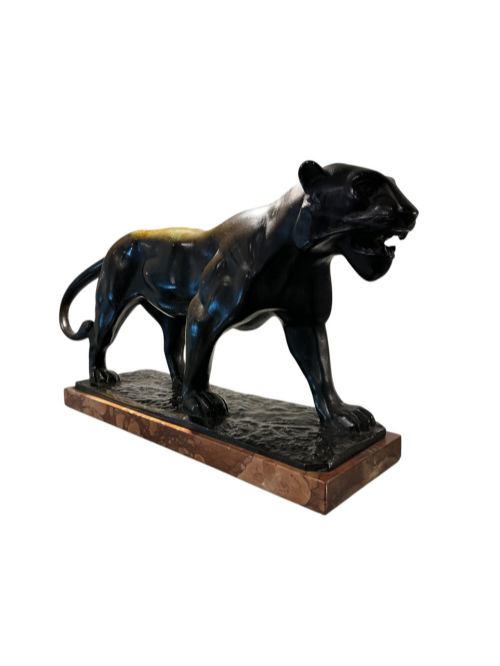
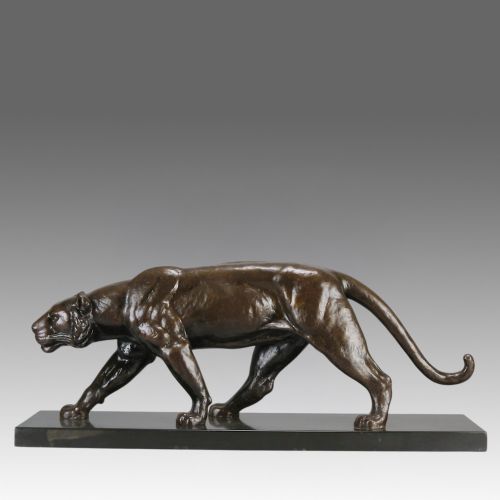
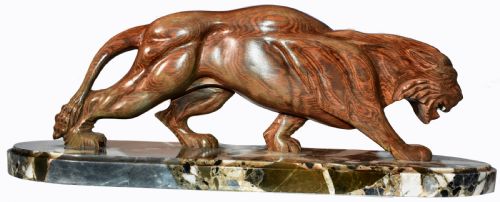
When you search for an art deco panther statue, you find sculptures that embody the sleek styling of the early twentieth century. Most examples date from the 1920s and 1930s, capturing the feline form in prowling, snarling, or resting postures.
The objects listed on this page take the form of freestanding sculptures, often mounted upon contrasting bases. These pieces emerge from the animalier tradition, focusing entirely on the musculature and tension of the wild cat.
You will encounter figures originating from French workshops, reflecting the continental taste for stylised fauna. The designs range from solitary prowlers to pairs and hunting groups involving human figures.
How they were made
Foundries produced metal examples using bronze or spelter, sometimes applying patination or silvered finishes to the surface. These metal casts were frequently secured to polished marble or onyx plinths.
Carvers utilised hardwoods and timber to shape alternative sculptures directly from the grain. These wooden iterations display faceted planes and smooth contours that emphasise the animal's silhouette without metal casting.
Several panthers are caught mid-prowl, proving that even art deco metal cats refused to sit still on the mantelpiece.
What varies in quality
The distinction between tiers rests upon the crispness of the casting and the sensitivity of the carving. Superior bronze and spelter figures retain sharp facial details and defined muscular tension in the paws and shoulders.
Base selection also defines the standard of the piece, with dense veined marble or contrasting onyx elevating the stature of the sculpture. Master modellers achieved greater anatomical conviction in the stride and posture of the cat.
Alexandre Ouline·Eugene Emile Borga·Chiparus·Michel Decoux·Andre-Vincent Becquerel·M. Font·Ruchot
The Art Deco Panther Statue Glossary
- Animalier
- Art that depicts non-human animals, particularly applied to nineteenth and twentieth-century sculptors. These artists specialised in capturing accurate or stylised wildlife anatomy.
- Spelter
- A zinc alloy utilised as a less expensive alternative to bronze for metal figures. It accepts patination well to simulate heavier metals.
- Patination
- The chemical treatment or surface coating applied to metal to alter its colour and tone. This process highlights the contours of the feline form.
- Onyx
- A banded variety of chalcedony frequently utilised for heavy decorative bases. Its translucent layers provide a polished foundation for the metal sculpture above.
- Plinth
- A heavy base supporting the main sculptural figure. These blocks stabilise the dynamic overhang of a prowling panther.
Art Deco Panther Statue: Frequently Asked Questions
What periods do these panthers date from?
The majority of pieces date from the 1920s and 1930s, capturing the height of the modernist design movement.
Some later productions also appear, extending into the mid-twentieth century and beyond.
How were the figures displayed originally?
Most statues were mounted directly onto heavy marble or onyx bases to provide stability and visual contrast.
They functioned as mantel ornaments or desk accessories in contemporary interiors.
Are these figures made of solid bronze?
While many statues utilise hot-cast bronze, others consist of spelter or carved hardwood.
Metal examples often feature applied patination or silvered finishes to enhance the surface texture.
How do I distinguish bronze from spelter?
Bronze offers a heavier weight and a more resonant feel, holding finer detail in the casting.
Spelter is a softer zinc alloy that may show lighter internal metal where the surface patination has worn.