


French Art Deco Panther
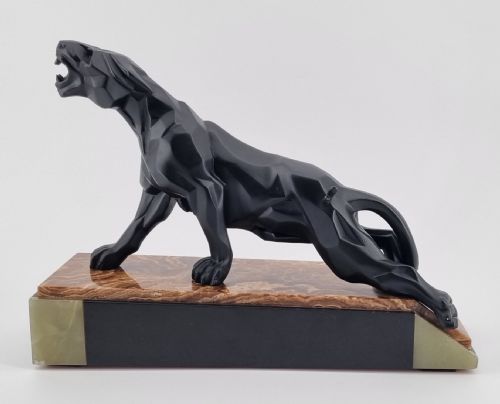
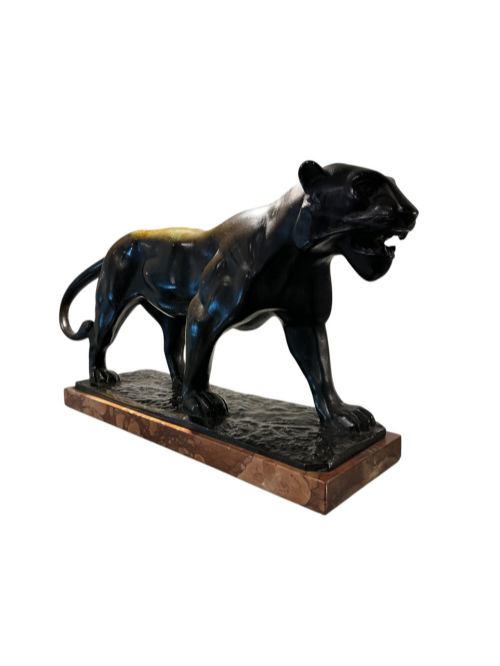
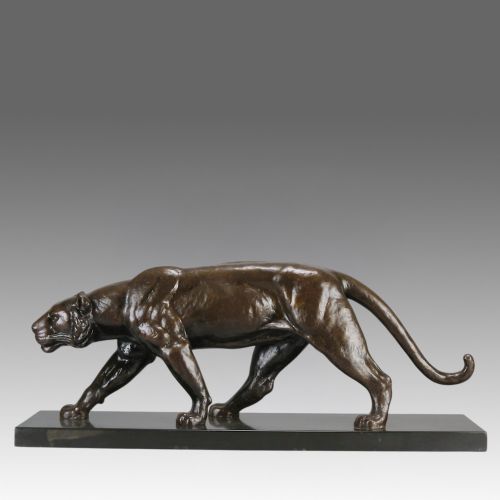
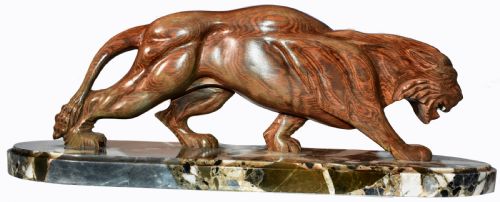
These French art deco panther sculptures capture the aggressive grace of the feline in bronze, spelter, and carved stone.
French Art Deco Panther
A french art deco panther figure represents the pinnacle of interwar animalier sculpture, capturing sleek movement and predatory tension. When searching this phrase, collectors encounter prowling, crouching, and stalking felines created during the height of the movement.
The pieces on this page span the 1920s, 1930s, and 1940s, reflecting the enduring popularity of big cat imagery throughout the period. Forms range from standalone bronze and spelter sculptures to functional mantle clocks, bookends, lamps, and mood lighting.
Many sculptures are mounted upon contrasting bases of black marble or onyx, elevating the cat from a floor or table surface. These combinations of metal and stone define the classic visual vocabulary of the era's animalier output.
Materials and construction methods
Foundries utilised traditional lost-wax casting for bronze editions, allowing for sharp muscular definition and fine patination. Spelter served as a popular, more accessible metal alternative, frequently finished with patination, silvering, or gilding to emulate bronze.
Sculptors carved alternative versions from solid wood and stone, pairing organic textures with polished marble bases. Clocks and lamps integrated these feline figures directly into utilitarian objects using cast metal components combined with clockwork mechanisms and electrical fittings.
French Art Deco Panther Retail Price Guide 2026
Typical asking prices for french art deco panther among the pieces listed under this phrase on Sellingantiques today, from the lower quarter to the upper quarter. They describe what is for sale here now, not the wider market.
Several crouching panthers double as fierce bookends, ensuring your modest paperbacks are guarded by an interwar apex predator.
Evaluating quality and execution
Quality rests primarily in the anatomical precision of the feline and the clarity of the casting cleanup. Superior examples display taut musculature, convincing tension in the stride, and carefully applied patinas that enhance the texture of the coat.
The choice and preparation of the mounting base heavily influence the overall distinction of a piece. Dense, well-polished marble or onyx bases with clean bevels indicate higher workshop standards than hastily cut or chipped stone.
Alexandre Ouline·Eugene Emile Borga·Michel Decoux·Irénée Rochard·Andre-Vincent Becquerel·D H Chiparus·M Secondo·M Leduc·E Guy
The French Art Deco Panther Glossary
- Animalier
- A term for artists who specialise in the realistic representation of animals. These sculptors focused heavily on captive and wild beasts during the interwar decades.
- Spelter
- A zinc alloy commonly used as a cost-effective substitute for bronze. It accepts patinas and paints well, though it is softer and lighter than cast bronze.
- Patina
- The surface coloration or sheen developed naturally over time or applied chemically to metal. Bronze patinas range from deep browns to green tones.
- Lost-wax casting
- A precise method of metal casting where a wax model is melted away from a ceramic mould to receive molten bronze. This technique preserves the finest details of the original sculpt.
- Onyx
- A banded variety of chalcedony used frequently for bases and clock housings. Its translucent layers complement the dark silhouettes of metal panthers.
French Art Deco Panther: Frequently Asked Questions
What metals were used for these panthers?
Foundries cast these sculptures primarily in bronze or spelter, sometimes applying silvered or gilded finishes.
Bronze examples represent the higher tier of production, while spelter offered a more affordable alternative during the period.
How do I identify a spelter panther?
Spelter is lighter and softer than bronze, often showing grey metal beneath worn spots in the patina.
Magnets will not stick to either metal, but the weight and coldness to the touch help differentiate them.
Where were these sculptures displayed originally?
Owners placed these figures on marble mantlepieces, desks, and bookcases as standalone sculptures or integrated clock sets.
Bookends and lamps also served functional roles while showcasing the same predatory feline motifs.
Are these pieces signed by artists?
Many sculptures feature cast or engraved signatures from prominent animalier artists directly on the bronze, spelter, or marble base.
Unsigned works remain common, often produced by anonymous foundry studios working in the same popular style.