


1930s Animalier Sculpture
These 1930s animalier sculpture pieces capture the speed and tension of wild and domestic animals through clean, modernist lines.
1930s Animalier Sculpture
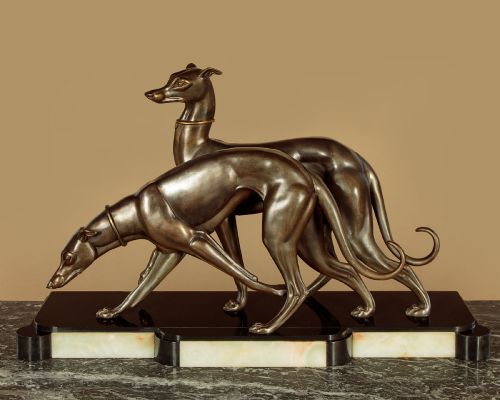
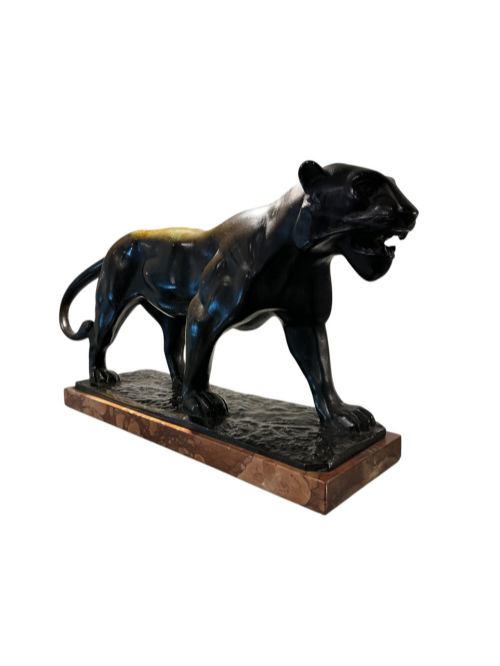
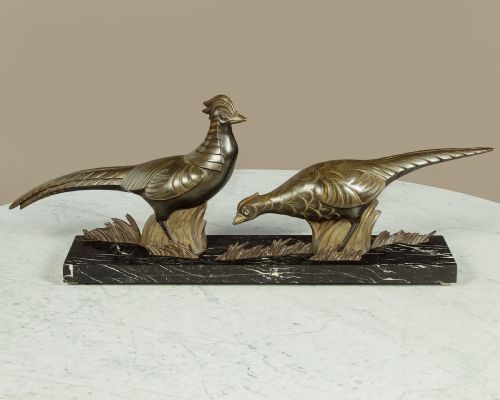
A 1930s animalier sculpture represents wildlife and domestic animals, from panthers and stags to greyhounds, pheasants and borzois, rendered through the lens of Art Deco design. These works focus heavily on motion, capturing prowling cats, hunting dogs and birds in characteristic poses.
The objects on this page predominantly take the form of figures mounted on stone bases, often pairing metal subjects with contrasting plinths. This grouping relies on the animalier tradition merged with twentieth-century aesthetics.
Dating ranges from the 1920s through the 1940s, capturing the interwar modernist shift towards stylised fauna. Most examples reflect French origin and the widespread taste for sleek, predatory cats or hounds.
What varies in quality
Quality separates through the crispness of the metal casting and the precision of the surface patination or silvering. Superior examples maintain sharp anatomical details and clean finishes on both the animal subject and its base.
The choice and execution of the base material create variation, with well-fitted marble and onyx plinths adding structural integration to the sculpture. The fidelity of the animal's posture and the authority of the rendering distinguish standard foundry work from finer pieces.
Golden pheasants make an appearance alongside predatory panthers, proving the interwar home had room for both fierce cats and decorative birds.
Eugene Emile Borga·Karl Hagenauer·Chiparus·Michel Decoux
The 1930s Animalier Sculpture Glossary
- Animalier
- Art depicting the literal likeness of animals, particularly wild beasts and hounds in motion. This genre flourished in sculpture throughout the nineteenth and twentieth centuries.
- Spelter
- A zinc alloy frequently used as a cost-effective alternative to bronze for sculptural casting during the interwar period. It accepts patination well to simulate heavier metals.
- Patinated metal
- Metal treated with chemical solutions to produce a specific surface colour and aged finish. This technique enhances depth and highlights sculptural contours.
- Onyx
- A banded variety of chalcedony quartz utilised for decorative plinths and bases. Its natural veining complements polished metal figures.
1930s Animalier Sculpture: Frequently Asked Questions
What animals appear in these sculptures?
The subjects include panthers, stags, greyhounds, borzois, lions and golden pheasants. Large cats and hunting dogs dominate the selection.
These animals are typically shown in prowling or alert stances suited to the modernist aesthetic.
What materials make up the bases?
Bases are constructed primarily from marble and onyx, often in black or contrasting tones. These stone plinths provide weight and geometric balance.
The animal figures are securely bolted or mounted directly to these stone foundations.
How do bronze and spelter differ?
Bronze is a heavy copper alloy known for durability and fine detail retention in casting. Spelter is a lighter zinc-based metal that was widely used for accessible decorative figures.
Both materials received patination, making visual identification dependent on weight and close surface inspection.
Are these pieces exclusively French?
Many examples originate from French foundries and workshops associated with the Art Deco movement. Other European makers also contributed to this international style.
Foundry marks and signatures on the base often indicate the specific origin of the work.