
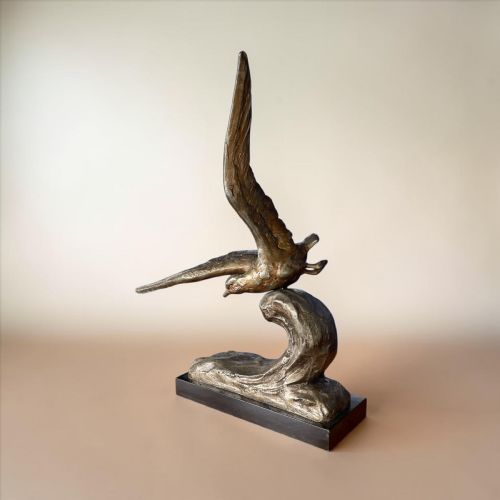


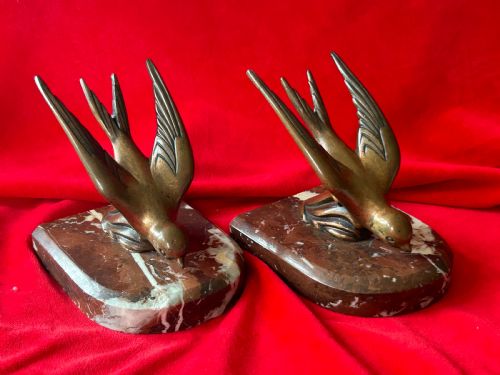


Art Deco Bird Statue
These art deco bird statue pieces capture the sleek lines and avian subjects typical of the interwar years.
Art Deco Bird Statue
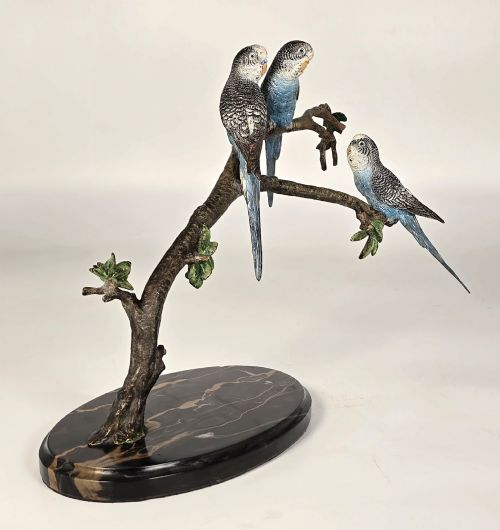
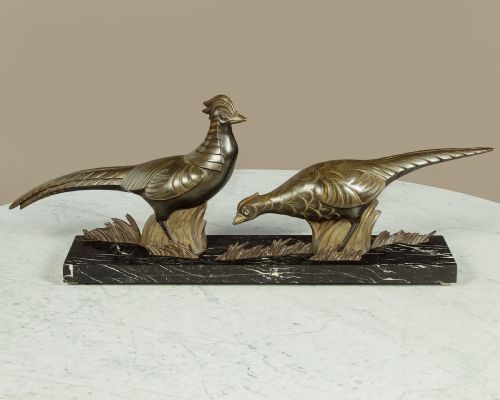
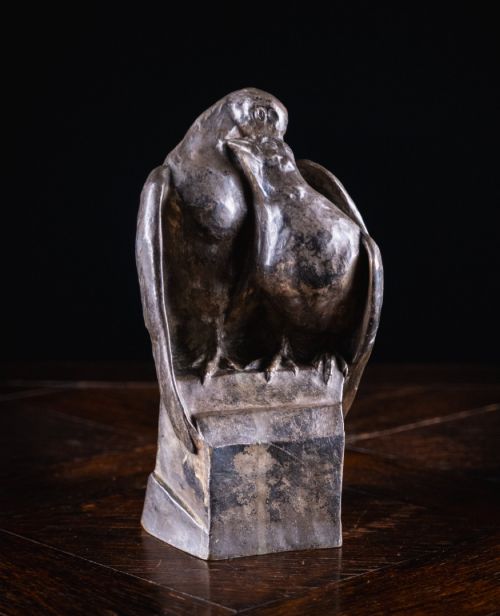
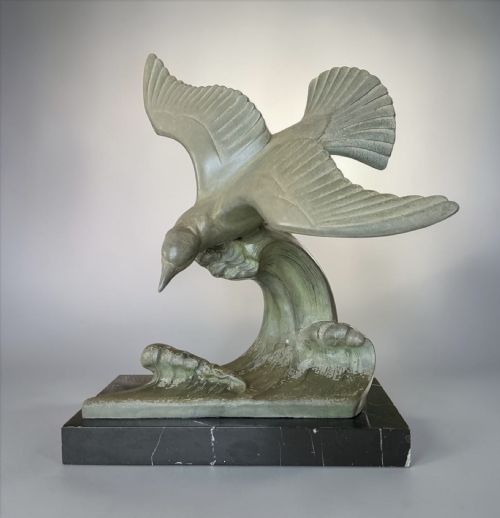
An art deco bird statue brings the characteristic geometry and aerodynamic forms of the 1920s and 1930s into domestic spaces through depictions of birds. These sculptures capture avian subjects ranging from solitary gulls and albatrosses to pairs of pigeons and golden pheasants.
The objects listed here predominantly take the form of freestanding decorative sculptures or functional bookends. Figures perch on leafy branches or stretch into flight, reflecting the design vocabulary of French workshops from the period.
Materials and Construction
Foundry work from the period relies heavily on bronze, nickel bronze, and patinated spelter cast into detailed avian forms. Metal components frequently sit upon contrasting black marble bases to provide weight and stability.
Surface treatments include cold painting and patination to render the plumage of species such as budgerigars and pheasants. These finishes highlight the feathers and capture the metallic sheen characteristic of the style.
The listings span the years 1920 to 1930, capturing the height of interwar design.
Judging Quality
Quality rests upon the crispness of the casting and the fidelity of the bird's anatomy. Superior examples show refined detailing in the feathers and beak without softness in the metalwork.
The integration between the sculpture and its marble base distinguishes better pieces from simpler productions. Well-executed patination and preserved cold painted surfaces elevate the visual interest of the work.
Frederique Cederlund Ozanne·Zoldan Kovats·Le Manceau·Paul Joris·Herzig
The Art Deco Bird Statue Glossary
- Patinated metal
- Metal treated with chemicals to produce a coloured surface film or antique finish. This process protects the underlying material while enhancing visual depth.
- Cold painted
- A method where paint is applied to metal without heat firing. It allows for vibrant coloration on bronze and spelter sculptures.
- Spelter
- A zinc alloy commonly used as a cost-effective alternative to bronze during the early twentieth century. It takes patination well to simulate heavier metals.
- Bookends
- A pair of heavy supports designed to keep upright rows of books. Sculptural pairs often incorporate figures of birds or animals.
- Nickel bronze
- An alloy containing copper, nickel, and zinc that yields a silvery finish. It resists tarnishing and provides a bright surface for modernist designs.
Art Deco Bird Statue: Frequently Asked Questions
How do I identify a genuine piece?
Look for the weight, materials such as bronze or marble, and the casting quality typical of the interwar period. Signatures or foundry marks also help confirm authenticity.
Examine the surface patination and assembly methods to ensure they match manufacturing standards of the 1920s and 1930s.
Where were these sculptures made?
Many originate from French studios and foundries active during the interwar design movement. Paris served as a primary hub for this decorative metalwork.
Continental European workshops contributed significantly to the output of animalier and modernist bronzes.
How should I clean these surfaces?
Dust gently with a soft dry cloth to prevent accumulation without disturbing the patination. Avoid abrasive cleaners or commercial polishes.
Moisture can harm cold painted finishes, so keep pieces in stable indoor environments away from direct dampness.
Can these bookends hold heavy volumes?
Most feature substantial marble bases designed to anchor standard book collections securely. The combined weight of metal and stone provides necessary stability.
Position them against the end of a shelf to distribute the weight evenly.